


Expectations for fusion are growing as a potential breakthrough solution to challenges in decarbonization and energy security, and research and development efforts are accelerating. To demonstrate the scientific and technological feasibility of fusion power, the construction of the International Thermonuclear Experimental Reactor (ITER)—an international project involving Japan, China, the European Union, India, Korea, Russia, and the United States—is underway. At the same time, government-led R&D and demonstration initiatives, along with private-sector investment, are also expanding. Fusion, long referred to as “dream energy” and supported by decades of fundamental research, is now entering a phase of active pursuit toward practical application.
How far have fusion technologies advanced, and what possibilities are now emerging? What roles will Hitachi play as we move toward the realization of these technologies? We spoke with Shuichi Kido, Division General Manager of Advanced Reactor Development & Management Division, who leads fusion and accelerator initiatives and has done so for many years.
Light-water reactors, the most common form of nuclear power generation today, produce electricity using the energy released when the atomic nuclei1 of heavy elements such as uranium split (fission). In contrast, fusion power generates energy when the atomic nuclei of light elements, such as hydrogen isotopes2, fuse—based on the same principle that powers the sun.
Atomic nuclei carry a positive charge and naturally repel each other. To overcome this repulsive force and induce fusion, hydrogen isotopes must be heated to temperatures exceeding 100 million °C, creating plasma—a state in which electrons are separated from atomic nuclei. In this state, atomic nuclei move at high speeds and collide, producing fusion reactions. Sustained fusion requires confining this high-temperature, high-density plasma— for example, using magnetic fields—and maintaining the necessary temperature, density, and confinement time conditions (known as the Lawson criterion).
Plasma confinement has been one of the greatest challenges in fusion research since the 1950s. However, this challenge also contributes to a key safety feature: the fusion reaction stops almost immediately if conditions are not maintained. Further, fusion produces no CO2 during operation and is expected to generate significantly less long-lived radioactive waste. In addition, deuterium, one of the fuel isotopes, is abundant in seawater, offering significant advantages from a resource perspective.
I became interested in fusion technologies after learning about the issue of oil depletion from a science magazine I enjoyed reading as a child. Today, as geopolitical risks surrounding fossil fuels become increasingly evident, the importance of fusion energy is greater than ever.
Among the plasma confinement technologies that have been central to fusion research, the tokamak3 method—developed in the former Soviet Union—has seen the most significant progress to date. Advances driven by foundational research conducted in Japan, the United States, and Europe have significantly improved the technology, paving the way for experiments aimed at achieving fusion power output far exceeding input energy. Against this backdrop, the ITER Organization was established in 2007, and site construction began in 2010.
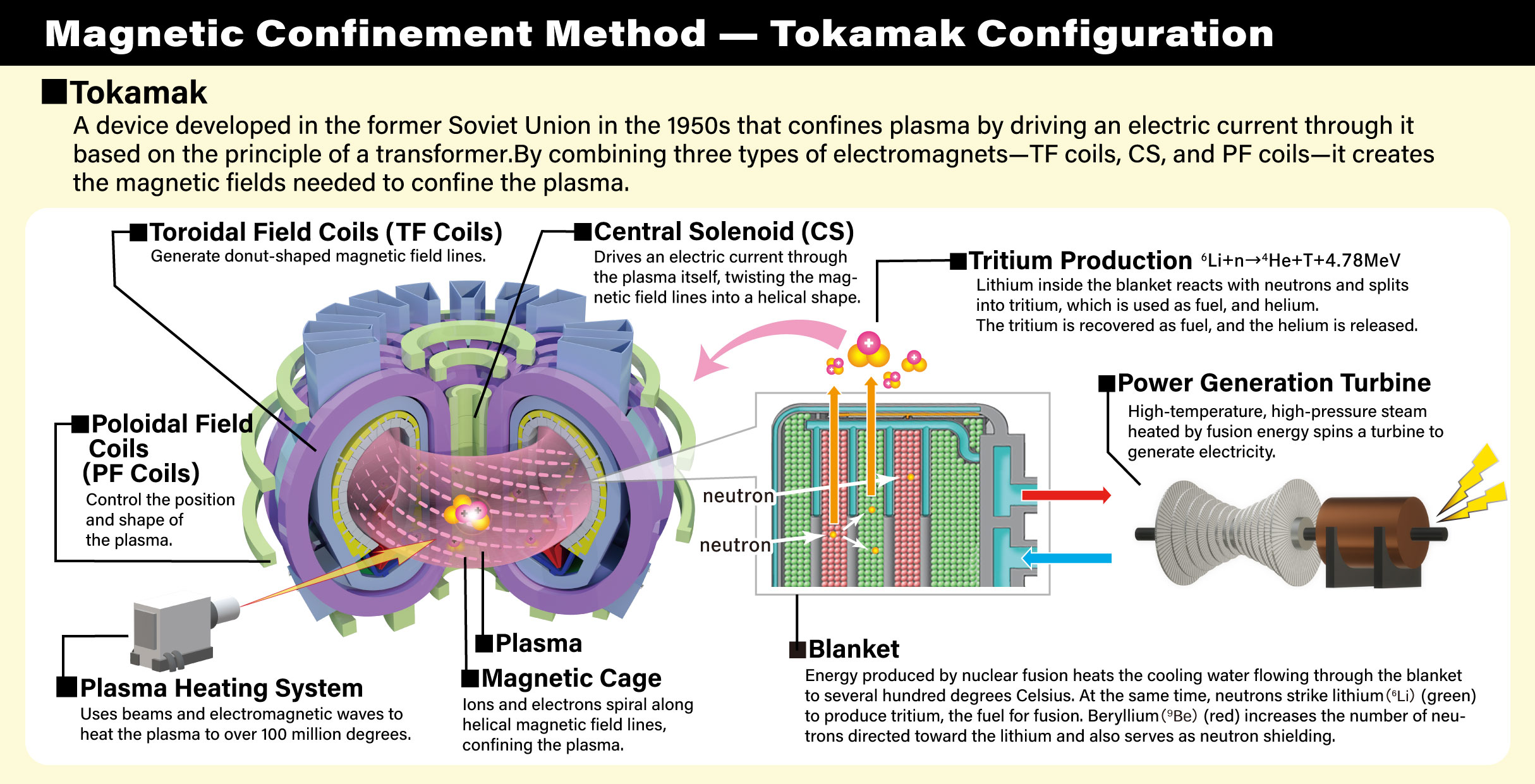
Magnetic Confinement Method — Tokamak Configuration
Photo courtesy of the National Institutes for Quantum Science and Technology (QST)
In parallel with these developments, advances in high-temperature superconducting technologies enabling stronger magnetic fields, as well as progress in plasma diagnostics and control technologies utilizing AI and digital solutions, are expanding fusion beyond government-led “big science” into the realm of industrialization and commercialization, and these efforts include the participation of startups. I have been involved in fusion development since joining the company in 1996, and I have witnessed the transition from the “physics research phase,” focused on demonstrating plasma principles, to the “engineering phase,” aimed at demonstrating practical power generation.
The next stage now coming into view is the extraction of fusion energy and its conversion into electricity. However, many challenges remain before reaching this stage, including maintaining plasma stability over extended periods and efficiently converting generated heat into electricity. Additional challenges will inevitably emerge as full-scale systems are completed, and actual power generation is attempted.
Japan was an early entrant in fusion research, and it has accumulated extensive expertise and technologies over many years. A clear division of roles—where universities and national research institutes focus on plasma physics, and manufacturers develop the engineering technologies required for experimental equipment in collaboration with these institutions—has functioned effectively. As a result, Japan ranks among the world’s leaders in both scientific research and engineering capabilities. Since the early days of the 1950s, Hitachi has been involved in manufacturing experimental equipment for fusion research.
Hitachi’s efforts in fusion are underpinned by its manufacturing expertise in electrical equipment and electromagnets, developed through products such as generators and transformers. Electromagnet technologies are indispensable for fusion systems that use strong magnetic fields to confine plasma. In addition, Hitachi has contributed to the advancement of this field by integrating a wide range of technologies, including ultra-high voltage, superconductivity and cryogenics, ultra-high vacuum, materials, thermal design, large-scale fabrication, radiation handling in the nuclear field, and control and systems technologies. Another of Hitachi’s strengths lies in its R&D capabilities, including the possession of experimental fusion equipment and an approach that integrates both scientific and engineering perspectives. Technologies developed for fusion systems have also been applied in fields such as MRI systems in healthcare.
A fusion system is a comprehensive technology that spans multiple technical domains. Demonstrating its principles requires the ability to design and manufacture actual systems, making Hitachi’s role—bridging research and manufacturing—critically important.
Personally, I aspired to work for a manufacturer because I wanted to be directly involved in creating physical systems, rather than pursuing a purely research-oriented career. During my job search, I visited a workplace where professionals from manufacturing and design engaged in intensive discussions to build complex equipment. Witnessing this collaborative process inspired me to join Hitachi. Since then, I have worked in design teams focusing on fusion, accelerators, and superconductivity, and have come to appreciate the unique value and fulfillment of contributing to fusion development as a manufacturer—transforming researchers’ ideas into working systems.
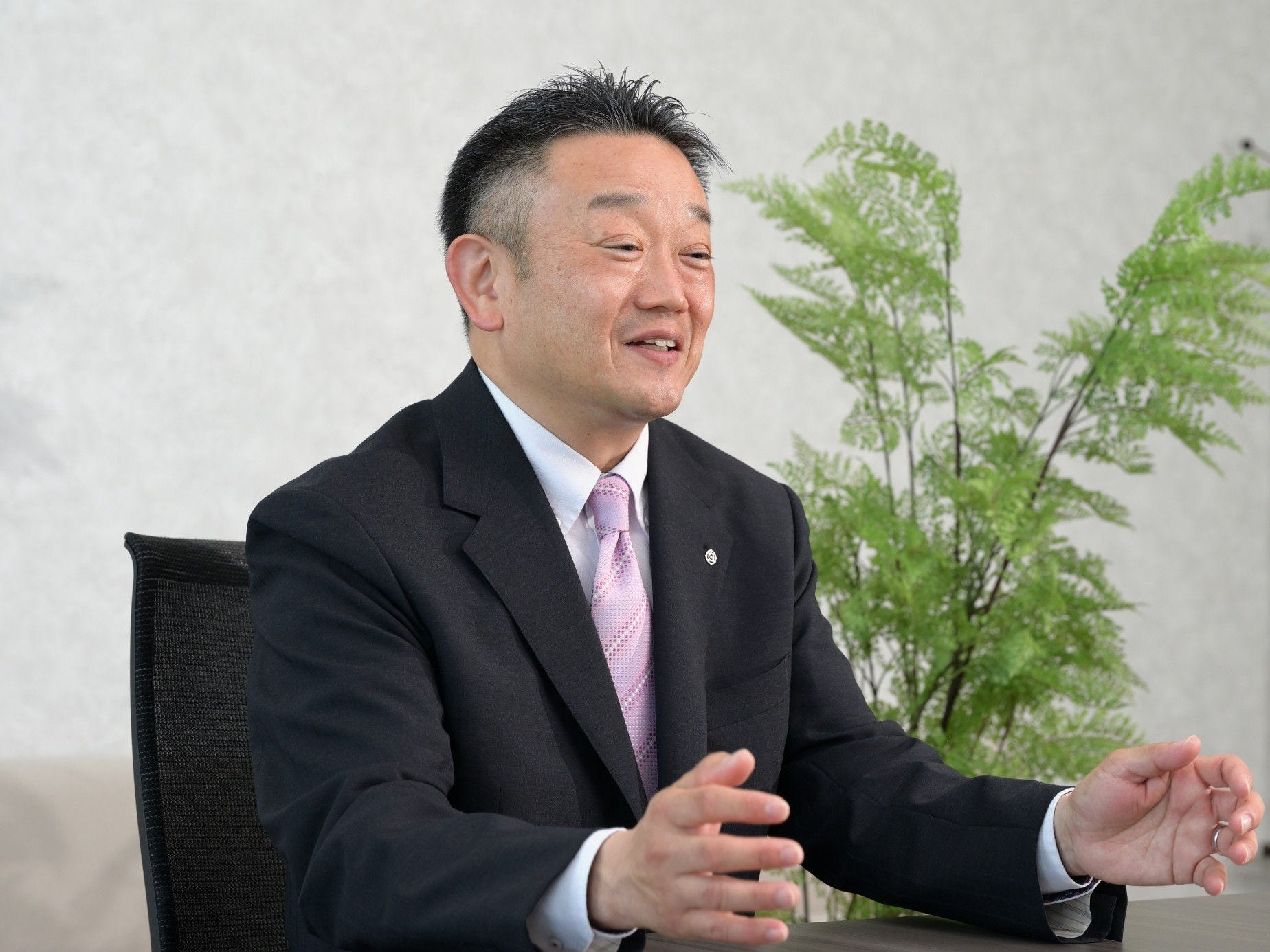
Shuichi Kido, Division General Manager for Fusion and Accelerators,
Advanced Reactor Development & Management Division, Nuclear System Division, Nuclear Energy Business Unit, Hitachi, Ltd.
Hitachi has participated in a wide range of national projects and, in collaboration with government research institutes and universities, has designed and manufactured key components for numerous fusion and accelerator R&D facilities, including the JT-604 and the Large Helical Device (LHD)5. These components include electromagnets, vacuum vessels, and neutral beam injection (NBI)6 systems.
 JT-60
JT-60
Photo courtesy of the National Institutes for Quantum Science and Technology (QST)
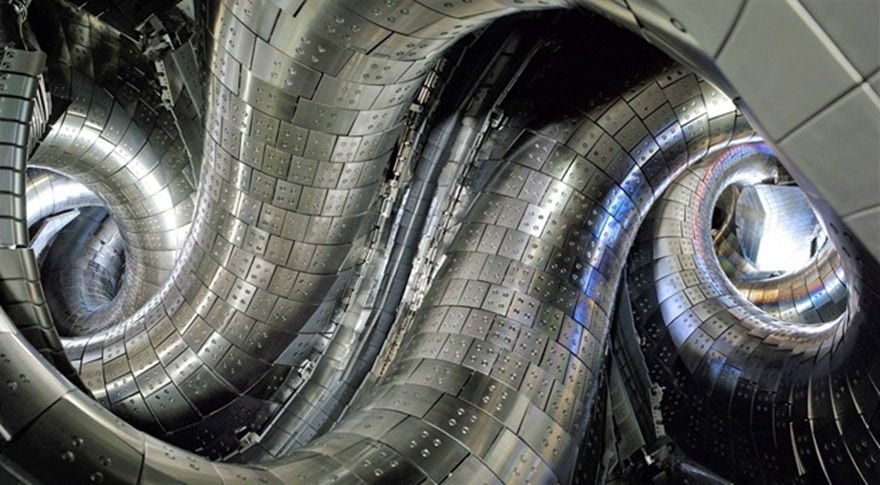 Interior of the LHD’s plasma vacuum vessel
Source: National Institute for Fusion Science
Hitachi is also contributing to the internationally collaborative ITER project by supplying critical components essential to fusion system operation, including ultra-high voltage power supply systems for NBI and divertors. The ultra-high voltage power supply systems generate voltages on the order of 1 MV and require advanced engineering capabilities in the areas of electrical performance, thermal management, and structural integrity. Divertors remove particles and impurities generated in and around the plasma and exhaust them outside the vacuum vessel, thereby preventing direct damage to the vessel. They require specialized materials capable of withstanding extreme heat and particle flux, as well as high-precision manufacturing technologies.
ITER aims to achieve fusion output more than ten times the input energy and sustain approximately 500 MW of fusion power for a certain duration. Operations are planned to begin in the mid-2030s, followed by efforts to reach the target performance. If successful, this will represent a significant milestone toward the practical use of fusion as an energy source.
However, ITER has experienced revisions and delays due in part to the challenges of decision-making inherent in international collaboration, as well as the impacts of the COVID-19 pandemic. As a result, efforts toward the commercialization of fusion are accelerating on both fronts—competition and collaboration—including national initiatives to develop prototype reactors and the development of fusion demonstration plants by startups. In these circumstances, I believe it is essential not to rely on overly optimistic expectations but to pursue steady R&D alongside forward-looking challenges.
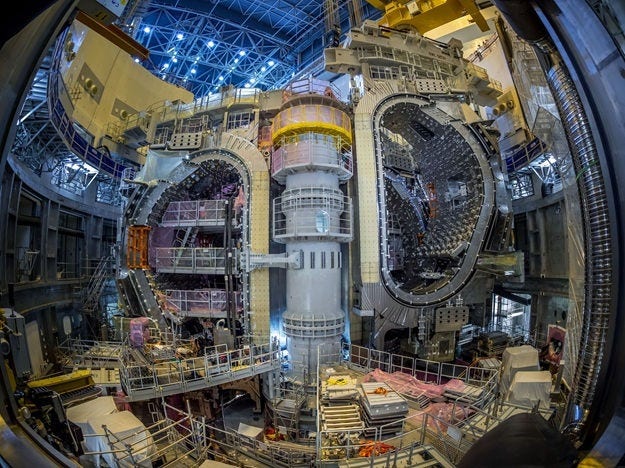 A sector module being installed at ITER on May 27, 2026
© ITER Organization
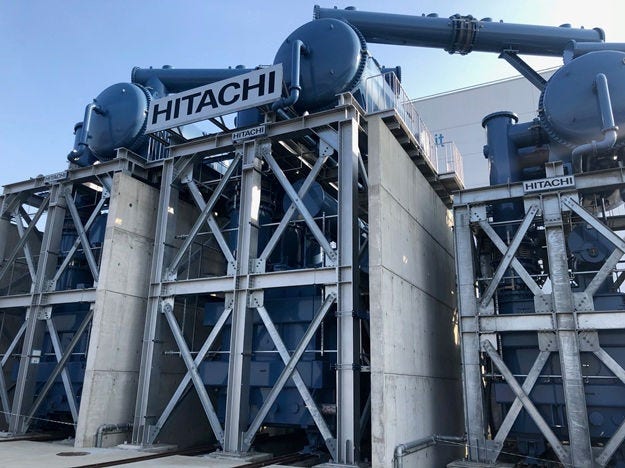 Completion of DC generator installation at the ITER Neutral Beam Test Facility (NBTF), Padua, Italy
Image: National Institutes for Quantum Science and Technology (QST)
Electricity demand is expected to increase significantly due to the rapid expansion of AI and data centers. To expand the power supply while advancing decarbonization, it is essential to combine multiple power generation sources. Among these, fusion is expected to play a key role in the future energy mix, offering advantages in terms of both energy security and decarbonization.
In Japan, under the Broader Approach (BA) activities7 with Europe, JT-60SA, a fusion experimental device developed based on JT-60, has been constructed. Through these efforts, Japan is advancing R&D that complements and supports ITER, as well as developing human resources. Within the BA activities, in addition to plasma research using JT-60SA, multiple initiatives, including materials development and prototype reactor design, are being pursued in parallel, forming a technological foundation for future fusion power plants. In addition, the Japanese government has positioned the industrialization of fusion energy as a national priority, with the aim of demonstrating fusion power generation in the 2030s through public-private collaboration. Nevertheless, from the demonstration phase to achieving stable operation and economic viability as a commercial reactor, many technical challenges remain.
Therefore, it is essential to advance both efforts to support today’s power supply and initiatives to build the foundation for future energy in parallel. For Hitachi, this means first addressing on-site challenges, such as supporting the restart of existing nuclear power plants and decommissioning, while steadily delivering next-generation solutions, including the BWRX-300 small modular reactor (SMR) and the innovative light-water reactor HI-ABWR. At the same time, Hitachi will continue to build experience and advance R&D through participation in projects such as ITER, BA activities, and demonstration programs, while looking ahead to future technologies including fast reactors and fusion reactors.
Nuclear energy should continue to evolve as a trusted and reliable social infrastructure. By leveraging its accumulated capabilities in fission and fusion R&D and manufacturing, along with strengths in digital technologies such as AI, Hitachi is committed to addressing both current challenges and future opportunities across multiple technological domains.
Another key strength of Hitachi is the strength and depth of its talent. Having found great fulfillment in manufacturing, I have made it my mission to convey to students studying fusion that there are diverse career paths beyond becoming researchers. As a result, the number of fusion specialists seeking to join Hitachi has been increasing in recent years.
Because these individuals have studied and conducted research alongside university and research institution professionals, they are able to engage with customers on an equal footing, accurately understand their ideas, and transform them into working systems. Hitachi is also characterized by a strong and diverse talent base, with many individuals who are highly motivated to support fusion development from an engineering perspective.
Through its commitment to manufacturing rooted in Hitachi’s Monozukuri philosophy and talent development, Hitachi will continue to contribute to the advancement of fusion technologies and support the future of energy.
1. A nucleus, located at the center of an atom, is composed of positively charged protons and neutrons. Negatively charged electrons orbit around the nucleus.
2. Hydrogen isotopes refer to deuterium and tritium. While the nucleus of a hydrogen atom contains only one proton, deuterium has a nucleus consisting of one proton and one neutron. Deuterium is a stable, non-radioactive isotope that accounts for approximately 0.015% of naturally occurring hydrogen and exists primarily in water. Tritium, by contrast, is an unstable isotope with a nucleus consisting of one proton and two neutrons, and it is weakly radioactive.
3. Ultra-high temperature plasma cannot be contained using ordinary materials. However, because plasma is electrically charged, its motion can be controlled by magnetic fields. The tokamak method utilizes this property to confine plasma within a helical magnetic field, generated by the combination of a magnetic field induced by an electric current flowing in the plasma and magnetic fields produced by external electromagnets.
4. JT-60 is a tokamak device installed at the Naka Fusion Research Establishment of the Japan Atomic Energy Research Institute (now part of the National Institutes for Quantum Science and Technology, QST), which began operation in 1985. It achieved world-leading performance in key parameters such as the fusion triple product and central ion temperature, contributing significantly to global fusion research and development.
5. LHD stands for Large Helical Device, one of the world’s largest superconducting helical plasma devices. It was constructed by the National Institute for Fusion Science (NIFS) in Toki City, Gifu Prefecture, and achieved its first plasma in 1998. A helical device confines plasma using magnetic fields generated solely by spiral coils.
6. Neutral Beam Injection (NBI) is a system used to heat magnetically confined fusion plasma in order to induce fusion reactions. It accelerates hydrogen or deuterium ions using an ultra-high voltage power supply, neutralizes them, and injects a high-energy beam of neutral particles into the plasma. These particles transfer energy through collisions with plasma particles, heating the plasma to temperatures exceeding 100 million °C.
7. Broader Approach (BA) is a framework for international collaborative R&D between Japan and Europe (the European Atomic Energy Community, Euratom). Its objectives are to support the ITER project and to establish the technological foundation required for future fusion demonstration reactors, thereby accelerating the realization of fusion energy.
Shuichi Kido
Position: Division General Manager for Fusion and Accelerators
Career history:
B.E. in Nuclear Engineering, The University of Tokyo
Ph.D. in Quantum Engineering, The University of Tokyo
1996 – Joined Hitachi, Ltd.; assigned to the Fusion and Accelerator Center, Hitachi Works. Designed superconducting flexible leads for the helical coils of the Large Helical Device (LHD) and contributed to the achievement of first plasma (March 31, 1998).
Subsequently designed sector electromagnets for the Superconducting Ring Cyclotron (SRC) delivered to RIKEN, and a 14.5 T superconducting magnet system for high sensitivity NMR at Hitachi Research Laboratory.
2015 — General Manager, Fusion and Accelerators Department
2019 — Member, MEXT Comprehensive Strategic Task Force on DEMO Reactor Development
2019–2022 — Director, Japan Society of Plasma Science and Nuclear Fusion Research
2025 — Member, JPO Advisory Board on Technology Trends (Fusion Power Generation)
Currently, Shuichi Kido oversees Hitachi’s fusion and accelerator business and actively promotes diverse career paths in fusion within the manufacturing sector.