



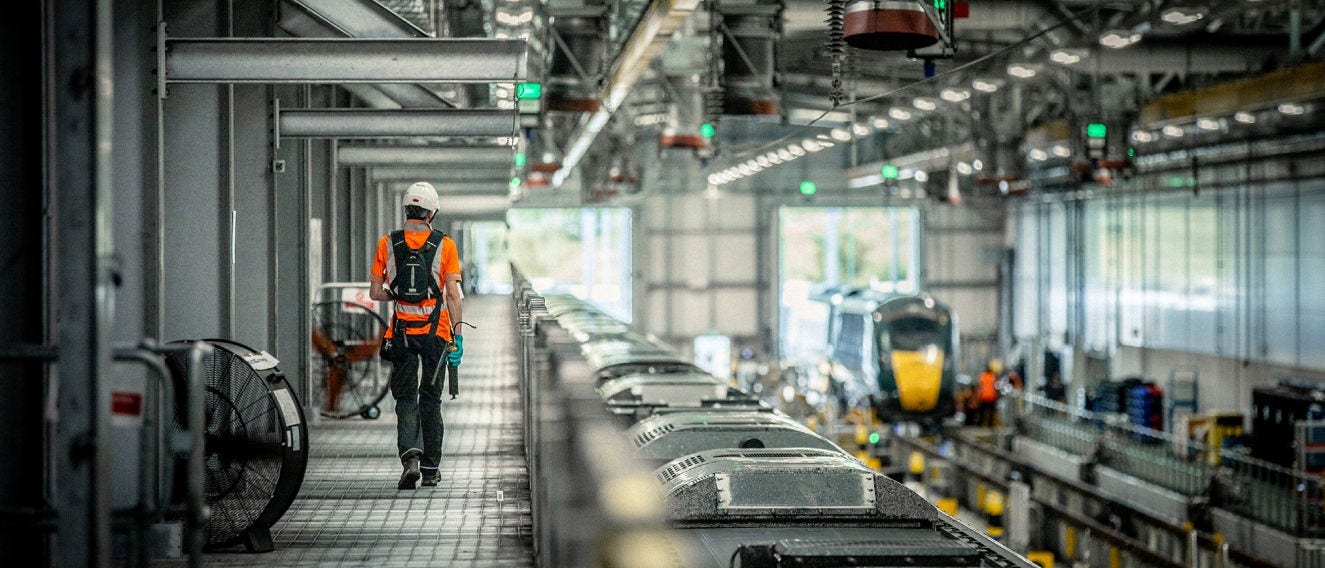
Beyond Intelligence: Building Reliable Physical AI for Critical Infrastructure
As AI moves into the physical world, Hitachi is developing an orchestration framework that combines AI, simulation, and domain expertise to support reliable decision-making across critical infrastructure.
By Ahmed Farahat, Lab Manager & Director, Industrial AI Lab, Hitachi Americas R&D
Autonomous driving has made remarkable advances, but it also highlights the challenges of applying AI in the physical world. Even in the relatively well-defined environment of driving, autonomous systems require extensive testing, operating rules, and human oversight to manage uncertainty.
Critical infrastructure presents an even more complex challenge.
Power grids, railway networks, manufacturing facilities, data centers, and logistics networks each operate under different physical conditions, engineering constraints, and operational requirements. Knowledge gained in one domain cannot easily be applied to another, and no single dataset can capture the complexity of these interconnected systems.
For Physical AI, the challenge is not simply developing more intelligent models or collecting more data. It is ensuring that AI-generated decisions are reliable and appropriate for the physical environments in which they are applied.
In mission-critical infrastructure, an incorrect decision can disrupt operations, damage equipment, or put people at risk. Intelligence alone is not enough. Reliability is essential.
From Intelligent Models to Reliable Decisions
AI models are advancing rapidly. Simulation and world models can help predict how physical systems behave, while domain-specific models incorporate engineering principles and operational constraints. Agentic AI can coordinate complex tasks involving multiple models and tools.
Together, these capabilities are expanding what Physical AI can accomplish. But they do not automatically make its decisions reliable.
Consider a power system operator evaluating grid stability. An AI system might recommend adjustments based on electricity demand, equipment conditions, and network constraints. Before acting, however, operators must determine whether those recommendations comply with engineering limits, how they affect other parts of the grid, and what risks they introduce.
This illustrates a fundamental distinction between generating an intelligent recommendation and verifying that it can be safely executed.
Physical AI therefore needs more than models capable of proposing actions. It needs a reliable process for evaluating those actions against the physical and operational constraints of the systems they affect.
Orchestrating Physical AI for Reliability
This is the thinking behind Hitachi's Integrated World Infrastructure Model (IWIM).
Drawing on more than a century of experience in critical infrastructure, Hitachi is developing an orchestration framework that brings together specialized AI models, physics-based simulations, digital twins, and domain expertise to support reliable decision-making. Rather than relying on a single model of the physical world, IWIM coordinates these capabilities to evaluate AI-generated recommendations against operational and safety requirements before they are executed.
These capabilities provide the intelligence and expertise needed to understand complex infrastructure systems, while orchestration and verification help ensure that AI-generated recommendations meet operational and safety requirements before they are executed.
At its core is a four-stage process:
- Propose: AI models generate potential actions or recommendations based on available data and operational objectives.
- Simulate: Specialized models and digital twins evaluate how those actions could affect physical systems, including interactions across interconnected assets.
- Verify: Proposed actions are checked against engineering constraints, operating rules, safety requirements, and other relevant criteria.
- Release: Actions that meet the required conditions may be authorized for execution within predefined boundaries, while novel, uncertain, or irreversible decisions are escalated for human review.
This process creates a verification layer between AI-generated recommendations and physical action.
The objective is not to assume AI will always be correct, but to evaluate its recommendations, identify potential risks, and prevent unverified actions from affecting critical infrastructure.
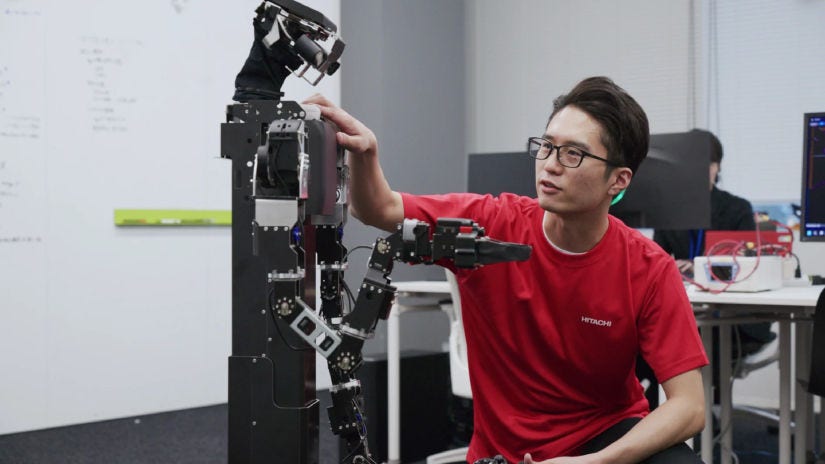
From Individual Assets to Infrastructure Systems
The need for orchestration becomes particularly important as Physical AI moves beyond individual machines. A power grid is not one generator or substation. A railway is not one train. A manufacturing facility is not one production line. These environments consist of interconnected assets, often governed by different physical processes and operational constraints. An action that improves one component may create problems elsewhere.
The Integrated World Infrastructure Model is designed to address this complexity by coordinating specialized models across infrastructure systems, allowing decisions to be evaluated in a broader operational context.
For example, in North America, growing electricity demand from data centers, electric vehicle infrastructure, and other sources is increasing the complexity of generator interconnection studies.
In 2025, Hitachi announced a strategic partnership with Southwest Power Pool (SPP), a regional transmission organization. Through this partnership, Hitachi is developing an integrated AI-based solution with the objective of reducing generator interconnection analysis times by 80% while supporting more informed planning decisions.
Looking ahead, Hitachi aims to use its orchestration framework to coordinate generator interconnection, power flow, equipment layout, and profitability assessment models. By bringing these capabilities together, the framework could help planners evaluate alternatives against physical laws, engineering constraints, and business requirements.
The objective is not simply better predictions, but more reliable decisions made more efficiently, even as infrastructure systems become increasingly complex.
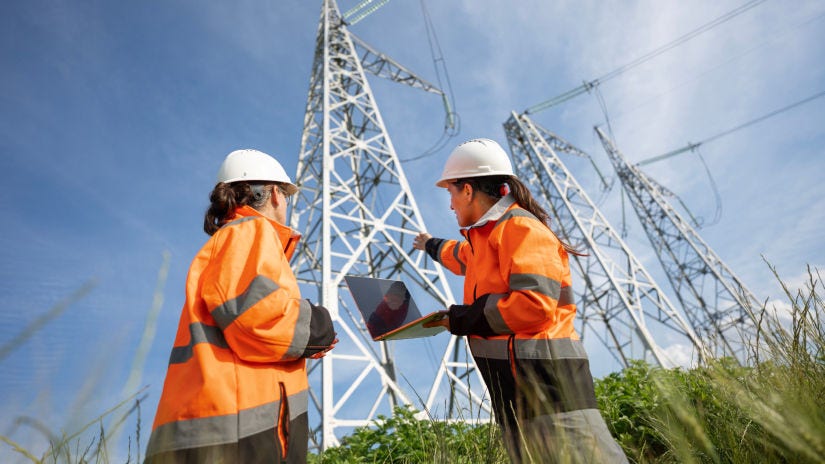
Autonomy Must Be Earned
As Physical AI advances, an important question emerges: How much authority should AI systems have to act independently? The answer depends on the nature of the decision and the evidence supporting it.
Routine actions that have been extensively simulated, verified, and shown to be reversible may be performed autonomously within clearly defined boundaries. Novel situations, uncertain outcomes, or actions with irreversible consequences should remain subject to human judgment.
Reliability also requires independent safeguards. Established industrial protection mechanisms, including relays, interlocks, and other safety systems, must continue to provide protection when AI-generated decisions are incorrect.
Human operators therefore remain essential. Their roles evolve toward supervising intelligent systems, defining operating boundaries, reviewing exceptions, and making decisions when circumstances exceed AI's authorized scope. The goal is not maximum autonomy, but appropriate autonomy supported by evidence and clear safety boundaries.
What’s next for Physical AI?
The next stage of Physical AI will be defined not simply by increasingly capable models, but by our ability to deploy them reliably in complex physical environments.
One of the greatest challenges will be verifying systems that continue to learn. Traditional engineering certification generally assumes that a system's behavior remains substantially consistent after testing. AI systems that adapt over time challenge that assumption, requiring new approaches to continuous verification, governance, and oversight.
This is where Hitachi's combination of AI research and infrastructure expertise becomes particularly valuable. Hitachi is developing technologies that help engineers create simulations, extract domain knowledge, and integrate specialized reasoning models. The Integrated World Infrastructure Model provides a framework for orchestrating these capabilities and evaluating AI-generated recommendations before they affect real-world operations.
The future of Physical AI will not be determined simply by who develops the most intelligent model. It will depend on whether those models can be integrated into systems that consistently operate within established safety and operational boundaries.
Models provide the intelligence. Orchestration, simulation, and verification provide the foundation for reliability.
For Hitachi, that is the path toward Physical AI that can be trusted to support the infrastructure society depends on.

Ahmed Farahat

Share this:


Hitachi America, Ltd.
2535 Augustine Drive, 3rd Floor
Santa Clara, CA 95054
USA