



Building Trust in an Interconnected World: Hitachi’s Perspective on Global Cybersecurity
By Kazuo Noguchi, Senior Manager, Security Innovation Lab, Hitachi America R&D
The United Nations General Assembly has endorsed the final report of the Open-Ended Working Group on the Security of ICTs (OEWG), which reached a historic consensus in July 2025 to establish a permanent “Global Mechanism” for cybersecurity.
This decision, achieved during the UN’s 80th anniversary year, reflects growing recognition that cyber threats are no longer isolated technical problems—they are systemic risks to global stability and human well-being. Critical Infrastructure such as Energy grids, water systems, transportation networks, healthcare facilities, and data centers are now at the frontlines of geopolitical conflict.
For Hitachi, this milestone carries special significance for safety and security in IT, OT, and IoT with hardware, software, and solutions. We have been engaged in this dialogue for six years, serving as a consistent private-sector voice in the OEWG. We are honored that we have been able to take part in discussing the substances such as capacity-building that are designed to protect the critical systems and information for billions of people rely on every day.
Cybersecurity in a Time of Dual-Use Technologies
The modern cybersecurity landscape is being reshaped by dual-use innovations— technologies that can be applied for both civilian society and defense purposes.
Two stand out in particular:
- Artificial Intelligence (AI): AI can accelerate innovations across industries but also enables new forms of cyberattacks at unprecedented scale and speed. Further, Artificial General Intelligence (AGI) may be existential threats of superintelligent
- Quantum technologies: While they promise breakthroughs in areas like materials science since decades ago, it also poses a fundamental challenge to today’s cryptographic systems so that we have to start preparing now in 2025
The convergence of Cyber-AI-Quantum technologies is creating hybrid threats that blur the line between digital and physical conflict. Cyberattacks are no longer abstract—they can disrupt hospitals and banks, shut down electric power grids and transportation networks, create data-poisoning and misinformation/disinformation, impact national economies and geopolitics.
As these threats grow, the central question becomes: how do we ensure that innovation strengthens trust and resilience rather than undermining it?
Hitachi’s Approach: Social Innovation at Global Scale
Hitachi has always been guided by a principle of Social Innovation: applying advanced technologies to improve quality of life and solve complex societal challenges.
Our work spans both the physical and digital domains:
- Hardware such as electric power systems, manufacturing machines, and transportation solutions
- Software and IoT that digitally connect and optimize critical infrastructure
- Services and operational expertise that integrate these systems into cohesive, safe, and secure networks
This breadth gives us a unique perspective. While many companies focus exclusively on either hardware or software, Hitachi’s integrated approach allows us to deliver end-to-end solutions that address cybersecurity holistically.
The philosophy of Hitachi’s founder, Namihei Odaira, remains relevant today since 1910: serve society first, and long-term business success will follow. This mindset is essential when dealing with global issues like cybersecurity, which demand a long-term, human-centered sustainability perspective.
The Role of Public-Private Partnerships
No single organization, or even nation, can secure global critical supply chains alone.
Modern digitized supply chains are complex, interconnected networks involving governments, corporations, NGOs, and academic institutions. A breach in one node can have cascading effects worldwide.
This reality underscores the need for public-private partnerships (PPP) internationally. Governments can set policies and frameworks, but private companies bring deep operational knowledge and innovation capabilities.
The UN’s Permanent Mechanism decision support PPP including Businesses, NGOs, and Academia in its cybersecurity structures reflecting the necessity. PPP necessity is recognized many nation-states including the Active Cyber Defense Act in Japan, where Hitachi is headquartered, encouraging collaborative defense strategies.
Hitachi’s role is to protect the global critical infrastructure with supply chains, operators, and people —those who build and manage the systems that keep societies functioning. Our focus has been on ensuring safety that policies are practical, grounded in operational resiliencies, and designed to foster both security and innovation.
Principles for a Secure Digital Future
To address emerging threats, Hitachi advocates for several foundational principles that can guide industries and governments alike:
- Security by Design: Cybersecurity must be integrated into every stage, from product development to deployment including AI. Even a small vulnerability can compromise an entire supply chain.
- Zero-Trust Architecture: End-to-end verification should be continuous and comprehensive, ensuring that only authorized users and systems can access sensitive data or infrastructure. Emerging Quantum-safe such as trusted digital signature will soon be required, while regulatory timelines will come towards 2030.
- Responsible AI and Quantum Governance: from policies to use-cases: Through initiatives like the United Nations Institute for Disarmament Research’s Roundtable for AI, Security and Ethics (RAISE) Framework, stakeholders can collaborate to ensure AI is developed and deployed ethically, with strong safeguards and human oversight.
These principles are not abstract—they are increasingly reflected in real-world solutions, including Energy, Banking, Transportation, and Data services.
Hitachi Vantara offers the Hitachi iQ platform with NVIDIA for analytics including security features for AI and LLM.
Hitachi Energy’s FOX615 delivers secure, ultra-reliable communications for electric utilities companies. It ensures that critical systems, such as grid protection and control, run without interruption, while keeping operational data safely separated from routine traffic. Built for long-term cyber defense, it uses Quantum-safe security and crypto-agility, enabling utilities to respond quickly to evolving threats, new challenges, and changing regulatory requirements. Already deployed in thousands of sites worldwide, FOX615 is trusted to perform in demanding environments and to keep power networks available, protected, and resilient.
As for industry collaborations, Hitachi works with the Quantum Strategic Industry Alliance for Revolution (Q-STAR), a Japanese industry consortium advancing quantum technologies, while fostering collaboration among businesses, academia, and startups.
In addition, we recognize potential alliances like Post-Quantum Cryptography Coalition (PQCC) led by MITRE, a U.S.-based nonprofit organization that runs federally funded research and development centers, to anticipate and mitigate future risks.
Looking to the Future: A Shared Responsibility
The creation of the UN’s cybersecurity Permanent Mechanism marks the beginning of a new chapter. But agreements on paper are only the first step.
What comes next will be defined by action:
- Businesses embedding security into every product and process
- Governments fostering cross-border cooperation
- Communities building trust through transparency and shared purposes
The future of cybersecurity depends on collaboration across regions and industries. Hitachi Group operates currently in over 140 countries across a broad spectrum of industries such as energy, transportation, manufacturing, digital services, and healthcare, started motor and electric transformer 115 years ago. We will continue to protect critical infrastructure with safety for people, while advancing innovation in AI, Quantum, and beyond—always with the goal of serving society.
In a world where digital and physical systems are inseparable, safety and security are not an option. They are the foundation on which trust, resilience, and human progress are built.
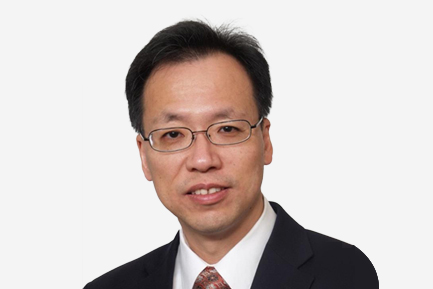
Kazuo Noguchi

Share this:


Hitachi America, Ltd.
2535 Augustine Drive, 3rd Floor
Santa Clara, CA 95054
USA