



Beyond Collaboration—How the Industrial Metaverse will Empower Businesses to Visualize Their Future
An interview with David Smith, Founder and CTO, Croquet
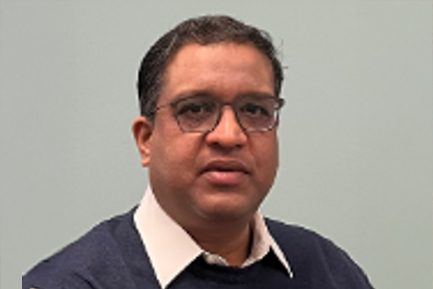
By Ravi Vennelakanti, VP and Head of Hitachi America R&D’s Big Data Analytics Solution Lab
I’m delighted to share my interview with David Smith, a Metaverse pioneer and my partner in innovation over the last two decades. David is Founder and CTO of Croquet, whose open, frictionless and secure Metaverse environments—fueled by the industrial IoT data and AI that Hitachi provides—have become indispensable to the solutions that we co-create with our customers in the Big Data Analytics Solutions Lab at Hitachi America R&D. Named 2023 WebXR Platform of the Year and Startup to Watch at Augmented World Expo 2022, Croquet has allowed us to simulate and share anything, to any device. Together with our customers, we are seeing the future of how industrial companies model and visualize their physical environments—not to mention interact with them and collaborate virtually—unfold before our eyes. I hope you enjoy the interview as much as I did speaking to David. Our conversation has been edited for clarity.

The Metaverse: A New Kind of Language
Ravi: In very simple terms, could you explain what the Metaverse is, especially in an industrial context?
David: The Metaverse is a new kind of language for communicating ideas and information—virtually anything that you can imagine. But you’ll be able to not just communicate, collaborate and share, but to model and visualize as well.
That’s the key element of a system like this. Humans think in terms of language, like a virtual machine running in their brain. Mathematics is a kind of language that is extraordinarily powerful. It’s the way we understand the physical world. And we utilize this very powerful way of thinking, this language of exploration and communication, to solve very hard problems.
The Metaverse enables what I call an augmented conversation, where you and I, in the very near future, and even today, we’ll be talking, and we’ll have an AI listening to what we’re saying, and that AI is going to take the ideas that we’re describing and make them real. We’re actually going to be able, then, to explore that idea space together. We can say, “What about this? What about that?” It’s a conversational system where we will be able to augment what we created with other content and models.
You’re seeing things in a way that Superman never could. You’re seeing systems, you’re seeing logistics. You’re seeing deep interactions between all these complex things and you’re able to reach in, explore and modify. You’re literally able to change the direction of a system, the same way as if you were standing beside a machine and hitting a switch.
Modeling “What Ifs”
Ravi: Could you elaborate on the exploration, modeling and visualization benefits of the Industrial Metaverse?
David: From an industrial point of view, the ability to simulate, forecast and understand is the most valuable part of the Metaverse. It plays a very similar role to what spreadsheets played when they were first introduced in the 1970s. Before spreadsheets, businesses could track their expenses, but they couldn’t do the “what ifs.” As soon as spreadsheets showed up, the nature of even small businesses changed, because they could start modeling how their businesses would react to changes.
The Metaverse is a kind of meta-spreadsheet. It’s going to allow you to visualize the what ifs. You’re going to be able to monitor and try out things, and you’re going to see what their impact on your business might be.
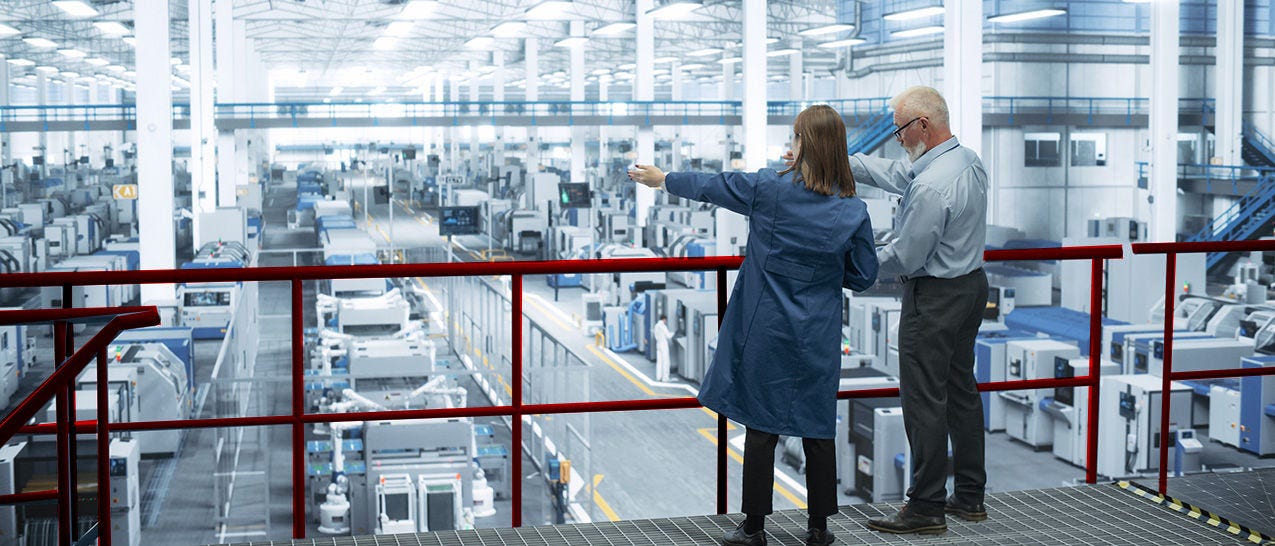
In an industrial context, when laying out a factory floor, for example, we can say, “What if we did this or did that? We can then actually monitor and visualize the impact of these changes, positive or negative, so we can refine them.
In the case of data centers, which we’re of course working on together as we speak, operators need to allocate resources, namely power and space, more efficiently as the environment heats up and computing workloads get heavier with the proliferation of resource-intensive applications like AI and blockchain, among others. With the Metaverse, data center operators can model optimal ways to allocate resources and maximize ROI.

“Digital Twins” Everywhere
Ravi: Could you tell us about “Digital Twins”? They seem to be equated with the Metaverse itself, which is oversimplistic.
David: Excellent point. Digital twins are a projection of live working systems into that space. On the one hand, you’re seeing the live, virtual version of the system, but it’s also subject to the ability to create a simulation of the system and explore its boundaries. Digital twins are a projection of live systems into that Metaverse. In a way, a digital twin is the equivalent of an avatar to a human.
One of the problems I was working on was for a defense contractor. Military ships are huge, and you have a relatively small crew, but you have big problems. So, what needs to happen is the ship has to tell you how to interact with it and how to modify it. The digital twin of that ship is an intelligent system and can engage with people to guide them through the process of repair. Digitial twins will be indispensable in maintenance and repair for industrial companies.
Repairing a Deep-sea Oil Drilling Platform in the Metaverse
Ravi: We’ve worked together previously on an interesting project, a deep-sea oil drilling platform of all things. Could you share with our readers how we used an early version of the Metaverse to collaborate virtually?
David: That was a very scary time for oil companies because they just had that big fire with oil leaking into the Gulf. It took them forever to figure out how to fix that. They realized they needed a much better way of not just dealing with crises but monitoring the system as well.
One of the problems with these deep-sea drilling platforms is that you have to train for two weeks before you’re even allowed to step onboard.
And at the time, it was even more complex, because for a while, the oil business had a slump, and so they weren't hiring. And so, they had these experts that were aging out because they hadn't been replaced. The problem with these guys is that they're extremely rare.
But that’s where the expertise was, so you had to virtualize them. You had to take the subject matter experts, no matter where they were in the world, and project them into this shared space to solve this problem.
We can now imagine those types of problems manifesting in the industrial and enterprise worlds. We can virtualize large facilities, equipment, vehicles and fleets and share the conditions of their operations in real-time with experts who could be anywhere.
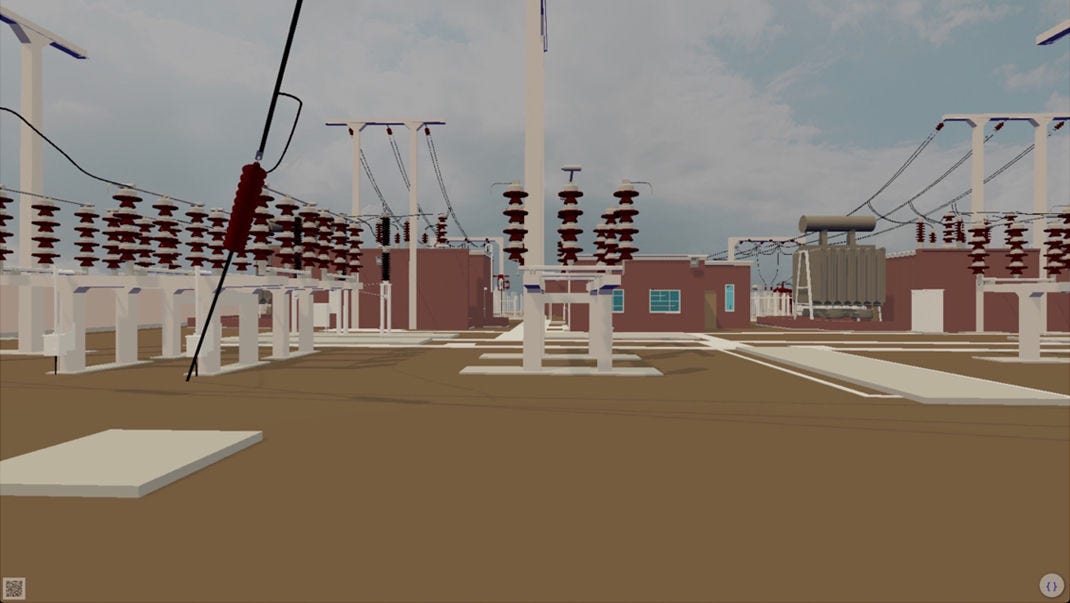
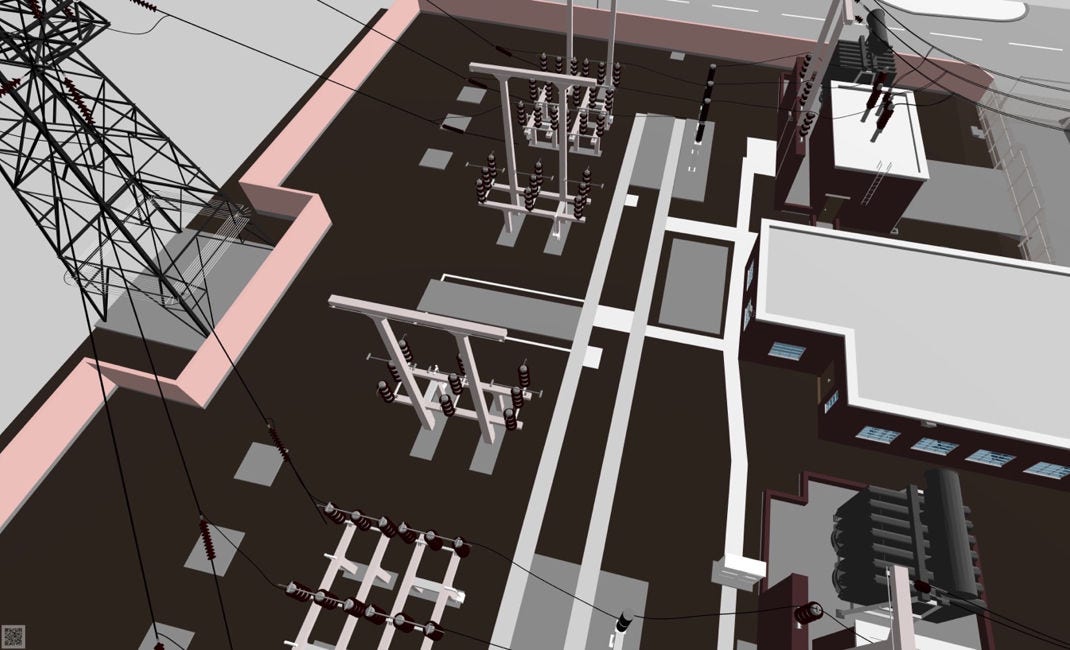
The power substation project we’ve been discussing takes virtualization to a whole new level. We’re enabling “Metaverse-assisted field operations” that can be managed, operated, optimized and, perhaps most interestingly, commercialized. We're integrating physical assets, along with the services that support them, into the Metaverse to transform them into revenue-generating ecosystems, or digital economies. Again, all of this can be simulated in advance, so businesses have a clear idea of their potential.
An Exponential Double Curve
Ravi: How do you think business acceptance of the Metaverse will evolve? Where are we currently on the adoption curve?
David: First, the Metaverse. We’re on an interesting double exponential curve. What we’re going to see is a crucial transition this year or next year, where we have devices that are good enough that you really have to pay attention now.
The Metaverse is going to own everything. It’s going to replace your phone. It’s going to replace your PC.
The other exponential curve is a little bit more visible to us right now, which is AI. As soon as you start combining the Metaverse and AI, you’ve got an extraordinarily powerful and very capable system.
The Metaverse is the next big platform, which means that you have to understand it today because it’s an exponential curve. You don’t ever see that you’re on an exponential curve, but next year, you’re going to see it. Next year after that, you’re going to see it a lot. And after that, you’re now behind because you didn’t act this year or next year. It’s really essential that people begin exploring.
That means applying these technologies — for example, the digital twin side of the equation requires a data feed from these devices. It’s essential that you have that, and it has to be bidirectional, because you also want to be in control.
When you start designing systems today, you have to think in five years, most of the interaction with this system is going to be virtual. This is not in ten years or twenty years. It’s in five years.
We’re talking about things being designed today that have to incorporate this. You’re either going to have to redesign it, or you’re going to lose to your competition, because they did.
Where to Begin?
Ravi: Where do businesses start? How should they go about creating their Industrial Metaverse?
David: They can start by building out some amount of infrastructure. I’m not talking about putting a building in one of the crypto spaces. That’s not a real data feed. That’s marketing.
Instead, start looking at the very act of simulating the infrastructure that you’ve got. What are the components? Metaphorically, what are the cells of that spreadsheet in your case? Do I have information there that I can project into the space to start controlling it, understanding it, and engaging with it?
I think: How am I going to train the next generation in the systems that we create and utilize every day? It’s a good thing that we’re almost to the point where we can video our subject matter expert going through and interacting with the system. And then we can turn that into a training system in the Metaverse. You’re literally capturing the 3D. You’re watching what that person is doing as he’s talking. So, when the next person is engaging with this, you have a full Metaverse model of this subject matter expert showing you exactly what the steps are.
As you know, Ravi, one of the customers we’re working with gets about one terabyte of data every single day. Capturing and analyzing that information is the most valuable thing they can do. This data feed is a goldmine. It will fuel the customer’s Metaverse, which will enable them to model their operations to realize faster throughput, lower costs and even improved safety. This is exactly where the opportunity is. We talk about exponential curves. You’re going to see that with the Industrial Metaverse.
.jpg)


Hitachi America, Ltd.
2535 Augustine Drive, 3rd Floor
Santa Clara, CA 95054
USA