



Bringing the Digital and Physical Together to Transform the World’s Challenges
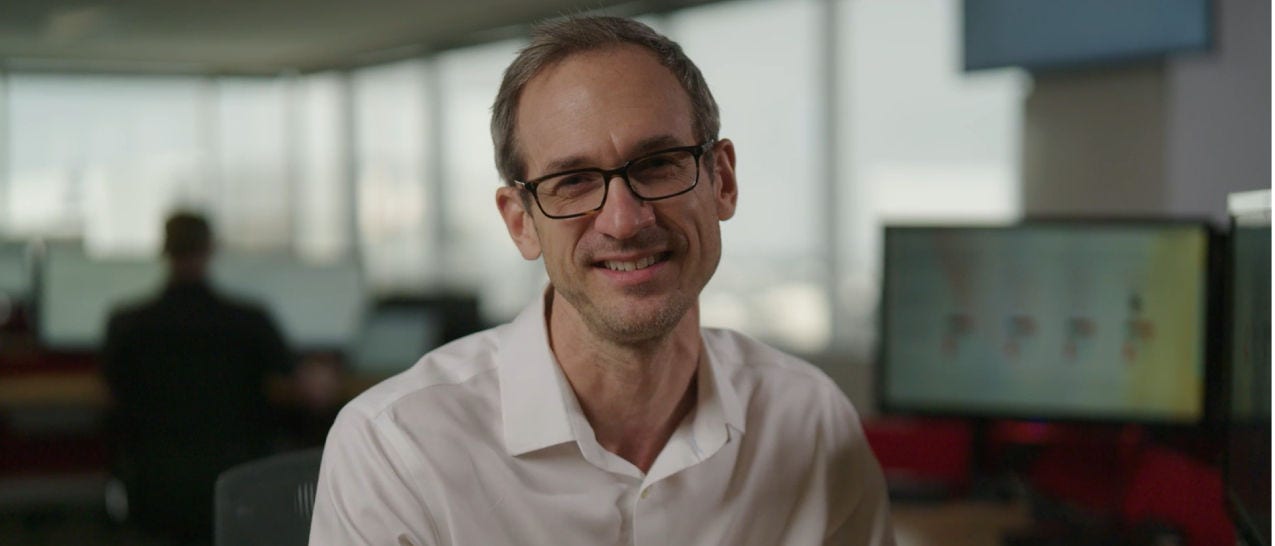
By Jason Hardy, Chief Technology Officer for Artificial Intelligence at Hitachi Vantara
We are entering a moment where digital solutions are directly supporting the physical systems that power society, including energy, transportation, and industry.
AI is changing from something that can understand data and anticipate needs, to something with the ability to act in the real world with precision and impact. It means that social infrastructure, industry, and the physical reality of our daily lives could all be vastly improved. The potential for good is all there. Our experience at Hitachi has already shown us: to fulfil that potential we need to start small to scale big.
The boundless potential of physical AI
The move of AI from the virtual to the physical is less “Rise of the Machines” and more aligned with the early promise we’ve already seen in autonomous systems and self-driving vehicles. Agentic AI gives machines and systems the ability to adapt to errors and changing conditions in real time. With the evolution of physical AI, we’ll soon see robotics and autonomous systems that can assist humans without ever tiring out. The impact of this will be profound. It will change how we manufacture, how we operate as a society, and how we connect with one another.
From the conveyor belt to the cloud
Hitachi’s strength comes from deep domain knowledge and decades of experience supporting essential social infrastructure through both IT and operational technology (OT). When it comes to the convergence of digital and physical, we don't just understand the cloud; we understand the conveyor belt. We design critical energy infrastructure and digital systems that manage and optimize them.
Take digital twins, for example. We’ve all seen the videos of robots struggling with physical tasks. The power of physical AI is that it can be trained inside a digital twin environment. If I want to teach a robotic dog to walk, I no longer have to do it in the real world, where it might take years of trial and error. Instead, we can use a digital twin—a perfect virtual replica governed by real physics—and let it learn by failing thousands of times per second. That learned behavior can then be transferred to the physical robot, allowing it to perform effectively from the outset. This is how we can accelerate innovation while reducing the risk.
When we think about operational technology, it’s always in conversation with information technology, and vice versa. In our business, we bring both perspectives together allowing each to inform and strengthen the other as we drive innovation forward.
Scaling from the small to universal
How do we bring these elements together effectively? For all the epic scale of what is possible, it starts at the smallest level with data. If we are truly going to benefit from this technology, it needs to be put in the hands of everybody and designed without bias to make sure AI can accommodate every aspect of who we are as people. The only way to achieve that is through high-quality, sufficiently broad datasets that represent the richness of society.
It sounds like a big task, but my mantra is simple: “don’t try to boil the ocean.” Start small, fail fast, and adapt as you go. Too many leaders rush to buy graphics processing units (GPUs) thinking AI is a product. It isn't; it’s an enabler of outcomes. If you rush without a plan, you end up with a bag of bolts—a Frankenstein’s monster of infrastructure that burns energy but delivers zero ROI. The right approach is to start with the problem, not the hardware. Those early, focused steps allow businesses to test for bias, gain visibility and transparency in their data, establish strong governance, and make adjustments as they scale forward.
AI is not a product you can buy. That requires a mindset shift. What sets Hitachi apart is its structured approach to AI. It’s outcome-oriented, purpose-built, responsible, and reliable.
Better yet, it works at every scale—from small enterprises to the largest sovereign AI systems. At Hitachi Vantara, we pioneered the development of Hitachi iQ with NVIDIA, which is enabling us to solve some of the hardest power grid challenges and some of the most complex transportation problems—and even enabling simple use cases like chatbots that help people fill out forms. We start with the problem and can scale up from there to meet demand. Hitachi iQ works for both grand challenges and mundane tasks because our focus is on creating outcomes and, more importantly, outcomes that improve society.
A mindset turned toward possibility
Physical AI will bring a fundamental shift. I’m excited about the potential and promise it holds for how we live and who we become. By starting small, with the right data, we create a flywheel effect: a small improvement in data efficiency that leads to a better power grid, which leads to a better city, which leads to a better society. What keeps me grounded is the knowledge that I’m part of something much bigger—a future that’s filled with unlimited potential.
That’s the vision: to have the freedom to build and execute things that are fundamentally different yet full of potential for the bigger picture of humanity. I know that the things I do today could meaningfully improve the future my children and my grandchildren experience, For Hitachi, that is the real meaning of "What’s next."
Share this:
You may also like





European Headquarters
Hitachi Europe Limited
Ditton Park
Riding Court Road
Datchet
Slough, SL3 9LL, United Kingdom