



Standing Shoulder to Shoulder: Embracing the Future of Manufacturing
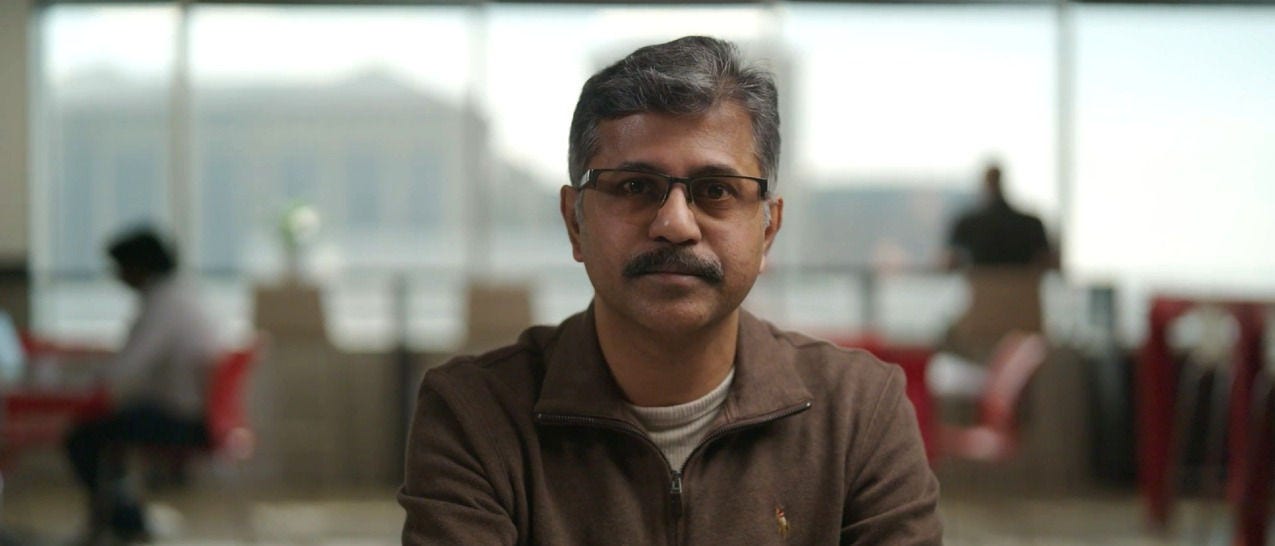
By Premkumar Balasubramanian, Chief Technology Officer and Head of AI, Hitachi Digital Services
When I wake up and think about what industrial AI can do for manufacturing, it genuinely excites me. The possibilities feel endless, and I’m passionate about helping businesses understand what’s coming and how to get ready for it.
There is no doubt that industry wants to adopt this technology—and needs to. Manufacturing faces a triple challenge: 1. the loss of generational knowledge as older workers leave the factory floor, 2. the rapid pace of change in emerging technologies, and 3. the growing complexity of managing global, rather than local, supply chains.
Lowering the barriers to Industrial AI entry in manufacturing
Thankfully, the barrier to integrating industrial AI into manufacturing is the lowest it’s ever been and the wait for ROI is significantly shorter.
As Hitachi’s Chief Technology Officer, you might think, “of course he would say that!” But I’m part of a business that’s also engaged in manufacturing. Hitachi knows the challenges manufacturing businesses face because we face them ourselves.
We also know that AI doesn’t just promise to help with these challenges. It already can. Nevertheless, when it comes to AI, we still have to get it right. We’ve heard the cautionary tales: the airline AI chatbot that gave away so many discounts it led to financial loss, or the business that over-inventoried car purchases during COVID because the AI model was trained on historical patterns and didn’t have proper governance.
Even more seriously, if AI fails in a factory environment and has an impact on safety—even one time in 100,000—it could cost a life. And that is a cost too high to pay.
Understandably, many companies take a risk-based view of industrial AI because failure is not an option in manufacturing use cases.
The early adopter advantage
At Hitachi, we’re both a business that makes things as well as an early adopter of technology. We’ve experienced firsthand the challenge of integrating AI into manufacturing. We know in the past it’s taken a significant investment to build a model, collect the data, clean it, make it ready, and then train the AI to a point where it is delivering consistently.
So, we’re creating AI-powered solutions that reduce the time and investment manufacturing businesses need to realize the benefits of AI, drawing on our real-world manufacturing experience and decades of technological expertise.
And we’ve found that in a lot of use cases you can actually build on top of existing models, to create “plug and play” versions that can then be fine-tuned for each unique application. So instead of doing the work training a model on a data set, you can use the common footprint and then add in the specific knowledge of your business.
AI as an asset for accelerating change
We call this “assetizing” AI, creating pre-built accelerators for common manufacturing challenges such as predictive maintenance, autonomous quality inspection, and digital twins. Hitachi has already eliminated about 30% of the development effort1, dramatically reducing the friction many businesses face when adopting AI. As a result, it is now simpler than ever to bring AI into manufacturing and to realize greater value than ever before.
The shift toward physical AI is a major turning point. It will empower both people and businesses and fundamentally change what we know about how factories operate. No factory I know of today is designed for hundreds of drones to fly around making inspections, and there will have to be changes to physical security models. In the next 10-15 years, the factories of the near-future will look radically different as manufacturers rethink their layouts, infrastructure and processes.
With this shift comes benefits for workers too. Remote working will become more viable, improving both safety and job satisfaction. Automated, AI-integrated machinery—drones, robots, and production line arms—will have the perceptive intelligence to handle complex tasks, while human operators will be able to monitor operations and troubleshoot remotely. Reducing the need for constant physical presence will also extend careers by lowering the physical toll of manufacturing, helping retain the vital knowledge of longstanding, skilled workers.
The possibilities are enormous, and Hitachi has a unique advantage. For the businesses we work with, we can say with confidence that when we build an AI use case, we have already considered the core challenges it must overcome to function in a real manufacturing environment, because we’ve been there.
This is a path we’re making ourselves. We want to walk the road toward the factories of the future alongside our partners, helping transform operations for the better, to stand shoulder to shoulder with manufacturers and ask, “What’s next?” together.
1 https://hitachidigital.com/insights/blog/driving-lower-barriers-higher-returns-in-industrial-ai/
Share this:
You may also like


European Headquarters
Hitachi Europe Limited
Ditton Park
Riding Court Road
Datchet
Slough, SL3 9LL, United Kingdom