




Co-creating Tomorrow: Partners in Innovation
How an IoT-linked partnership between Thailand and Hitachi is helping the Kingdom realise its smart nation vision.
Transforming an economy has never been an easy job for any government. Today in Asia, many countries are faced with a very daunting task: overcoming the middle-income trap. Income inequality is growing at an ever-faster pace across the region, and Southeast Asian nations are no exception. Even one of the most developed and ‘mature’ members of ASEAN (Association of Southeast Asian Nations), such as Thailand, has to cope with the gravity of the issue.
For decades, Thailand has been running an ongoing marathon towards achieving greater agricultural and industrial development. Despite its remarkable achievements, it has struggled to fully ‘graduate’ into the ranks of advanced economies, due to various reasons including the lack of resources and skills. However, distances are shrinking and the finish line does not seem too far.
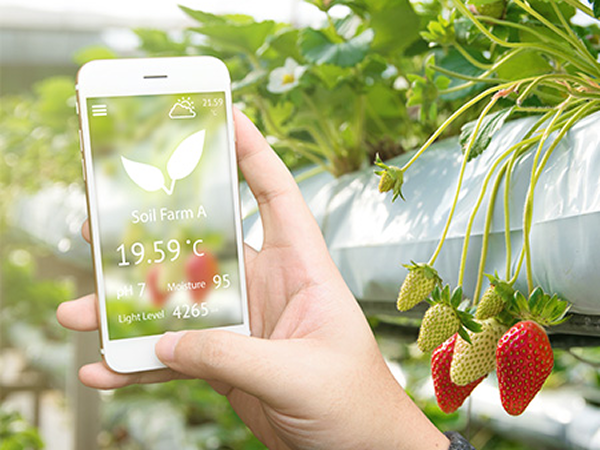
With new technologies and social innovation, solutions are now within reach. Even income inequality seems defeatable. It’s up to countries to live up to the challenge by making the best use of the digital revolution, including the rise of the Internet of Things (IoT), to solve the most critical issues affecting their economies and societies, and give rise to what is dubbed ‘the fourth industrial revolution’.
The Road To Thailand 4.0
The Thai government is hard at work to realise their vision of Thailand 4.0. But what is it exactly? And what were the economic models before it?
- Thailand 1.0
- Thailand 2.0
- Thailand 3.0
- Thailand 4.0




Thailand 4.0: A New Engine Of Growth
To create a value-based economy that is driven by innovation, technology and creativity, the Thai government put forward an ambitious plan, Thailand 4.0, in 2016. This leads the country to rethink its development model by keeping the goals of stability, prosperity and sustainability in mind. It will also lead to the restructuring of the Thai economy as a whole, binding society together and moving forward without leaving anyone behind — precisely to overcome the problem of the middle-income trap.
Designing A Smart Future
How the Thai government is steering the country towards Thailand 4.0.


Expanding The Corridor Of Opportunity
Thailand 4.0 comes as part of a broader and concerted spending effort to attract more foreign direct investment (FDI) and to boost infrastructure investment. While major investments in infrastructure are already underway on high-speed rail networks, roads and airport upgrades, the real focus is on the Eastern Economic Corridor (EEC), which represents the Thai government’s major effort to make Thailand the ‘new economic hub of Asia’. The EEC covers the provinces of Chachoengsao, Chonburi and Rayong on Thailand’s eastern seaboard, and will be an important centre for trade, investment, regional transportation, mainly functioning as a strategic gateway for Asia.
In September 2017, Industry Minister Uttama Savanayana received representatives of 600 Japanese companies to discuss investment into the 10 targeted industries under the Thailand 4.0 policy, and the establishment of the EEC. Hitachi was among those invited, and the tech powerhouse consequently signed a cooperation agreement with the EEC Office on applying its social innovation solutions, including IoT, in the new economic zone. This preferential partnership should not come as a surprise as Hitachi has been highly involved in the development of the ASEAN market, especially in Thailand, which is its largest partner in the region.
Hitachi has been helping to establish innovative environments to support development in Thailand, rolling out its business capabilities in various fields, including the railways, industrial products, and the information and telecommunications system. Through the implementation of Hitachi's Social Innovation Business, which combines the operational technologies (OT) that have been its strength since its founding with the IT expertise amassed over more than half a century, the company is thoroughly committed to continue contributing to the development of Thailand and the whole ASEAN region by promoting the use of IoT technologies along the EEC.
Co-Creating Ideas That Work: Hitachi’s Social Innovation Solution
Helping to breathe life into new possibilities and opportunities. One of the conditions needed to create sustainable societies and cities, where people can live in comfort and prosper, is to achieve further advances in reducing the environmental impacts of socio-economic development through proper urban planning.
Hitachi takes this challenge very seriously, making tangible efforts on environment preservation through products and services that put the consideration for the environment at its core. Among other projects, Hitachi is working with Sunway Group, one of Malaysia’s largest conglomerates with core interests in property, construction, education and healthcare, to implement an energy-saving system for a university, a college, hotels, a hospital, a shopping mall, and other facilities owned by the Group. With this partnership, Hitachi is committed to contributing to urban development in Malaysia, as well as the rest of the region, making it a leading and trusted social innovation solutions provider in ASEAN.
Connecting The Dots
Technological innovations, such as artificial intelligence and cloud computing, continually revolutionise how we live and how businesses operate. In recent times, we’ve also seen a growing awareness across industries on the use of IoT to collect big data. Through the analyses of such data, companies can gain insights into different processes, such as inventory management and quality control, which they can then use to help reduce costs, increase efficiency, overcome challenges and seize new business opportunities.
To help data-driven leaders find and use the value in their data, Hitachi unified its three businesses — Hitachi Data Systems, Hitachi Insight Group and Pentaho — to form Hitachi Vantara. With the combined expertise, the new company aims to help customers gain even faster insights, predictions and recommendations from their data, which in turn can be easily adapted to support mid-to-large-scale environments.
The result of the unification is the highly intelligent and flexible IoT platform, Lumada, designed to deliver the most advanced capabilities to transform data into intelligent action. A cutting-edge IoT facility housing the Lumada platform is currently in construction in Thailand, and is likely to be completed and operational in 2018.

These are indeed exciting times for businesses, the government and the people of Thailand.
Find out more about Achieving Social Innovation Through Technology in Thailand and Hitachi in Thailand
Date of Release: March 2018
Share this:
Related Contents






Southeast Asia Headquarters - Singapore
Hitachi Asia Ltd.
20 Pasir Panjang #05-21
Mapletree Business City, Singapore 117439