



Delivery and Case studies
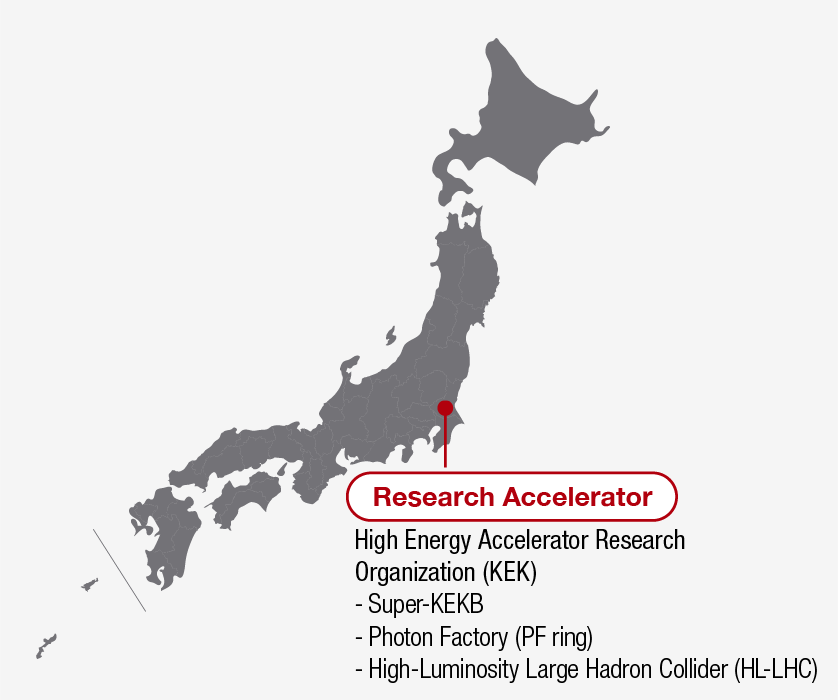
Map of Delivery and Case studies
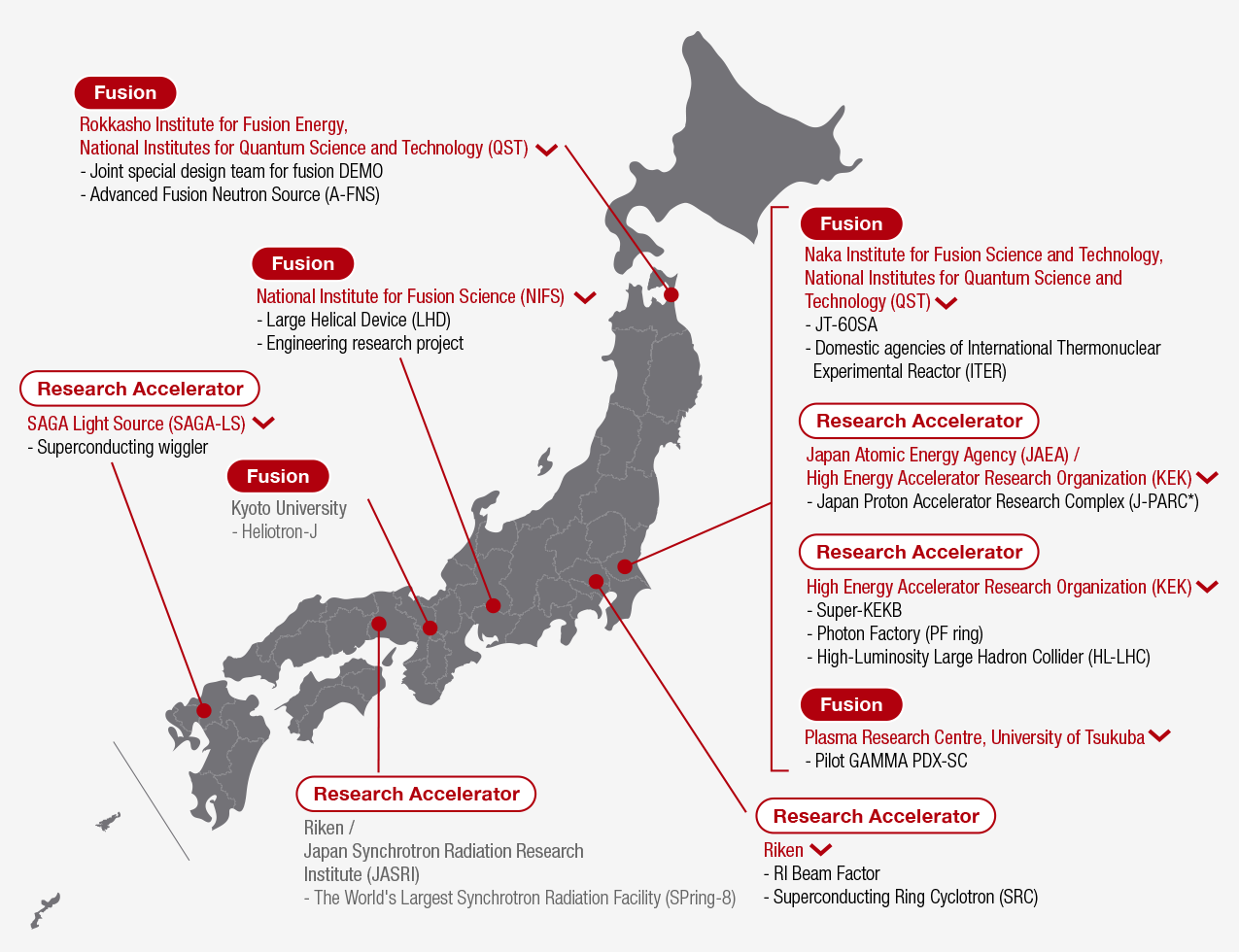
- J-PARC is a registered trademark of Japan Atomic Energy Agency and High Energy Accelerator Research Organization.
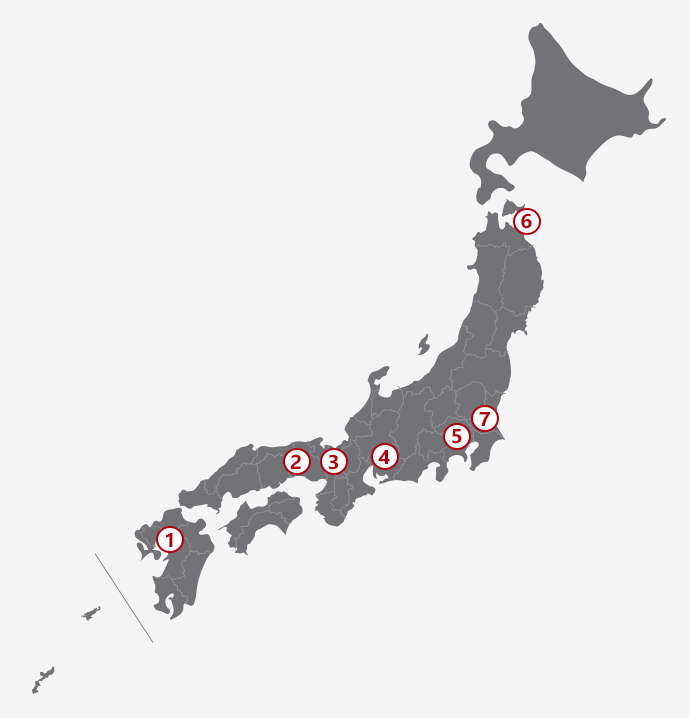
List of delivery destinations
Main Delivered Products
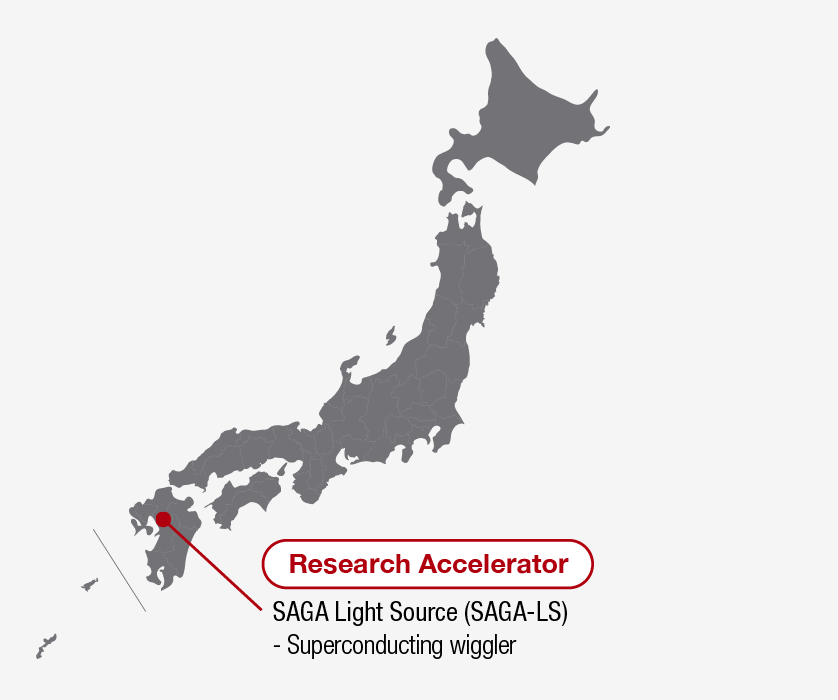
Superconductive Wiggler for SAGA Light Source
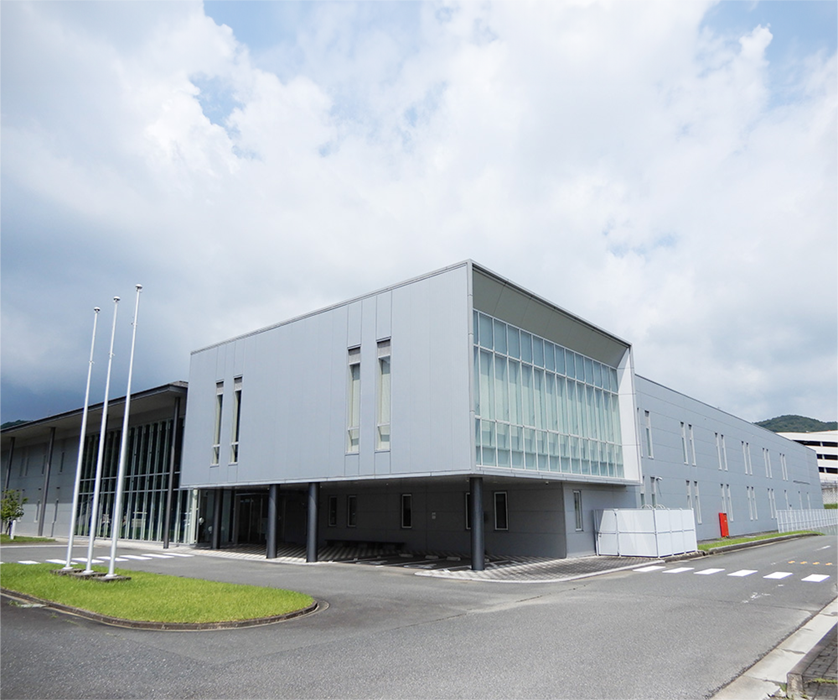
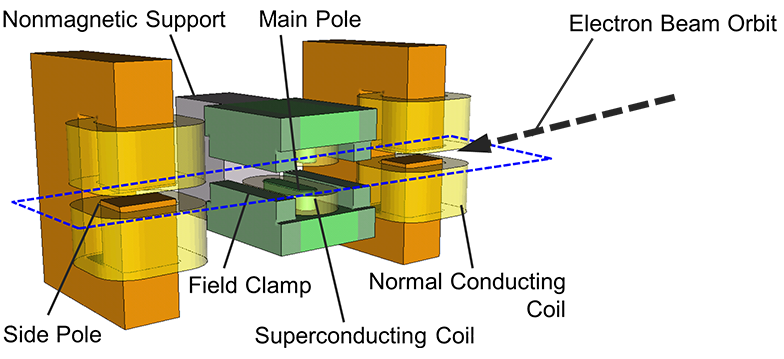
At SAGA Light Source (SAGA-LS), a synchrotron light facility, Hitachi installed two superconducting wigglers (SCW) with a magnetic field of 4T (Tesla) to meet the need for higher energy synchrotron light. We collaborated with SAGA-LS in designing, manufacturing, and installing the SCWs on site, and carry out regular maintenance contributing to their stable operation.
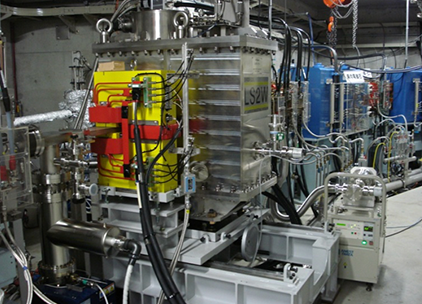 Superconducting Wiggler at SAGA-LS Photo courtesy of SAGA-LS
Main Delivered Products
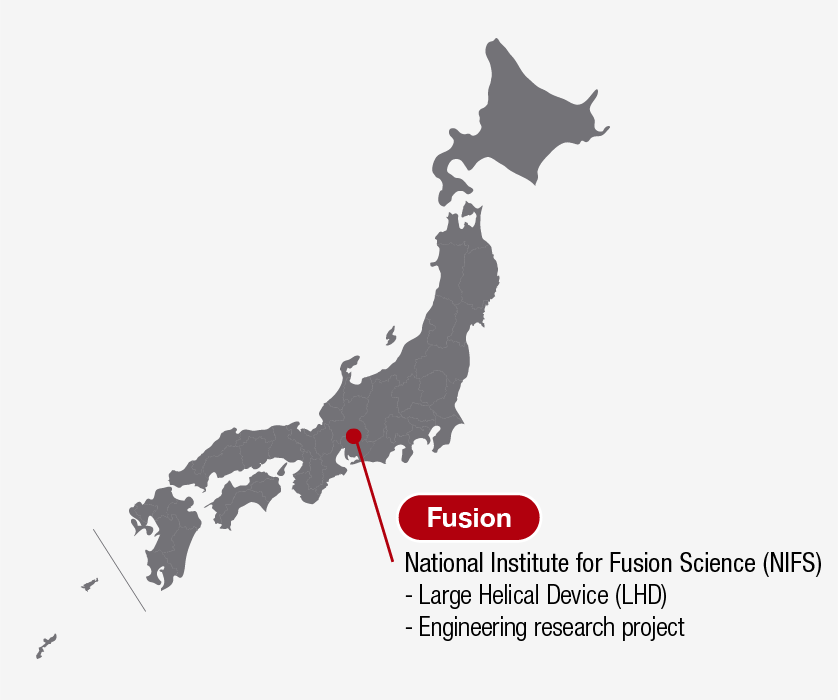
Large Helical Device (LHD)
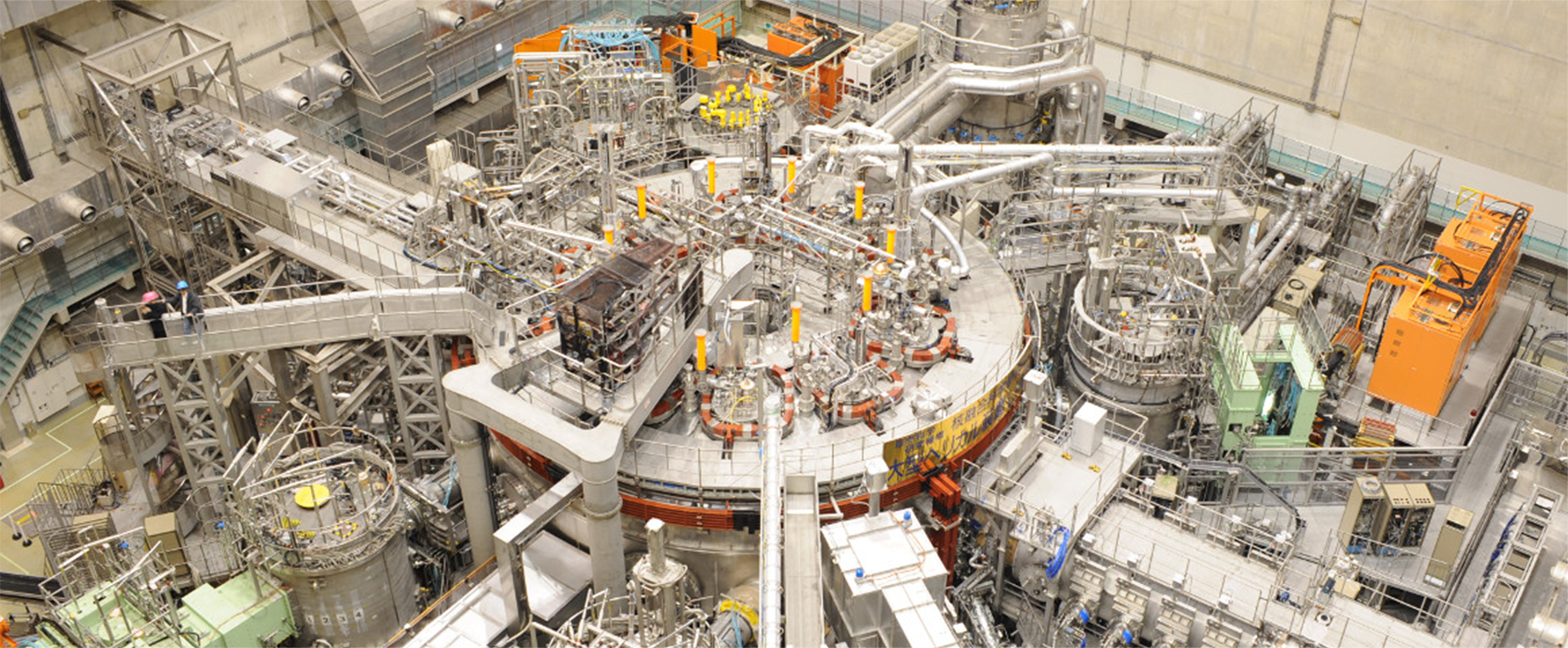
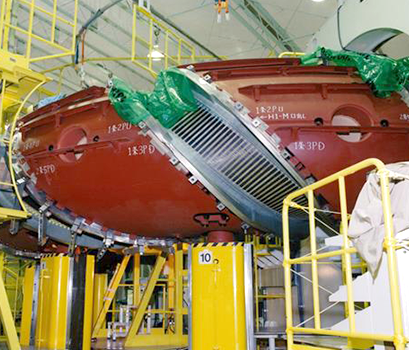
The LHD is a device designed to confine fusion plasma in a distinctive spiral-shaped superconducting coil, and is based on a unique Japanese idea. Hitachi participated in the construction of the LHD as an overall assembly manufacturer, and since the facility began operation in 1998, has also implemented additional construction including coil cooling systems and internal vacuum vessel equipment, such as a closed divertor and tungsten divertor test units. Going forward, Hitachi will continue to support test operation by providing stable operational maintenance and equipment improvements to enhance performance.
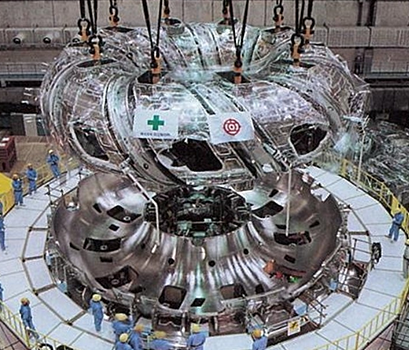 Assembly of Cold Mass
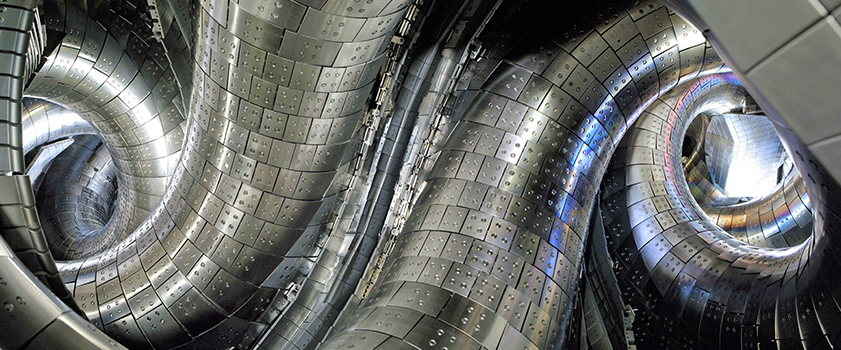 Inside of the plasma vacuum vessel (Photo courtesy of NIFS)
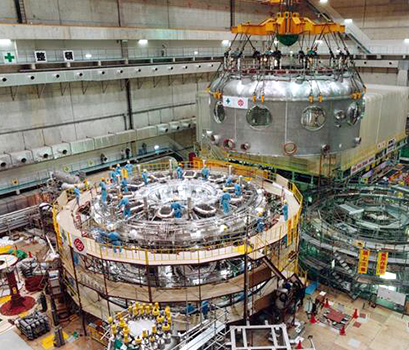 Hanging Cryostat
 Superconducting helical coil
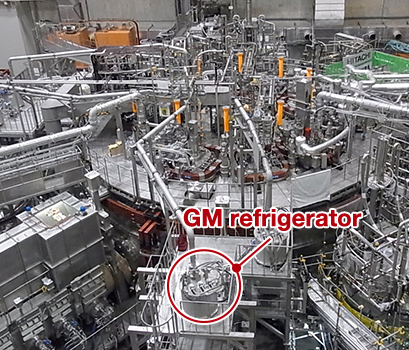 Large Helical Device (LHD) (Photo courtesy of NIFS)
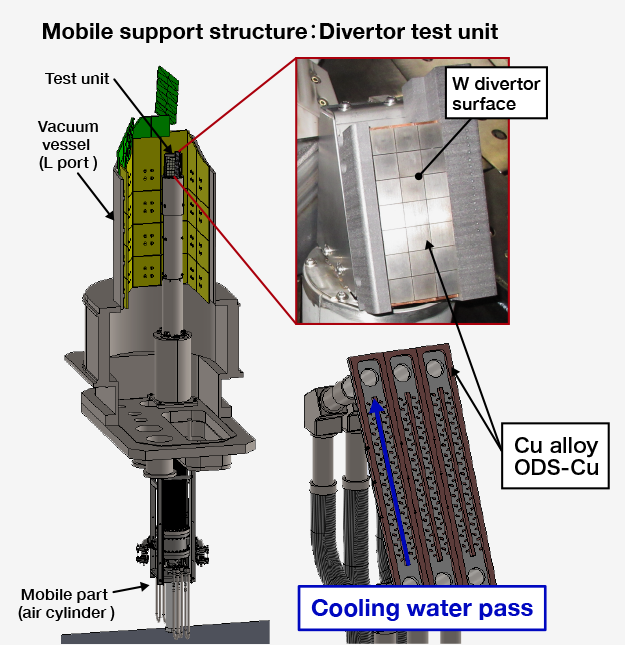 W divertor test unit
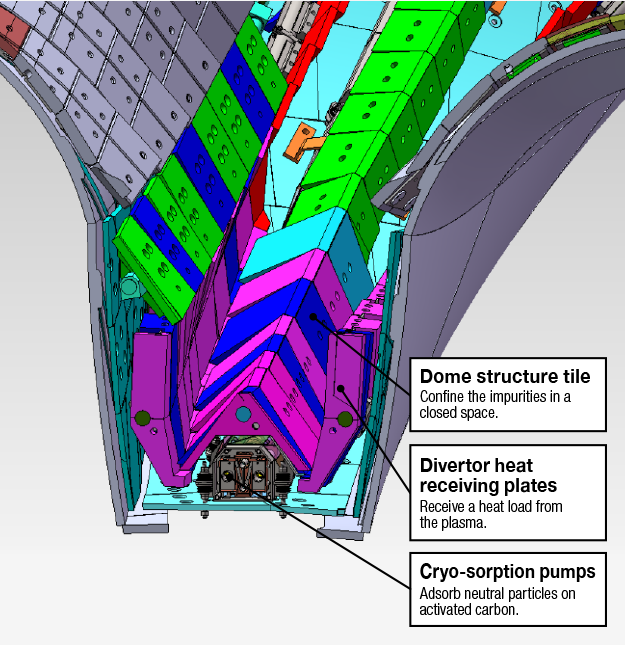 Closed helical divertor
Main Delivered Products
Superconducting Ring Cyclotron (SRC) Sector Electromagnet
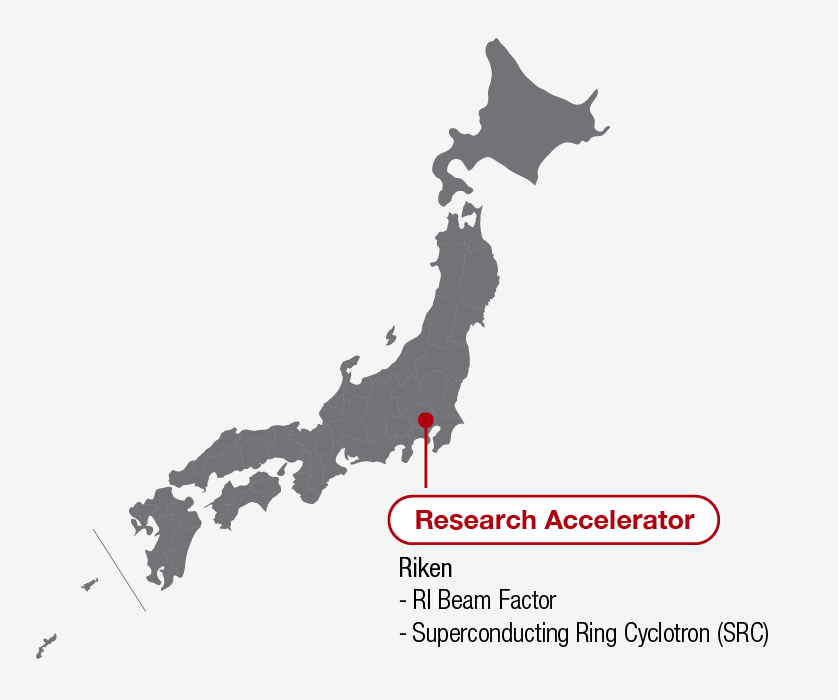
RIKEN's RI Beam Factory (RIBF), a heavy ion accelerator facility, developed the world's first superconducting ring cyclotron (SRC), which accelerates heavy ions up to uranium ions as the facility's final stage accelerator. Hitachi was in charge of manufacturing all six sector electromagnets—the most critical component in the SRC—based on manufacturing technology for large superconducting magnets that we have cultivated over many years.
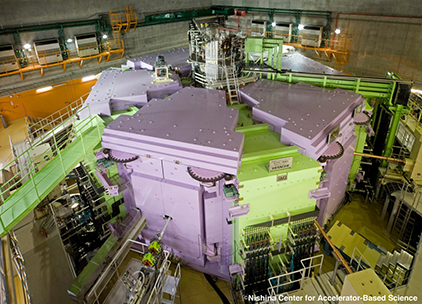 SRC(Superconducting Ring Cyclotron) Photo courtesy of RIKEN
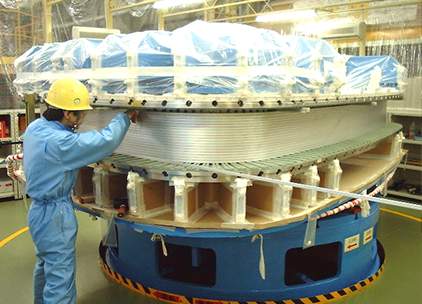 Superconducting main coil
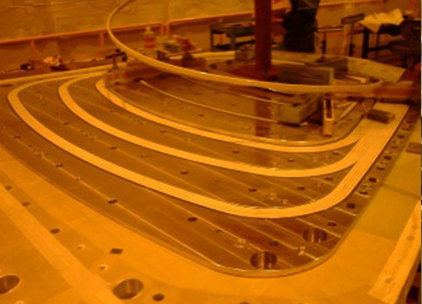 Superconducting trim coil
Related Links
Hitachi Review
Vol.90 No.02 170-171
Shuichi Kido, Dr. Eng.
Tomoyuki Semba, Dr. Eng.
Takashi Masumoto
Yoshiaki Hagiwara
Tsunehiko Yamauchi

Main Delivered Products
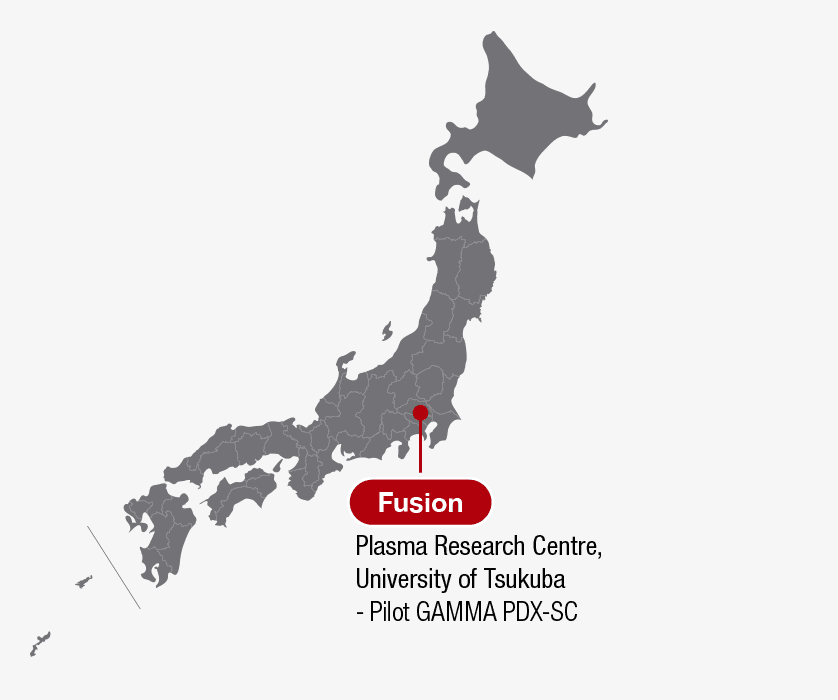
Superconducting Magnet for Pilot GAMMA PDX SC
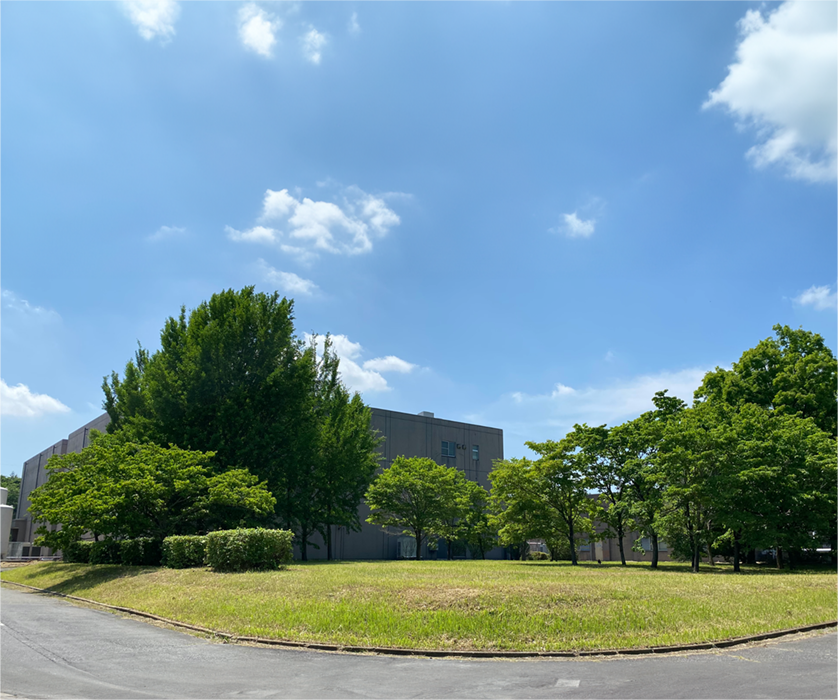
The Plasma Research Center of the University of Tsukuba is constructing an advanced divertor plasma research device, the Pilot GAMMA PDX-SC, as part of the Action Plan for the Development of a Prototype Nuclear Fusion Reactor ("3. Divertor - Development and Experimentation of Divertor-Class Steady-State High-Density Plasma Experimental Equipment"). Hitachi designed and manufactured two pairs of large superconducting coils that form the backbone of this device. The opening diameter of these coils is approximately 900 mm, making it one of our largest superconductive cooling systems for conductive cooling using a refrigerator.
| Superconducting Wire Type | Monolithic, NbTi / Cu |
|---|---|
| Number of Turns | 5,854 turns |
| Rated Current | 236.3 A |
| Central Magnetic Field | 1.5 T |
| Stored Energy | 1.4 MJ |
| Diameter of Warm Bore | 0.9 m |
| Total Weight | 1.9 t |
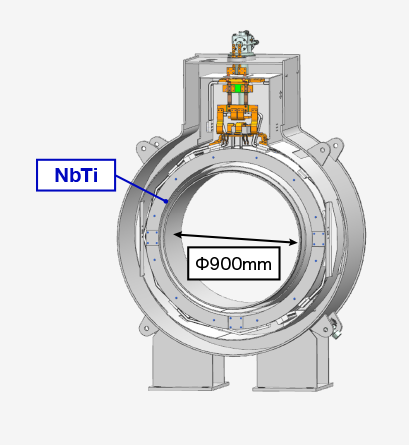 1.5 Tesla - Φ900 bore magnet
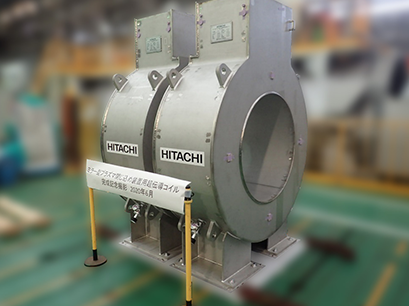
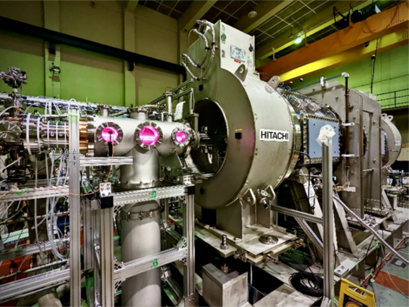 Overview of Polot GAMMA PDX SC Photo courtesy of Plasma Research Center, Univ. Tsukuba.
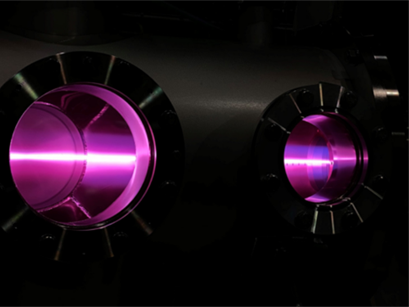 First plasma fired-up Photo courtesy of Plasma Research Center, Univ. Tsukuba.
Related Links
The Japan Society of Plasma Science and Nuclear Fusion Research
Production of superconducting magnet for Pilot GAMMA PDX SC
Toshiro Imamura, Shigeki Okitsu, Yasunori Koga, Shuichi Kido, Ryutaro Minami*1, Tsuyoshi Kariya*1, Mizuki Sakamoto*1
- Plasma Research Center,Univ.Tsukuba / University of Tukuba
Main Delivered Products
Superconducting Magnet for High-Energy Accelerator HL-LHC-D1
At the European Organization for Nuclear Research's (CERN) Large Hadron Collider (LHC), the construction of a High-Luminosity Large Hadron Collider (HL-LHC) is currently underway, with the aim of improving the performance of the LHC to further explore new physics. As part of the international cooperation with CERN, Hitachi has received an order for the superconducting magnet (D1), and we are working on its manufacture.
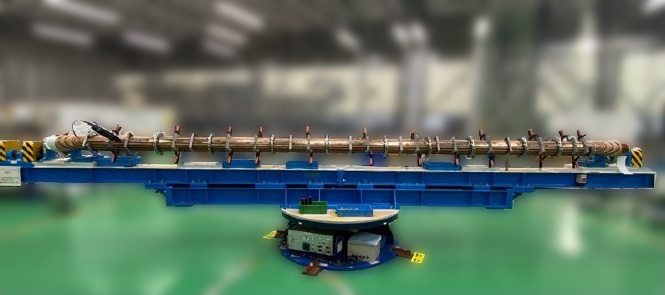 Winding of superconducting coil
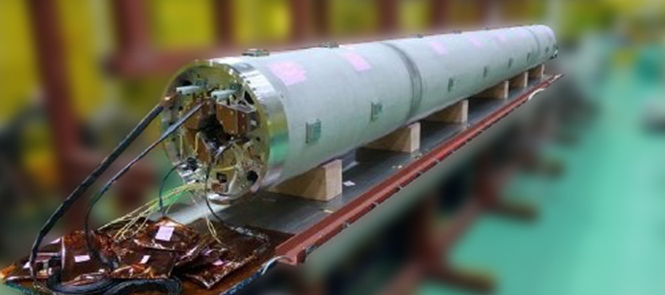 Welding the shell to the superconducting magnet
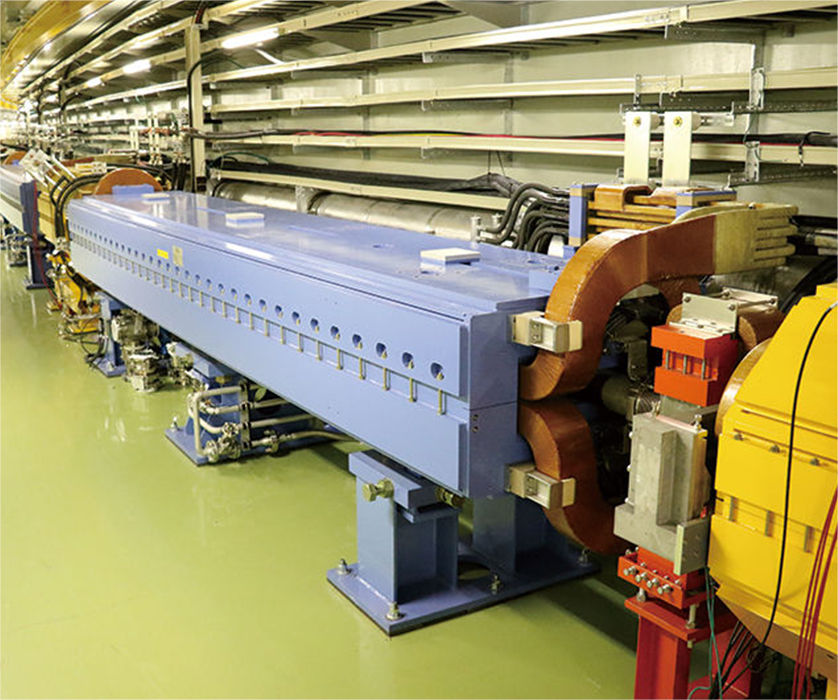
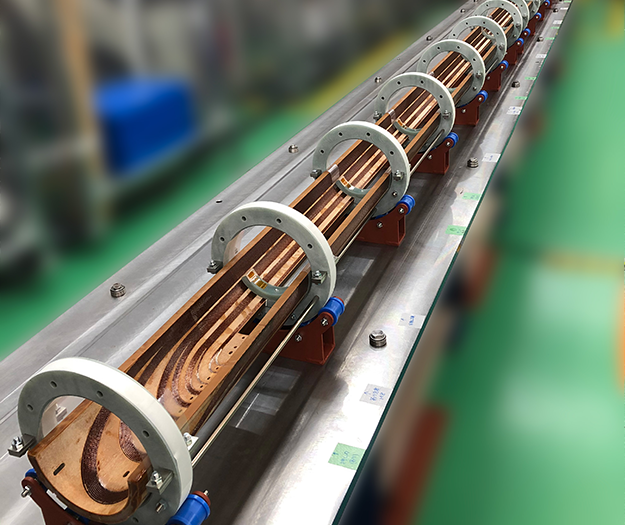 Inner view of D1 magnet
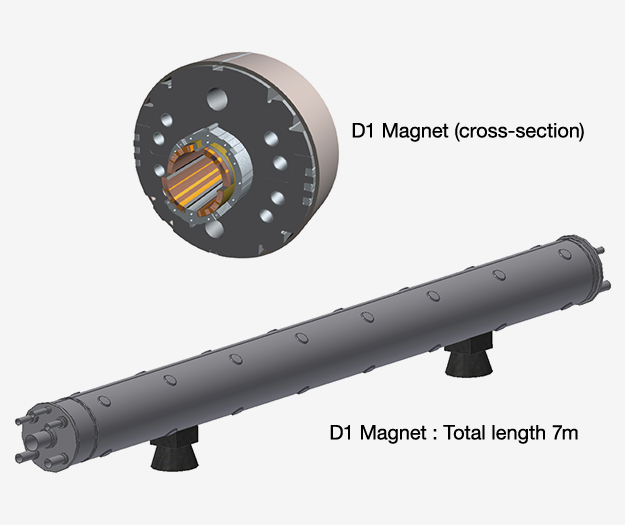 Cross section and the full length of D1 magnet
Provided by High Energy Accelerator Research Organization
Main Delivered Products
Superconducting Solenoid Magnet for Muon Transport for the Japan Proton Accelerator Research Complex (J-PARC)
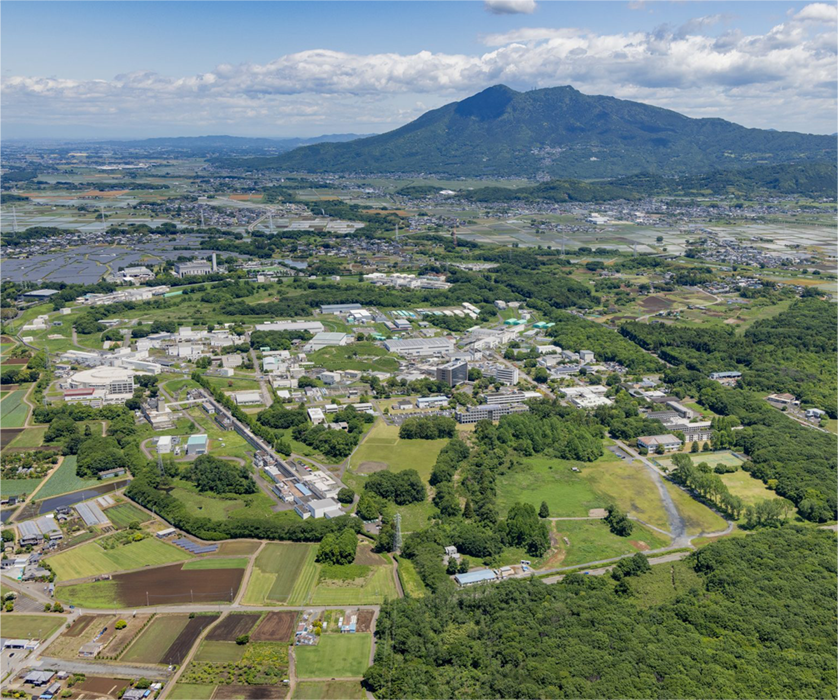
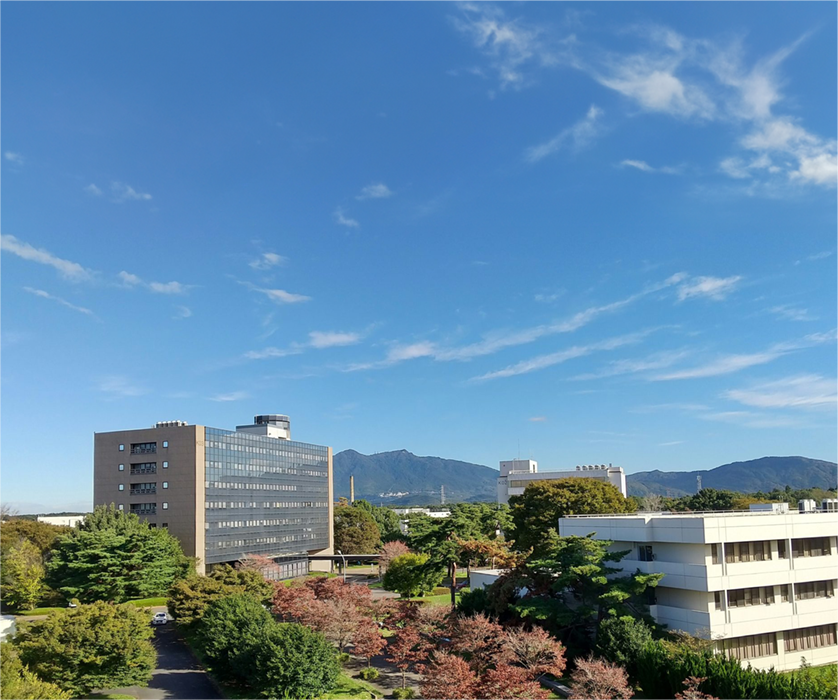
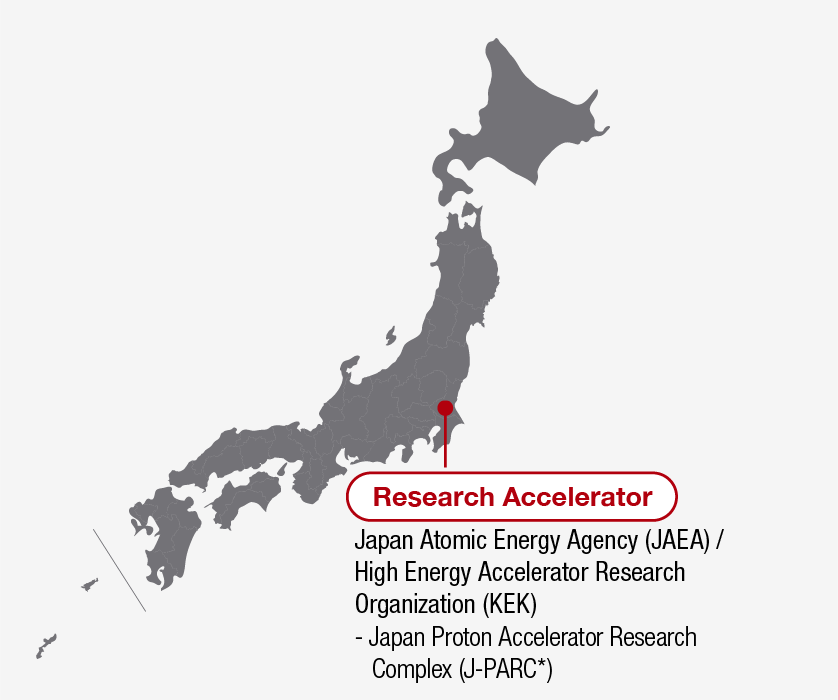
A muon beamline (D-line) constructed at the Japan Proton Accelerator Research Complex (J-PARC)— Muon science facility of the High Energy Accelerator Research Organization (KEK)—had been in operation until superconducting solenoid magnets for muon transport installed in the D-line were damaged by the 2011 Tohoku earthquake, making it necessary to manufacture replacement superconducting solenoid magnets. Hitachi designed, manufactured, and delivered one solenoid magnet (D1) with a total length of 6 m on the upstream side and two solenoids (D2 and D3) with a total length of 1.5 m after branching.
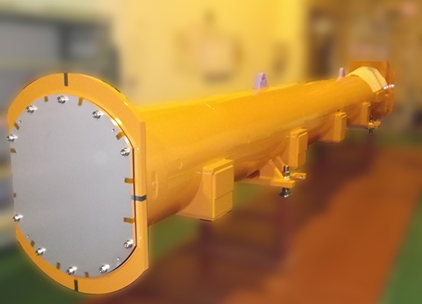 D1 solenoid
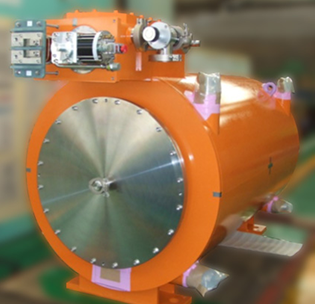 D2 solenoid
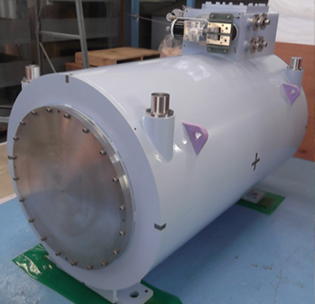 D3 solenoid
(Photo courtesy of KEK)
Related Links
Particle Accelerator Society of Japan
DESIGN AND MANUFACTURE OF SUPERCONDUCTING TRANSPORT SOLENOID FOR D-LINE AT J-PARC MUON SCIENCE FACILITY
Yasuyuki Tanaka, Tomoyuki Semba, Shotaro Nakajima, Yoshiaki Hagiwara, Shuichi Kido, Kenichi Sasaki*1, Koichiro Shimomura*1, Naritoshi Kawamura*1, Patrick Strasser*1, Yasuhiro Maki*1
- High Energy Accelerator Research Organization
Electromagnets for Japan Proton Accelerator Research Complex (J-PARC)
Hitachi has also delivered a group of large, high-precision electromagnets for experimental equipment at the Japan Proton Accelerator Research Complex (J-PARC), contributing to leading scientific and research activities in the 21st century (in areas including materials science, life science, nuclear and elementary particle research, and nuclear transmutation technology research).
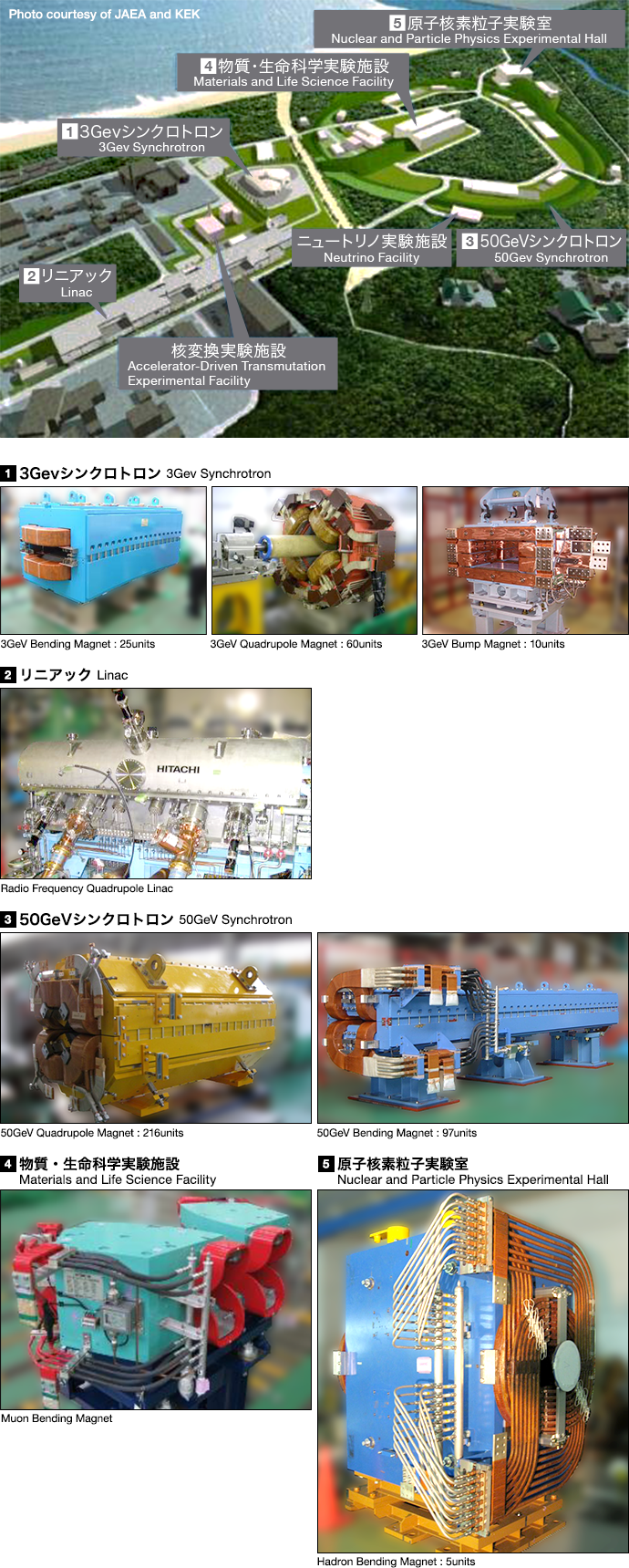
Related Links
Hitachi Review
Vol89 No.02 192-193
Takashi Watanabe
Takabumi Yoshinari
Yutaka Chida
Shoichiro Koseki, Dr. Eng.
Mitsushi Abe
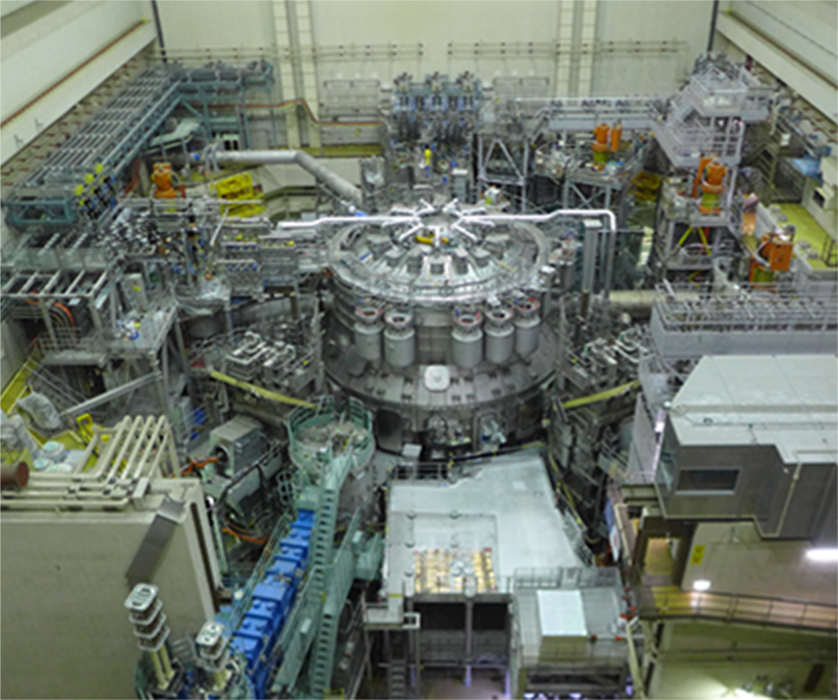
Main Delivered Products
Received Encouragement Awards in the 65th Electrical Science and Technology, 2017
"The development results of a DC-1MV Ultrahigh Voltage Generator for ITER-NBTF"
Together with the National Institutes for Quantum Science and Technology (QST), Hitachi has developed an ultra-high voltage power supply for NBI, which is required for plasma heating and current drive in the ITER.
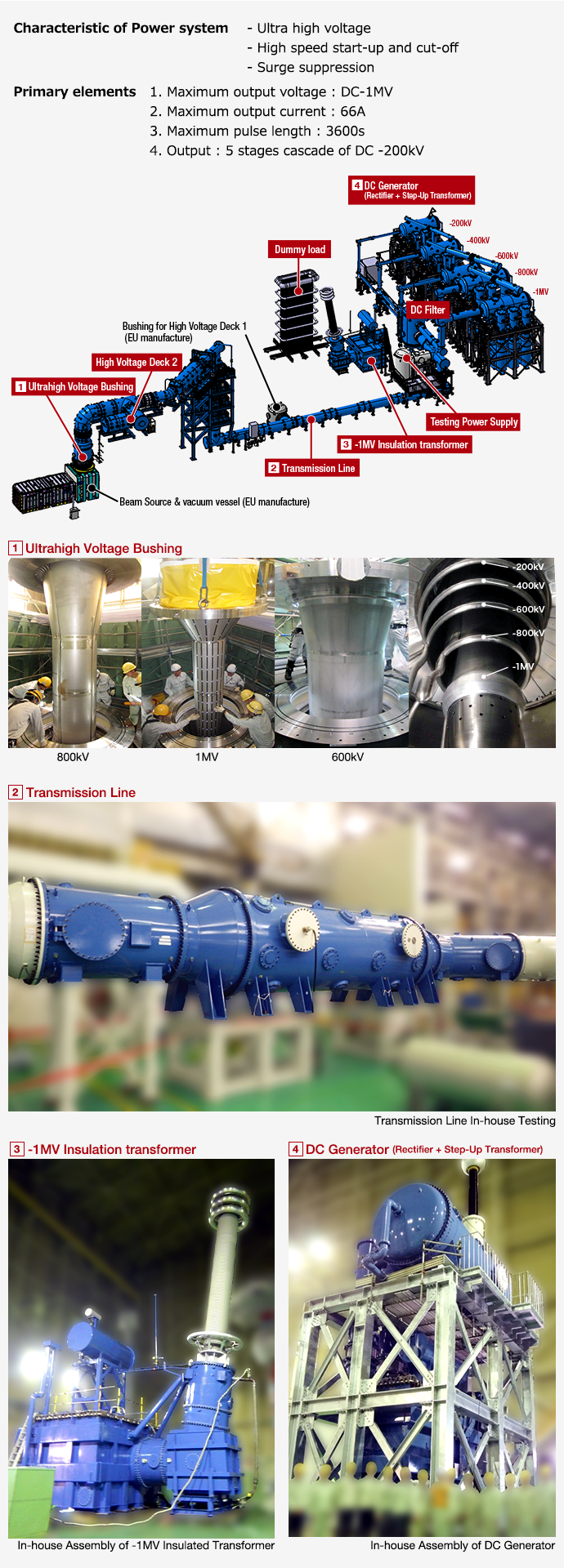 Ultra-high voltage power supply system of NBTF(Neutral Beam Test Facility) (NBTF) (Japan part: red)
Development of Relative Displacement Absorber of the Transmission Line for ITER Neutral Beam Injector
A key issue for the transmission line for the NBI device for the ITER is to create a structure that absorbs differences in displacement between the ITER building and the transmission line that may occur during an earthquake. Hitachi developed a relative displacement absorption structure combining expansion joints, laminated rubber, and sliding bearings, and secured the feasibility of the concept through seismic analysis.
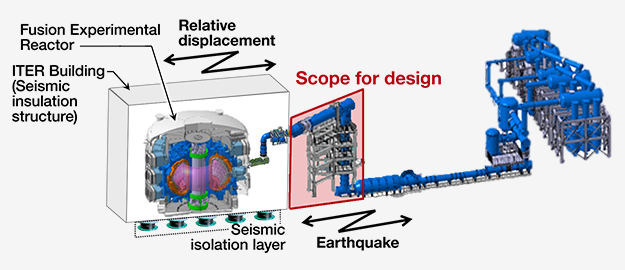 Overview of ITER Building and Transmission Line
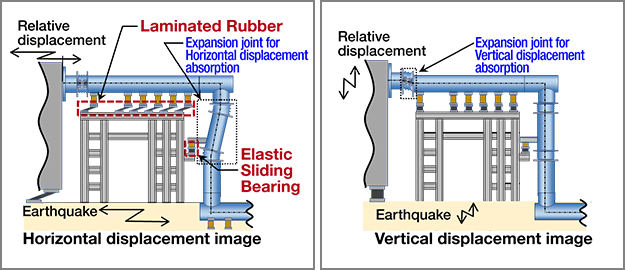 Concept of Relative displacement absorption
Related Links
Atomic Energy society of Japan
Development of Relative Displacement Absorber of the Transmission Line for ITER Neutral Beam Injecto
Naoya Sogo, Akihisa Miyazoe, Miu Yunoki, Takayuki Suzuki, Mieko Kashiwagi*1, Hiroyuki Tobari*1, Atsushi Kojima*1, Masahiro Ichikawa*1, Eiji Ohshita*1, Noki Shibata*1
- QST / National Institutes for Quantum Science and Technology
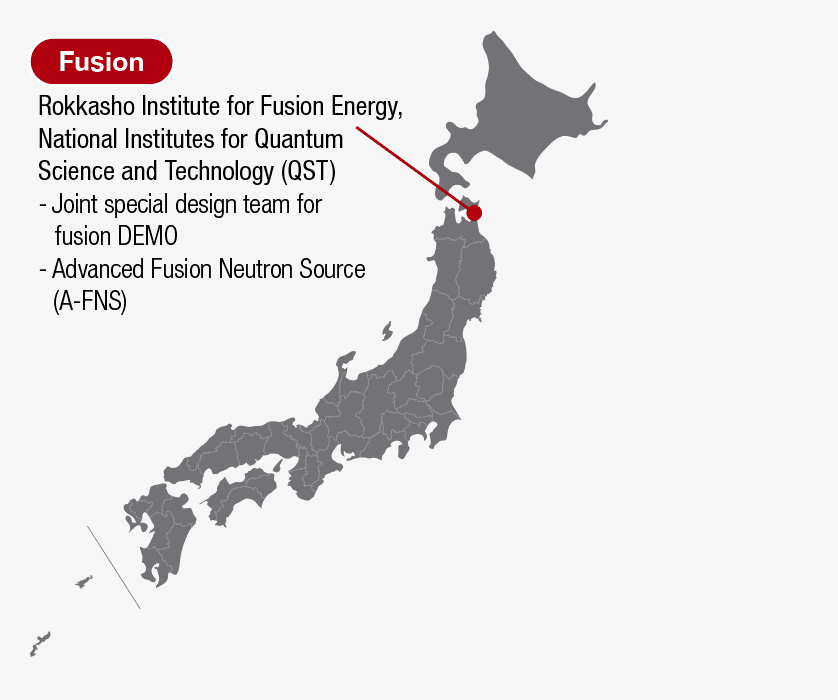
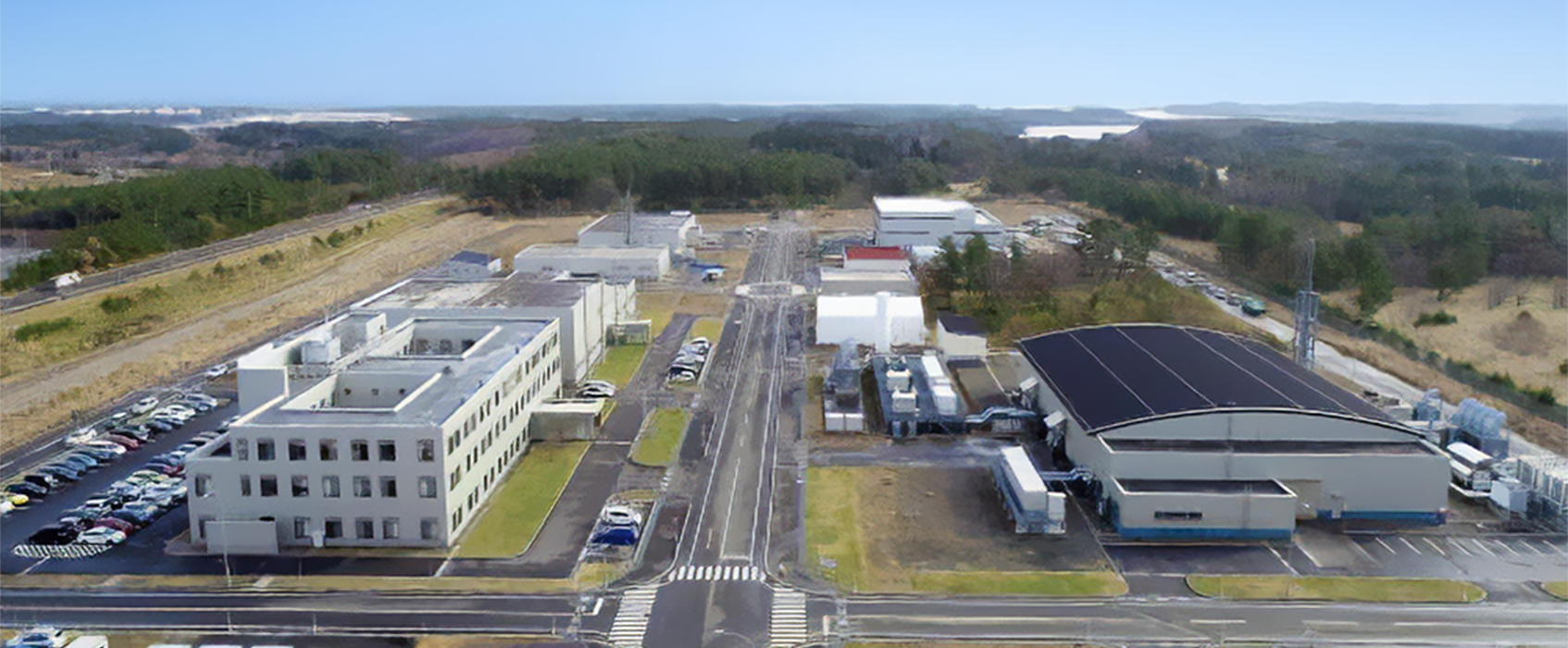
Main Delivered Products
Examination of Methods for Erratic Magnetic Field Correction in a Prototype Fusion Reactor
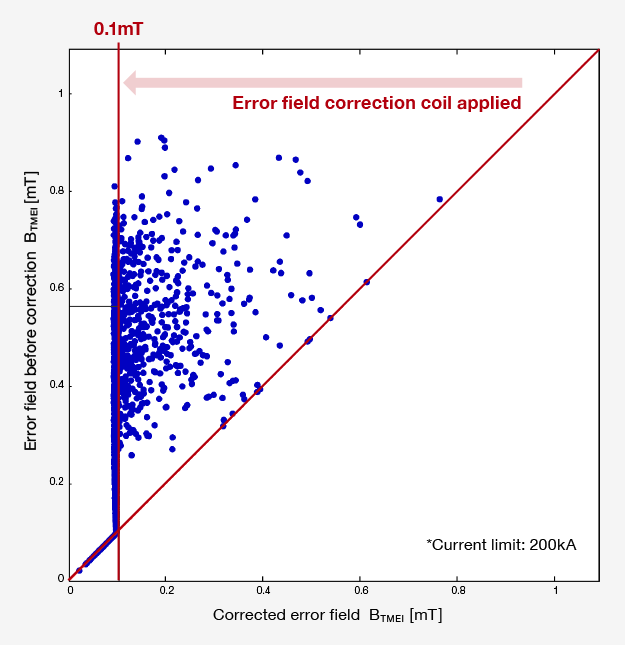
As part of the "1. Superconducting Coil - SC Conceptual Basic Design" component of the Action Plan for the Development of a Prototype Fusion Reactor, together with the QST, we investigated the error field derived from the superconducting coil in the prototype fusion reactor and specifications for an error field correction coil, manufacturing accuracy required for superconducting coils. As a result, we have been able to secure the prospect of relaxing the manufacturing accuracy required for superconducting coils by a factor of 2 to 4 times compared to superconducting coils for ITER.
① Error field evaluation by BTMEI same as JT-60SA※1

- TMEI: Three Mode Error Index
- G. Matsunaga et al., Fusion Eng. Des. 98-99, 1113-1117 (2015).
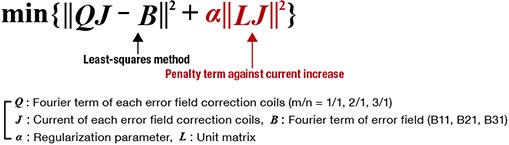
② Regularization to suppress required current is applied for current design of each error field correction coils
③ Designed error field correction coils which can achieve BTMEI ≦0.1mT at 95% of 5000 coils with error field
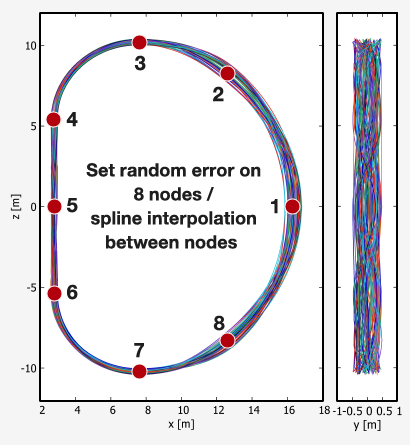 TFC with manufacturing error
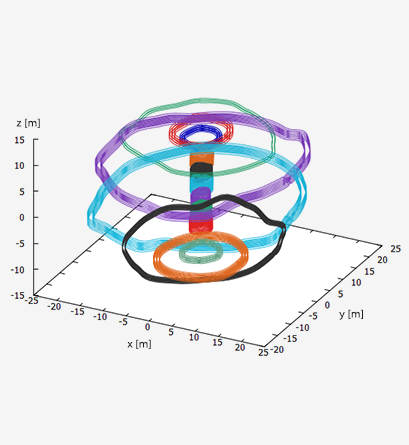 PFC with manufacturing error ※Each errors are emphasized by 100 times
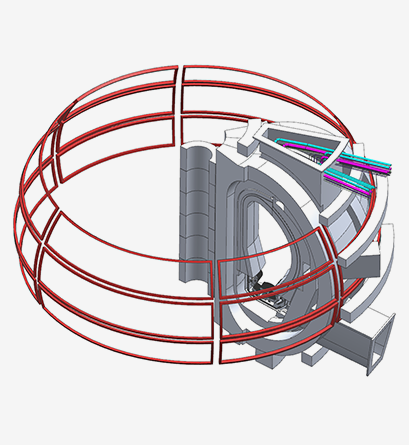 The shape of designed error field correction coils


