



The Evolution of Decommissioning Robots and the Future of Nuclear Energy Enabled by Physical AI

Share this:


Fifteen years have passed since the accident at Fukushima Daiichi Nuclear Power Station. As the trial retrieval of fuel debris gets under way and preparations continue to expand retrieval operations, robots are playing an increasingly important role in conducting surveys and performing work in areas that are difficult for people to access. Hitachi has developed a wide range of robots and supporting technologies tailored to specific purposes, including surveys inside the primary containment vessel, the preparation of work environments inside and outside reactor buildings, and work toward the removal of fuel debris.
What kinds of decommissioning robots has Hitachi developed, and what future does it envision through the integration of these robots with AI and digital technologies? We spoke with Satoshi Okada, Chief Engineer at the Fukushima Decommissioning Engineering Center and the Innovative Technology Management Office of Hitachi GE Vernova Nuclear Energy, Ltd.
Physical AI, which is the combination of the autonomous decision-making technologies used on worksites and the physical work performed by robots and other machines, has been drawing an increasing amount of attention, and interest in robotics is also increasing. As labor shortages become increasingly severe, robots are expected to play an even greater role in the future, not only by assisting people in shared workspaces but also by performing tasks on their behalf in environments that are difficult or dangerous for humans to access, such as outer space and disaster sites.
The Fukushima Daiichi Nuclear Power Station decommissioning site is one such location. Hitachi has been working since the accident to develop technologies and remediate the environment at the site, including decontamination activities, the management of contaminated water, and the retrieval of spent fuel and fuel debris. Because the radiation level in many areas is high, making it difficult for people to enter or work in them for extended periods, Hitachi has developed and deployed robots to conduct surveys and perform work in place of people.
One of the most important and challenging processes in decommissioning is the retrieval of fuel debris, which was formed when the nuclear fuel and reactor structures melted, mixed together, fell into the reactor and the lower part of the primary containment vessel, and solidified. This work can be broadly divided into three stages. The first is surveying the site to understand its conditions and determine a retrieval method. The second is preparing the work environment by removing rubble and other obstructions and reducing ambient dose rates. The third is the actual retrieval of fuel debris. Because the environment and objectives differ for each task, each robot must have shape and capabilities that are tailored to its particular application.
One robot developed for survey work is the shape-changing robot PMORPH. It was designed to enter the primary containment vessel (PCV), examine the condition of structures and nearby radiation dose rates, and identify an access route to the fuel debris to be retrieved.
To enter the containment vessel, the robot must pass through a pipe approximately 10 centimeters in diameter and then travel stably across a floor fitted with a lattice-like metal grate structure. In considering the configuration that could meet these requirements, the development team devised a crawler-based concept that takes a straight, I-shaped form when passing through the narrow pipe and transforms into a U-shape after entering the PCV.
In April 2015, the first PMORPH unit, PMORPH 1, entered the Unit 1 PCV and used a camera, thermometer, and dosimeter to examine conditions on the ground floor outside the pedestal. In March 2017, PMORPH 2 was deployed with a sensor unit equipped with a camera and dosimeter that could be lowered by winch. It surveyed submerged deposits and the radiation dose distribution on the basement floor outside the pedestal.
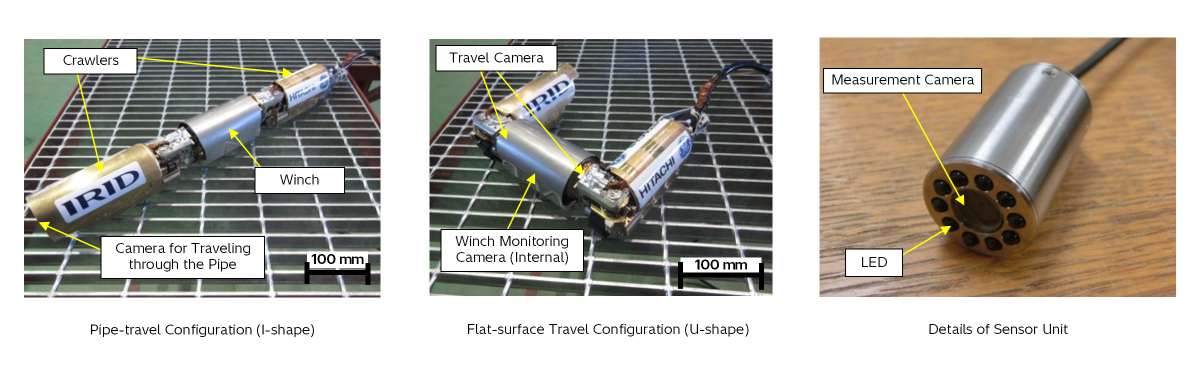 PMORPH2 Main Unit and Sensor Unit
To investigate the submerged deposits identified on the PCV basement floor during the 2017 survey in greater detail, Hitachi developed six types of submersible remotely operated vehicles (ROVs). Each ROV was equipped with functions tailored to a specific purpose, including the installation of guide rings to prevent cable entanglement, creation of three-dimensional maps of deposit surfaces, measurement of deposit thickness, measurement of radiation to characterize deposits, and direct sampling of deposits. During the Unit 1 PCV internal investigation conducted from February 2022 to March 2023, the ROVs collected information that was needed to develop a method for recovering submerged deposits.
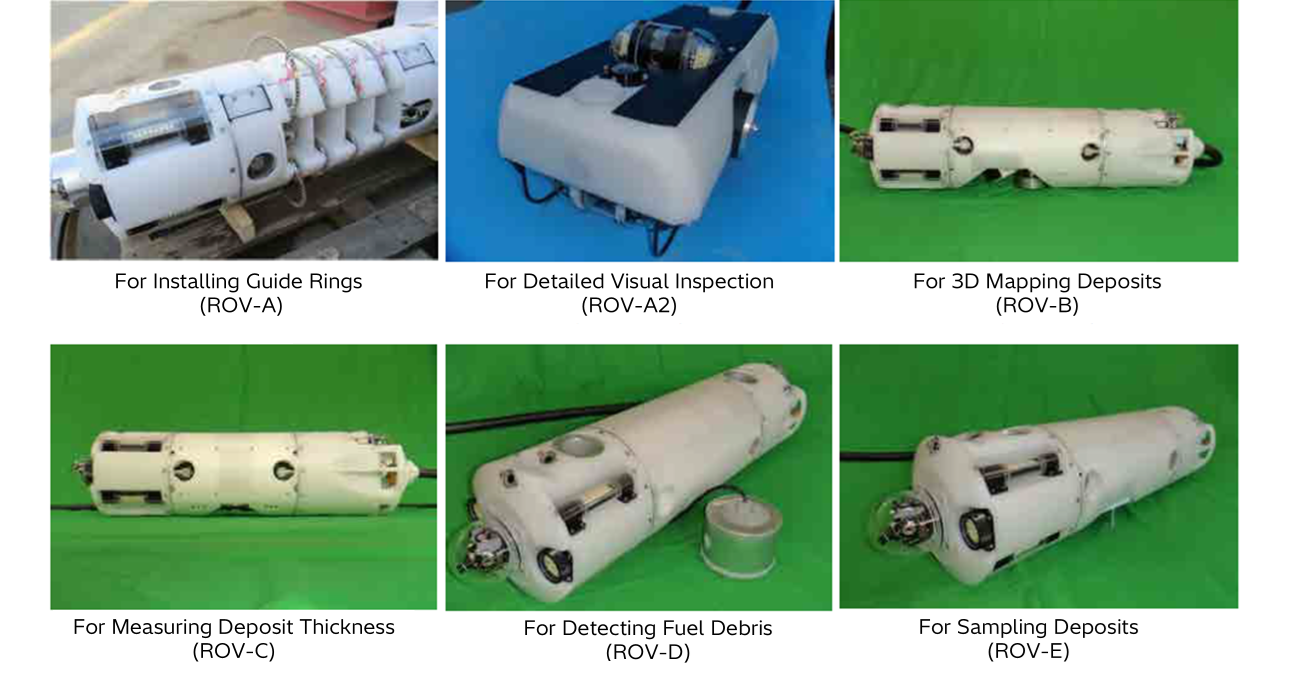 Six Purpose-specific ROVs
Hitachi developed the Telescopic Active Scope Camera (TASC), which can access the inside of piping, as a robot for preparing the work environment. In Unit 1, highly contaminated water inside a heat exchanger in the reactor building closed cooling water system was causing elevated radiation levels in the surrounding area, and its removal and drainage was a key challenge.
However, to get a drainage hose into the heat exchanger, it would have to pass through piping with bends. To address this, the hose was covered with short cilia so that it could automatically propel itself forward using vibrations generated by a motor. The direction of the device is controlled by wheels at its tip so that it can reach the heat exchanger, and then the water is removed using an inner hose. An active scope camera also allows operators to monitor conditions at the tip of the hose. Work is currently under way to drain the contaminated water inside the Unit 1 heat exchanger.
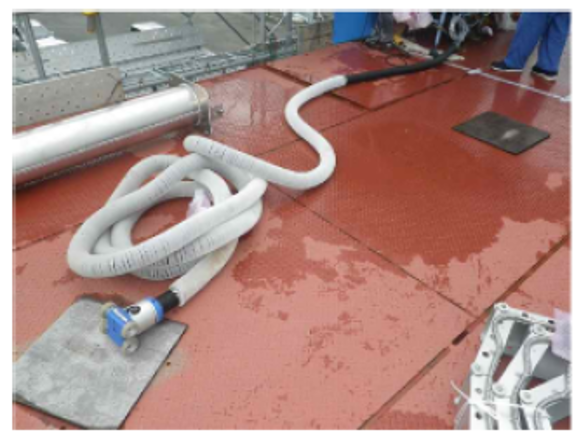
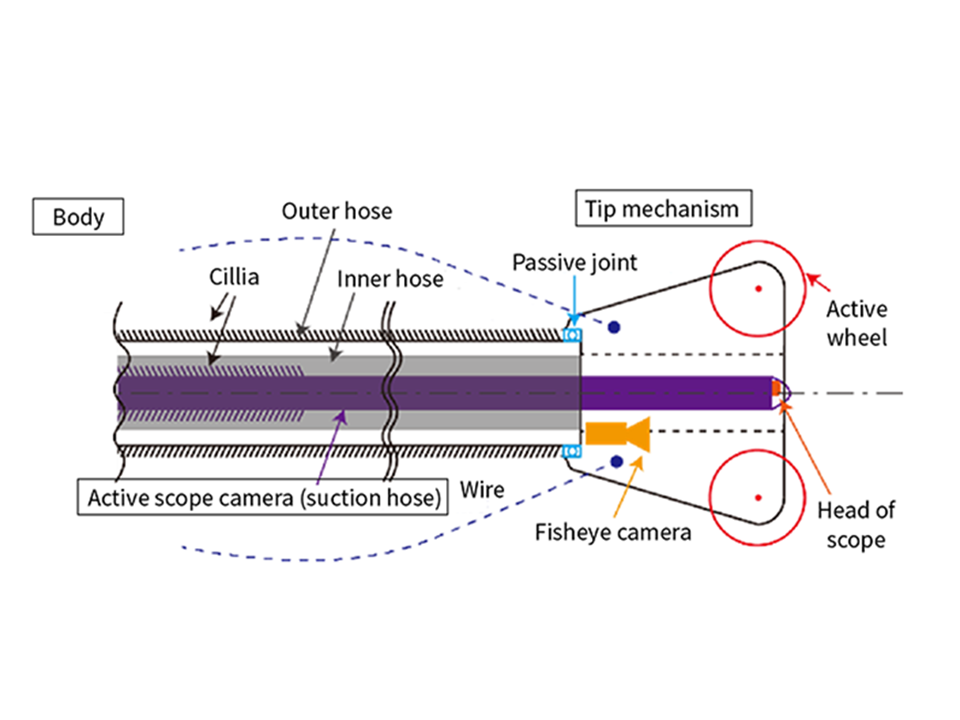
External View and Cross-sectional Diagram of the Telescopic Active Scope Camera (TASC)
HUMALT is a flexible-structure working robot developed not only for worksite preparation but also for fuel debris retrieval applications. Instead of mounting radiation-sensitive electronics such as control boards and sensors on the body of the robot, HUMALT uses multiple cylinder-type water-hydraulic actuators to drive its arm, enabling extended operations in high-radiation environments. By combining joint modules with bending and rotational functions, the robot is able to perform precise movements. Its flexibility also reduces the likelihood of damage to either the robot or surrounding objects and structures in the event of contact.
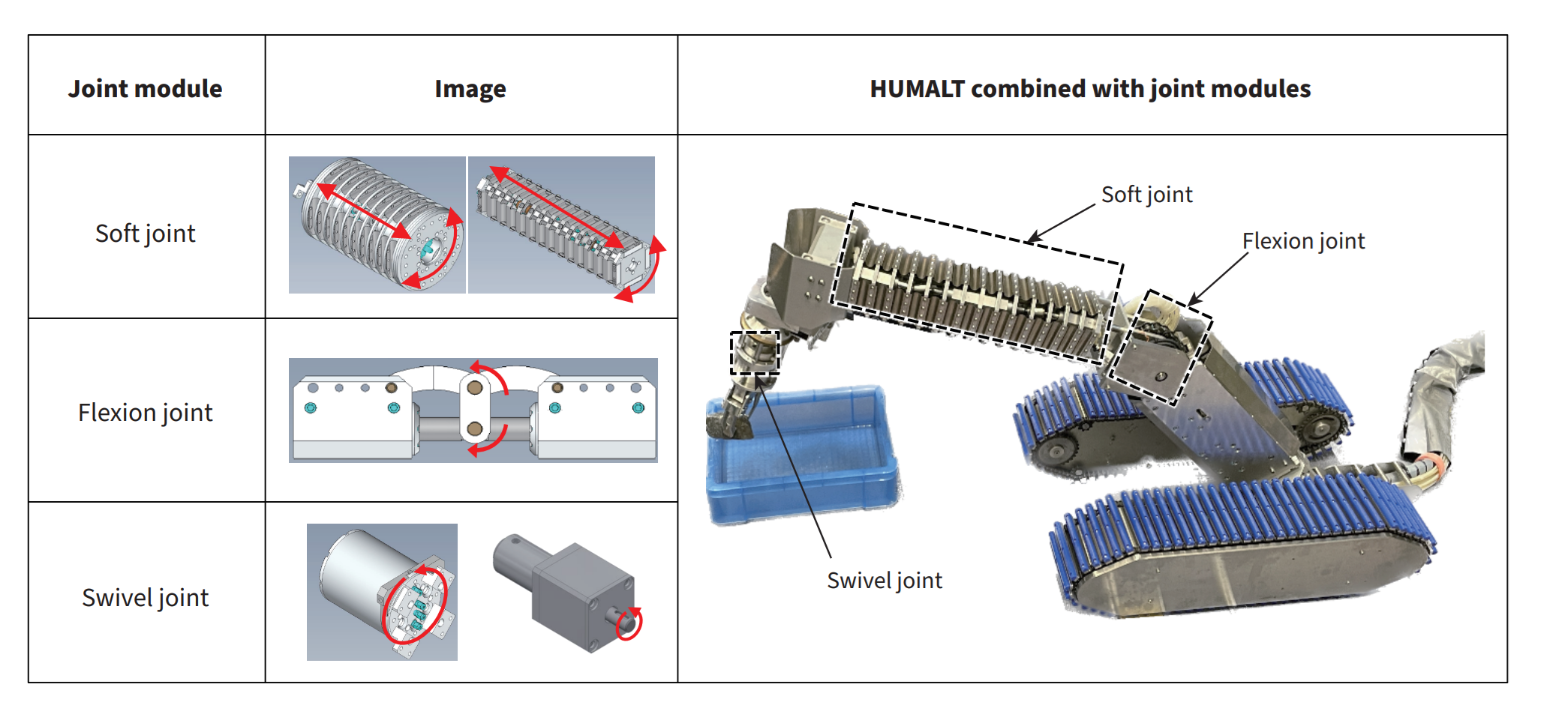 HUMALT Joint Modules
The robot is operated remotely using a control system connected to the main unit by hose lines. The control system consists of a pump unit that supplies water to the cylinders and a control panel, and regulates operations while sensors monitor flow rates and pressure in the piping.
Power can also be transmitted by fluids using hydraulic oil or compressed air. Hydraulic systems using water were selected not only for their controllability, but also because, in the unlikely event of damage, the only fluid released would be water, minimizing the impact on the worksite environment. HUMALT is also well suited for underwater use. In addition to decommissioning work, potential applications include inspection work at operating nuclear power plants. The system can be expanded from one arm to multiple arms and combined with mobility mechanisms suited to the work location, enabling it to be used in a wide range of tasks.
In 2019, a predecessor of HUMALT equipped with two flexible-structure arms was deployed in the Unit 3 turbine building of Fukushima Daiichi Nuclear Power Station, where it removed obstacles. Future plans also include the recovery of zeolite placed in the basement of the reactor building to adsorb cesium from contaminated water.
My original field of expertise was measurement technology. After joining Hitachi, I conducted research regarding sensing technologies at a research laboratory, and my work expanded into robotics as a means of transporting sensors to measurement locations.
When the Great East Japan Earthquake occurred in 2011, I was working at a research laboratory on the conceptual development of submersible robots for in-reactor inspections. I applied that experience when I began developing robots for the decommissioning work at Fukushima Daiichi Nuclear Power Station. Initially, I was only responsible for the development of concepts. When the project moved to the stage in which actual equipment was being built and deployed on site, I transferred to the business division and also became involved in on-site work. Today, I am engaged broadly in the development of robotic technologies required for the decommissioning of nuclear reactors.
Although the conventional decommissioning of reactors and the decommissioning of accident-damaged reactors are both called decommissioning, they are very different. Accident-damaged reactors contain many high-radiation areas and enclosed and confined spaces where it is necessary to contain radioactive materials. Conditions also include obstacles not found in conventional reactors, poor visibility due to dust and steam, the low transparency of retained water, and work in dark areas where lighting cannot be brought in. Because these adverse conditions overlap, robotic technologies designed for ordinary environments cannot simply be applied as-is. Radiation remains one of the most significant challenges. In addition to protecting sensors against radiation, it is essential to ensure worker safety and reduce operational burdens.
Measures to harden equipment to radiation include making the sensors radiation resistant, adding radiation shielding, and separating sensors and other electronic equipment from the body of the robot. The design must also address operational considerations, such as the need to replace equipment before it reaches its accumulated radiation dose limit.
To ensure worker safety and reduce operational burdens, it is necessary to achieve a degree of task automation and remote operations from locations tens to hundreds of meters away from the task. To advance automation, Hitachi is developing autonomous control systems that allow robots to perform repetitive tasks, such as the removal of rubble in areas with comparatively low dose rates. Operators make final decisions, helping to both achieve operational efficiency and ensure the quality of work.
In non-routine tasks such as fuel debris retrieval, it is necessary to primarily rely on remote operators. However, operations are difficult because the work cannot be observed directly. Hitachi is currently developing radiation-resistant cameras. It is also developing a system for situations where sensors or cameras cannot be mounted on robots. Based on images from externally installed stereo cameras, the system estimates the three-dimensional positions of the robot and its surroundings, as well as the posture of the robot arm. Hitachi is also studying control technologies to assist in the operation of articulated robots such as HUMALT.
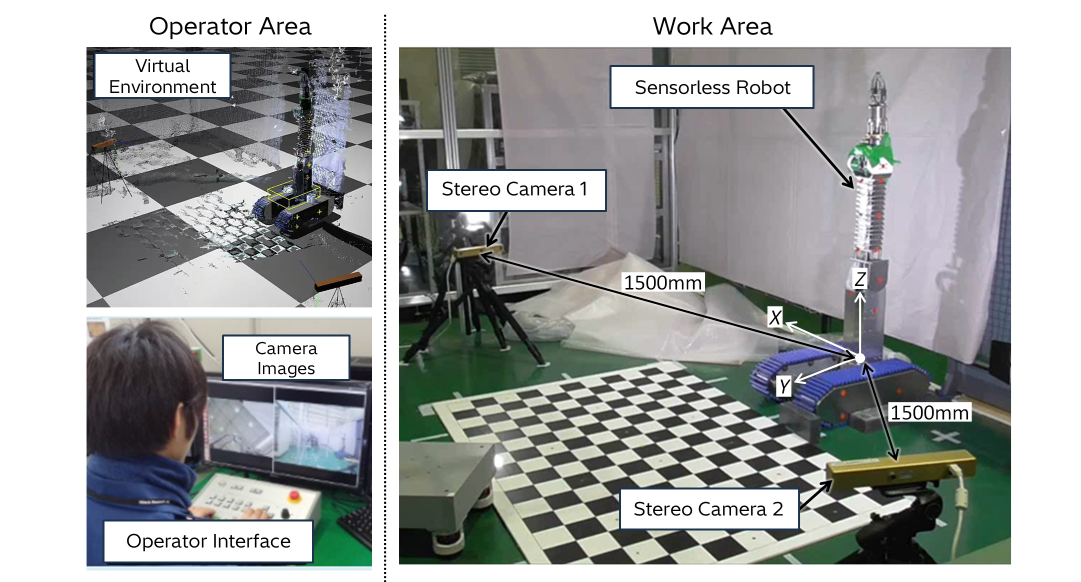 Arm Posture Estimation System Using Images from External Cameras
In the initial stages of fuel debris retrieval, human judgment and intervention will continue to be required in many situations. Automation will first be introduced for standardized operations such as movement and grasping operations. In the future, robots receiving instructions from people could autonomously perform work while assessing conditions, thereby increasing the speed of operations.
Physical AI will provide the foundation for these future capabilities. It is an area in which the Hitachi Group has significant strengths. Hitachi aims to reduce the burdens on frontline workers engaged in the decommissioning of reactors and improve the safety and reliability of work by combining field data acquired by sensors, the expertise of experienced workers, robotics, AI, and digital twin technologies. Hitachi possesses distinctive robotic platforms such as PMORPH and HUMALT, together with AI technologies that enable intelligent operation. By integrating the two, we believe we can create a system that will support the long-term decommissioning process.
The technical challenges of decommissioning differ at each stage, from investigation and fuel debris retrieval to the final site restoration phase. Accordingly, the things that are required of robots will continue to change in each stage. Development is an ongoing process. The robotic technologies and knowledge gained through the decommissioning of Fukushima Daiichi Nuclear Power Station must also be extended to the conventional decommissioning of reactors and to inspections after nuclear power plant operations resume.
I believe that the goal of robotics in the nuclear field should be to ensure the safety of frontline workers, enable them to work safely, confidently, and with a sense of purpose, ultimately contributing to their well-being. Creating an environment in which people can work safely, with peace of mind and a sense of fulfillment in collaboration with robots is essential both to the Fukushima decommissioning work that will continue for decades and to the development of nuclear energy as a vital part of the infrastructure supporting society.
To achieve this, it is important to continue to advance Hitachi’s robotics capabilities. Robots are an integration of a wide range of component technologies, including structural design, actuators, mobility systems, sensing technologies, data processing, software, control systems, and AI technologies. Our department brings together people with expertise in mechanical engineering, materials engineering, chemistry, control, and other fields. They strongly believe in their mission to contribute to the completion of the decommissioning of reactors, and they are advancing the development of technology.
There are no predetermined answers when you are tasking robots with reactor decommissioning work that is unprecedented. We keep a broad watch on developments inside and outside the company and continually search for promising seeds of technologies. We listen to needs on the front lines, identify challenges, and turn ideas into tangible solutions through hands-on work. This development process is both difficult and fascinating.
When conceiving PMORPH, the first thing I did was build a small model myself. Hitachi’s Founding Spirit, the values of Harmony, Sincerity, and Pioneering Spirit, are precisely what is required when developing technologies. Decommissioning is a long journey. That is why we will continue to develop robots that open the way to the future of nuclear energy while always retaining the pioneer mindset.
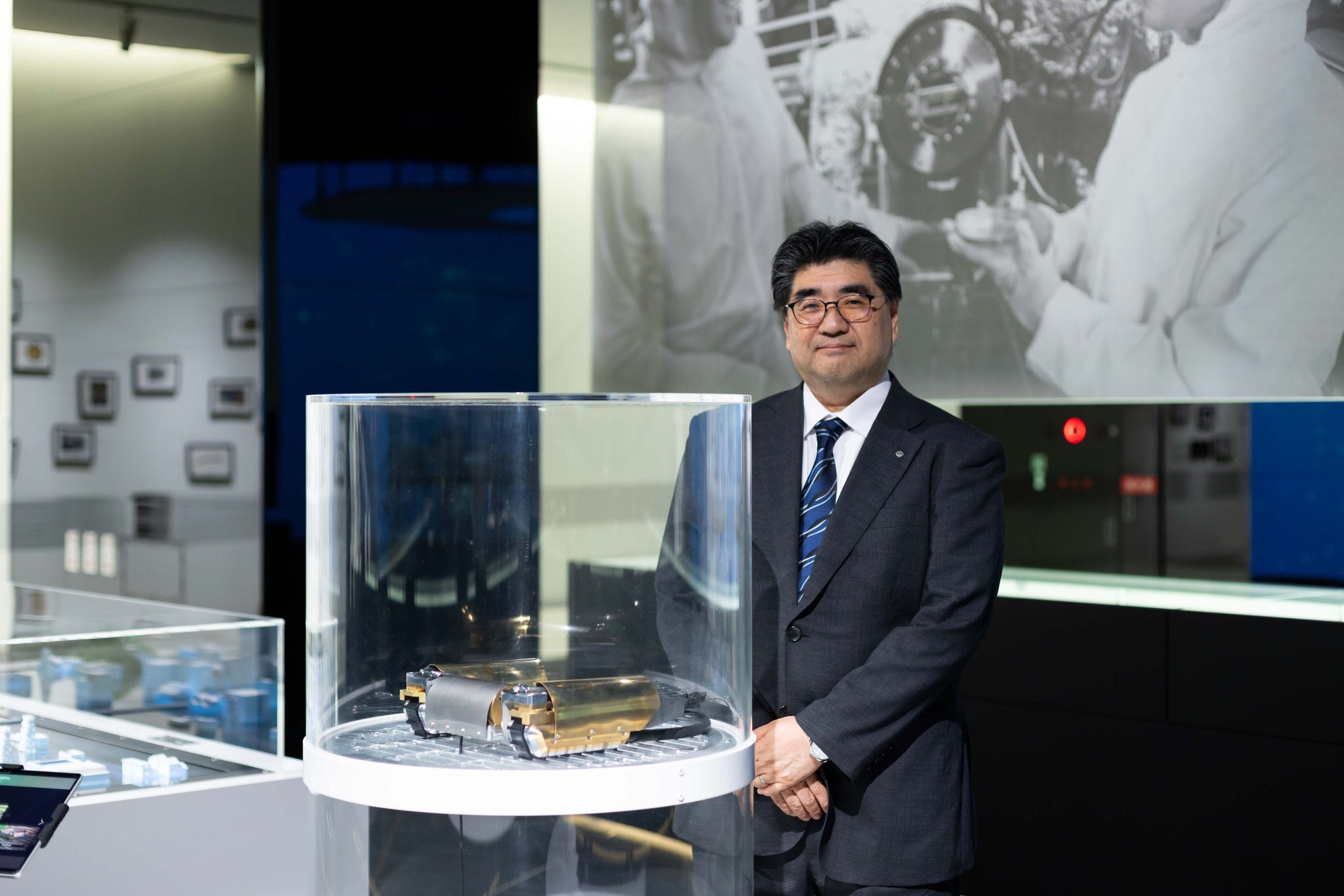 PMORPH is displayed at Hitachi Origin Park, Hitachi’s corporate museum, as a symbol of the company’s founding spirit
Satoshi Okada
Position: Chief Engineer
Career History: Ph.D. in Information Science, Tohoku University.
Joined Hitachi, Ltd. in 1993 and was assigned to the Energy Research Laboratory. Engaged in research and development of robotics technologies and electrical and electronic measurement systems for the nuclear and industrial sectors. Following the Great East Japan Earthquake in 2011, became involved in the development of technologies and systems for the decommissioning of Fukushima Daiichi Nuclear Power Station. Currently leads the development of investigation technologies, environment improvement technologies, and robotics technologies for the decommissioning of Fukushima Daiichi Nuclear Power Station at Hitachi GE Vernova Nuclear Energy, Ltd.
Robotics Society of Japan fellow and member of the Atomic Energy Society of Japan, the Japan Society of Mechanical Engineers, and the Japan Society of Maintenology.

