



Redefining Connection for a New Generation of Mobility
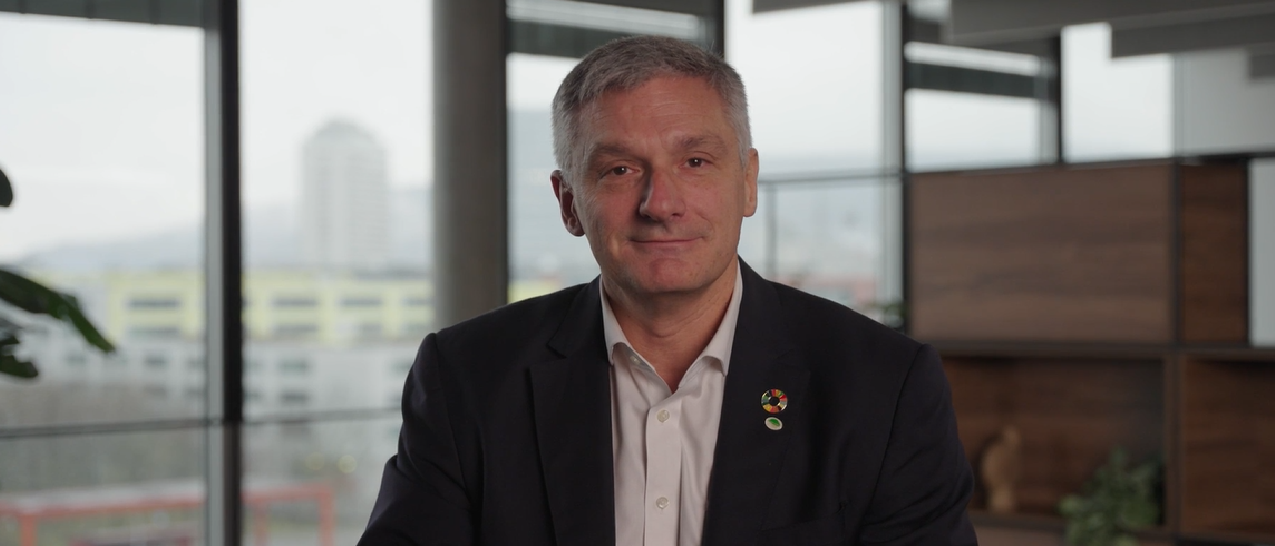
By Thierry Lassus, Head of Mobility Segment, Hitachi, Ltd.
In our increasingly complex and challenging world, the business community and society at large are craving connection like never before.
But where there is challenge, there is opportunity, and today the relentless acceleration of technology is opening up possibilities we could have never dreamed of even five years ago. Now is our moment to redefine connection and unleash a new generation of mobility.
Connect: The seamless mobility era
Mobility is the lifeblood of progress–connecting people, places, potential and society. Connection powers everything we do. But the next era demands mobility systems that are not just faster but also smarter, safer and more inclusive.
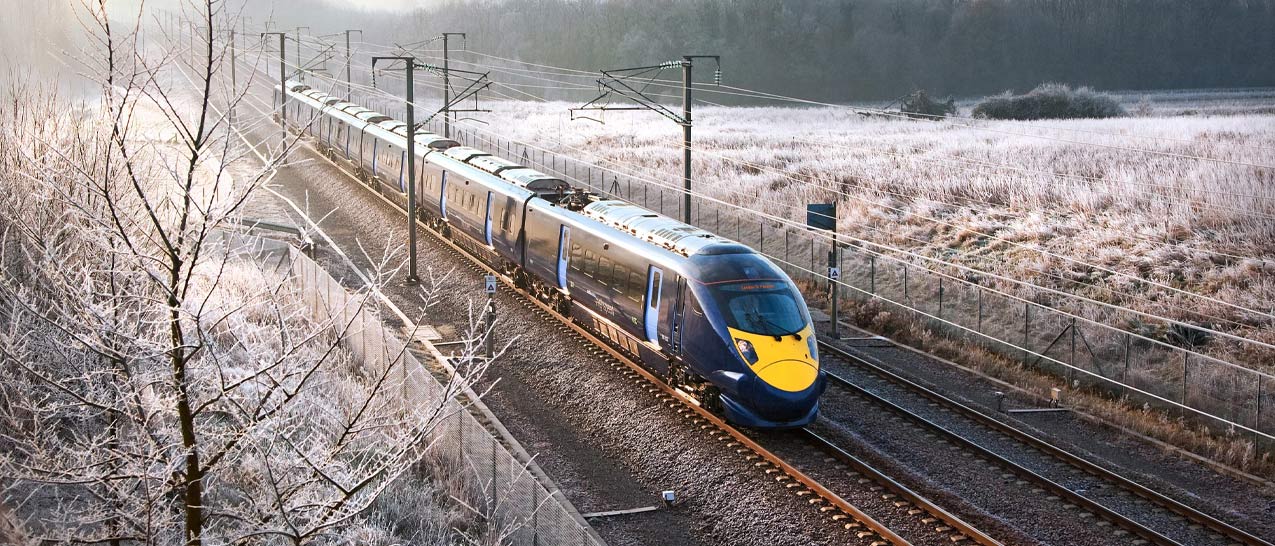
From data-driven rail networks to intelligent transport ecosystems, from the grid to the smartphone, sustainable mobility is taking us further than ever before—it’s a social transition that is transforming how we live. Sustainable mobility is no longer just trains and cars; it is the whole ecosystem—from the ferry to the bus to the plane, to the parking infrastructure. Every journey brings us nearer to a more connected, sustainable, digitally-enhanced future—but we are only just getting started.
As technology brings us closer to the end-user, we’re increasingly harnessing its immense possibilities to create a seamless B2B2C mobility experience—not just our individual journeys but the wider environment. Our cities are becoming quieter, cleaner, healthier, and smarter, and the future is unfurling before our eyes. We are building a better, more harmonized society – which has been part of Hitachi’s ambition since we were founded in 1910.
Optimize: A data-powered future
The engine room of our mobility future is data. Whether it’s high-speed trains, urban rail buses, trucks, ferries, passenger cars or parking lots, data is improving operations, maintenance, and reducing the total cost of ownership. Beyond that, real-time data is also informing future operations, both for us and our customers. We are learning all the time, and this digitalization is helping our customers improve performance and drive revenue around data monetization.
Consider a public transport operator armed with the very latest data on road conditions and transport capacity. They can now optimize routes, improve efficiency, and deliver a better passenger experience in ways that weren’t possible before.
This data-driven approach is critical to the expansion of electric mobility. As the number of electric vehicles—such as trains, buses, last-mile delivery trucks, and ferries—continues to grow, data is enabling end-to-end solutions that balance electricity supply and demand, integrate renewable energy, and deliver a best-in-class passenger experience.
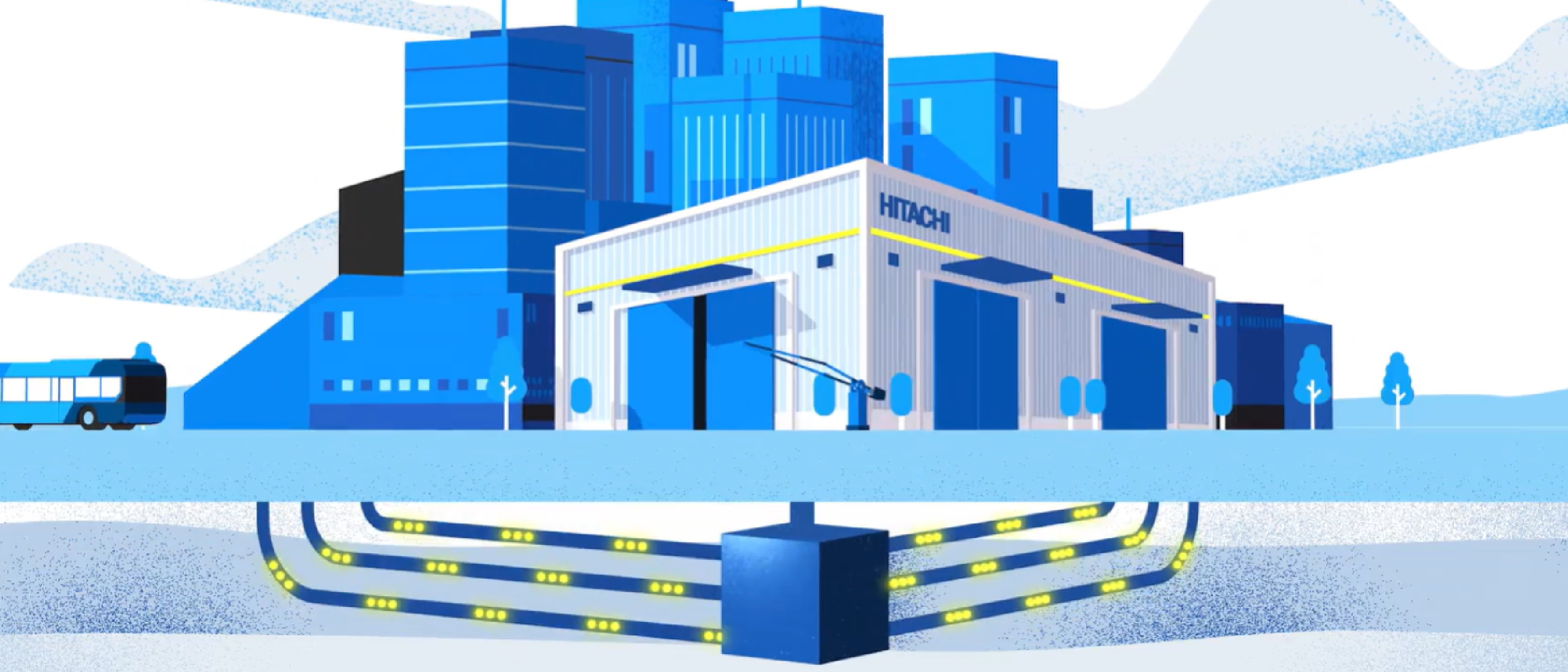
In the case of an operator, the data shared will highlight the available energy from the substation, how many vehicles need to be charged in parallel or in sequence, and the impact this has on the timetable. We are even innovating with Flash Charging technology that charges buses at stops along the route, so they don’t have to carry heavy batteries while giving more space for passenger capacity. And if you expand that to an entire city, it is clear how critical these insights are when it comes to the distribution of energy required to keep millions on the move.
What is required is a holistic systems approach using data to optimize the operation and the energy needed. At Hitachi we are well positioned to deliver this, having worked with these operating partners for many years.
Move: Moving people and goods, and driving organizational transformation
I’ve talked a lot about connection and our role in connecting vehicles to the grid, but at a broader level, our role is to move people and goods—and to move organizations forward—by making every journey a fantastic, accessible, and zero-carbon experience, orchestrated through digital innovation.
But meaningful movement doesn’t happen overnight. This is where optimization plays a critical role. Enabling this new mobility is not a one-time move; it’s a long-term commitment in which we support our mobility customers not only with the right products, but also with the software and data needed to continuously optimize the experience. As we are still in the early stages of our electrification journey, optimization helps move the system forward—improving energy efficiency, maintenance, and service, while also supporting the broader social transition by helping organizations and people build the skills needed to embrace this emerging technology – both for the present and the future.
We are putting our many years of rail experience to good use for other modes of transport. Hitachi’s AI solutions are used to optimize railway systems, including trains, signaling, and infrastructure by integrating data from sensors to predict issues, improve reliability, reduce downtime, and lower operating costs through predictive maintenance. But today, we are applying this to buses too where our solutions help to optimize the heat, energy consumption and service of the bus and, more crucially, the performance of the battery. We can now predict the exact health of a battery years in advance. This doesn't just help operations; it helps business—lowering insurance premiums and accurately forecasting the asset’s resale value.
Purpose beyond profit
Our purpose at Hitachi goes beyond profit. It’s about harmony, pioneering spirit, and social impact. We're committed to building solutions that allow our citizens to live in greater harmony with their environment, and our electric mobility journey is accelerating at pace.
For me, it’s so inspiring to be part of these transformational changes in mobility, but what really gives me hope is the next generation. I truly believe that they simply won’t accept polluting modes of transport. Faced with the choice, they will wait for an electric bus rather than taking a diesel or petrol version, for example. They will not accept the black smoke of the past. This is the future we are all working toward today, and it’s getting closer and closer. My message to mobility leaders is this: we have a generational obligation to decarbonize and elevate mobility – Come and join us on this journey and let’s keep moving forward.
Share this:
You may also like


European Headquarters
Hitachi Europe Limited
Ditton Park
Riding Court Road
Datchet
Slough, SL3 9LL, United Kingdom