Hitachi

Part 4|FIELD REPORT
The Hitachi Area in Ibaraki: A Journey that Explores Hitachi's Past, Present and Future (3)
Research and development that write the next chapter in nuclear technology

Share

  • Share to X
  • Share to Facebook
  • Share to Linkedin

Part 4|Yasumasa Matsui Explores the Frontlines of Nuclear Energy: Interpreting the Future of Energy Through Dialogues in the Field

We deliver a four-part series in which Yasumasa Matsui visits the Hitachi Group's facilities in Hitachi City, Ibaraki Prefecture, the birthplace of Hitachi. He reports on the origins of Hitachi, current operations and R&D (Research and Development) initiatives in the nuclear sector, human resources development for the future, and coexistence with local communities.

In this third installment, Matsui reports from the frontlines of nuclear energy research at Hitachi's Research and Development Group's Ibaraki Site, one of the hubs supporting Hitachi's R&D efforts. His report covers research focused on nuclear energy digital transformation (DX) and technological development related to the decommissioning of the Fukushima Daiichi Nuclear Power Station. What kind of facilities and researchers—with what kind of mindset and resolve—are driving the progress of nuclear technology? Matsui investigates.


The origins of Hitachi's R&D: The history and present of Hitachi Research Laboratory

Matsui headed to the Research and Development Group's Ibaraki Site, which is located on a small, green hill near the Rinkai Factory and Hitachi Origin Park. The site enjoys a scenic location, with views of the Pacific Ocean and the Kanto Plain from its observation floor.

The origins of the Ibaraki Site date to 1918, eight years after Hitachi's founding, when Hitachi's founder, Namihei Odaira, established the “Research Group” within the then-Hitachi Factory. At that time, sensing the need to improve product quality and enhance Hitachi's technological capabilities amid its rapidly expanding business operations, Odaira elevated the existing Testing Group to the Testing Section. Within this section, he established a new Research Group. Serving as both head of the Testing Section and head of the Research Group, Odaira personally directed efforts to strengthen Hitachi's technological foundation and develop new products.
In 1934, the Research Group became the Hitachi Research Laboratory, with Kumeo Baba, who had supported Odaira as the central figure in technological development, as its first director. It relocated to its current site in 1962. Later, as part of a reorganization of the Research and Development Group, it was renamed the Ibaraki Site. It primarily conducts research contributing to solving societal challenges relating to sustainability, such as climate change and resource issues.

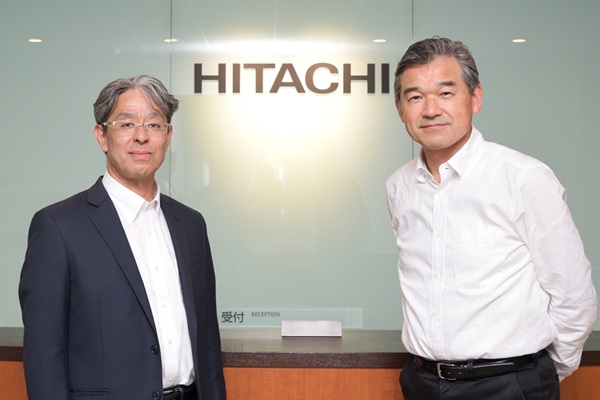
Upon his arrival at the Ibaraki Site, Matsui first received a brief introduction to Hitachi's R&D history and current structure from Atsushi Baba, Director of the Environment & Energy Innovation Center.

Following the establishment of the Hitachi Research Laboratory in 1934, Hitachi established the Central Research Laboratory in Kokubunji City, Tokyo, in 1942. It subsequently established research institutes by field, covering mechanical engineering, production technology, system development, design, and fundamental research, while also establishing overseas research facilities. Today, these have been reorganized into three major areas: Digital Innovation R&D, Sustainability Innovation R&D, and Next Research. While operating four domestic sites (Kokubunji Site, Ibaraki Site, Yokohama Site, and Hatoyama Site) as primary bases, Hitachi also operates joint research and development bases with universities and other institutions. Overseas, Hitachi has established R&D divisions across five regions, including the Americas and Europe. Approximately 2,000 researchers in Japan and 200 overseas are engaged in a broad spectrum of research, from fundamental to applied studies, supporting our future society.

The Ibaraki Site focuses on Sustainability Innovation R&D. For example, it develops technologies for power system stabilization, hydrogen production and supply, and marine carbon dioxide absorption (known as blue carbon), as well as nuclear energy technologies including decommissioning for the Fukushima Daiichi Nuclear Power Station, power plant restart support, new reactor development (including the BWRX-300 small light-water reactor), and digital transformation (DX) for nuclear power plants.
In the Digital and AI field, it collaborates with the University of Tokyo on digital observatory technology to observe and analyze diverse global social and economic activity data, identify risks to society, and detect early warning signs. Other research includes robotics technologies to perform frontline worker tasks, the digitalization and utilization of skilled engineers' expertise, and energy management for data centers in the era of generative AI.

In the Energy Applications field, which looks to the near future and aims to deliver the next innovation, research is progressing on next-generation cancer radiation therapy equipment that reduces the burden placed on patients, the development of motors with the world's highest power density for aircraft electrification, and silicon-based quantum computers.

“Hitachi itself began as a small venture company. Within that context, the emphasis on conducting proper research shows us Namihei Odaira's commitment to technology. It's wonderful that this spirit has been passed down properly. I don't think many companies today conduct such a broad range of research,” says Matsui.

Nuclear metaverse: DX for power plants utilizing digital technology and data

Among the diverse R&D themes at the Ibaraki Site, Matsui focused on nuclear energy-related topics for this report. He was first guided to the Metaverse Collaborative Creation Garage to explore the metaverse.

To drive DX in the nuclear energy field, Hitachi is developing technologies that integrate the metaverse and AI to enhance operational efficiency. These technologies apply to areas such as safety retrofitting at existing nuclear power plants, the construction of new plants, maintenance operations, and decommissioning projects.
This system recreates the site of a nuclear power plant in a virtual “metaverse” space, collecting, visualizing, and using diverse on-site data (including images, audio, documents, and sensor data) relating to workers, equipment, and tools. It also features a function that enables users to search for the information they need through dialogue-based interaction using generative AI, enhancing the convenience of data utilization. Multiple authenticated users can enter the metaverse space simultaneously as avatars to confirm design information and site conditions, perform dimensional measurements, hold online meetings, and more.
These functions accelerate decision-making, improve work efficiency and safety from design to on-site construction, and support the transfer of technical knowledge. The vision is to leverage this technology to build “data-driven power plants” that operate based on data.

Data-driven Power Plant for Innovation in Stakeholder Activities

How Metaverse is Used at Nuclear Power Plants

During the visit, Yohhei Sugimoto, Manager of the development team, introduced a case study where the technology was applied to the relocation of an in-house mock facility as an actual project to verify its effectiveness.

Hitachi constructed a full-scale simulated facility replicating the lower section of the Fukushima Daiichi Nuclear Power Station reactor to conduct validation and training for robot operation as part of efforts to decommission the plant. Metaverse technology was applied to relocation work for this facility. First, the simulated facility was recreated within the metaverse. Daily 3D measurement data from the construction site was applied to enable real-time progress monitoring. Photos taken with smartphones, surveillance camera footage, and design documents were also uploaded.
Using this metaverse space, daily evening meetings—originally held only at the construction site—are conducted in the metaverse. These meetings involved reviewing the day's work and discussing tasks for the next day. By having site supervisors, workers, and designers in remote locations share the same space and communicate while checking work progress, project members were able to reach a consensus faster and improve productivity.

To let Matsui experience this metaverse space, images of the simulated facility were projected onto the five screen walls (front, ceiling, floor, left, and right walls) of the Metaverse Collaborative Creation Garage. The entire space (except the rear) displays images, creating an immersive experience that makes users feel as if they have entered the digital space, without the need for VR goggles.
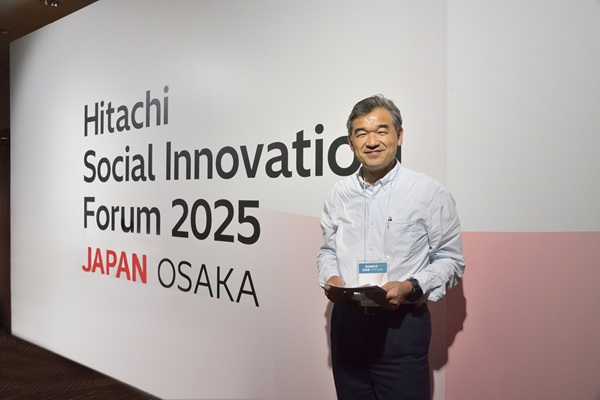
Upon seeing the images surrounding him, Matsui expressed his surprise, saying, “I saw a metaverse exhibit at the Hitachi Social Innovation Forum 2025 Japan, Osaka, but this one feels even more real.”

“In locations without such spaces, I think you'd probably view it on a computer screen. But being able to share a digital twin of the actual plant while conversing, even from remote locations, is groundbreaking. It might even enable collaboration with overseas sites. I feel that if we can share high-definition images like those I saw today, then it's fully practical for real-world use,” says Matsui.

Research and development of simultaneous adsorbents for treating contaminated water

Next, Matsui was guided to the Engineering Research Building. Because this is a radiation management facility that handles radioisotopes (RI), the group donned white coats and shoe covers before entering. The first item introduced here was an adsorbent used for treating groundwater and contaminated water at the Fukushima Daiichi Nuclear Power Station.

The contaminated water generated by Fukushima Daiichi Nuclear Power Station contains various radioactive substances: primarily high concentrations of radioactive cesium (Cs) and radioactive strontium (Sr). Since the accident, treating this water has been a challenge. Initially, only radioactive cesium was removed, and the water was stored in tanks. Starting in 2013, the Advanced Liquid Processing System (ALPS) began operation, removing radioactive substances except tritium from the contaminated water, and this treated water has been stored. Since 2023, measures have been underway to dilute this treated water, reducing the tritium content to less than 1/40 of the national safety regulatory standard, and releasing it into the ocean.

Radioactive cesium and strontium are removed using adsorbents. Previously, different adsorbents were used for each. If both could be removed using a single adsorbent, the number of steps and time required for treatment of contaminated water could be reduced, improving treatment capacity. This would also reduce the volume of spent adsorbents, which become radioactive waste. In response to this issue, in 2013, Hitachi developed a “Cs-Sr Simultaneous Adsorption Material” capable of adsorbing both radioactive cesium and radioactive strontium simultaneously. This material was applied to groundwater treatment in the subdrain and other water treatment facilities, which entered operation in 2015. At the Fukushima Daiichi Nuclear Power Station, groundwater from around the reactor buildings flowing into the buildings was a factor contributing to increased water contamination. The subdrain and other water treatment facilities—installed as a countermeasure against this—collect groundwater from around the buildings just before it flows into them, remove radioactive cesium and strontium, as well as other radioactive substances, and release the water into the ocean. Since these facilities began operation, the amount of groundwater entering the buildings has decreased, thereby reducing the volume of newly generated contaminated water.

According to Yuuko Kani, Distinguished Researcher of the development team, they chemically treated a silicotitanate compound (previously known as an adsorbent for cesium) to enhance its ion exchange performance, enabling the simultaneous adsorption of cesium and strontium. This newly developed simultaneous adsorbent exhibits adsorption performance equivalent to high-performance adsorbents for both cesium and strontium. In addition, while conventional adsorbents also adsorb sodium and calcium, which have chemical properties similar to cesium and strontium, respectively, this adsorbent can selectively adsorb cesium and strontium. This allows it to maintain high adsorption performance even under seawater conditions, where the water contains sodium and calcium.

Cs and Sr Adsorption Performance

This simultaneous adsorbent is not only used for groundwater treatment but was also adopted for use in the Advanced Liquid Processing System (ALPS) introduced at the Fukushima Daiichi Nuclear Power Station in 2014.
In recognition of these achievements, the research, development, and practical application of this simultaneous adsorbent were awarded the Contribution Award at the 52nd (FY2019) Ichimura Prize in Industry. The Ichimura Prize in Industry is presented to technology developers who have made outstanding contributions to the advancement of science and technology and the development of industry in Japan.

“The issue of contaminated water treatment was a theme I had covered extensively during my time as a reporter, but I hadn't realized that Hitachi's technology was contributing not only to the treatment of contaminated water but also to groundwater countermeasures. I remember when I appeared on a news program as a nuclear energy reporter and said something that we hadn't discussed in advance: 'Getting this unprecedented, highly advanced contaminated water treatment system operational in such a short time is really gold-medal-level technology. It's a win for Japanese engineers.' At the time, the reporting world had a strong negative bias against nuclear energy in general, and no one was voicing positive opinions. But I believed that efforts deserving of recognition should be properly acknowledged,” says Matsui.

Shape-changing robot technology contributing to the decommissioning work at Fukushima Daiichi Nuclear Power Station

Advancing further into the research building, Matsui received an explanation from Ryousuke Kobayashi, Manager of the development team, about a shape-changing robot being developed for use in the decommissioning work at Fukushima Daiichi Nuclear Power Station.

Extracting the fuel debris, considered the greatest challenge in decommissioning, first requires an understanding of the conditions inside the containment vessel. Robots used for this task must possess high radiation resistance, be small enough to pass through the pipes leading to the containment vessel (100 mm diameter), and have sufficient mobility to cross gratings (lattice-like metal plates used for ditch lids and scaffolding) and uneven surfaces. To meet these requirements, Hitachi developed a robot that travels on two small crawlers and can change its shape depending on the situation. The robot consists of a main unit equipped with cameras for filming, and crawler sections connected on both sides by joints that can bend 90 degrees. During movement, it maintains a stable U-shape. When passing through the pipes, it can transform so that the main body and crawlers align vertically in a single column.

This shape-changing robot was used in 2015 for a demonstration test to survey the first-floor area inside the containment vessel of Fukushima Daiichi Nuclear Power Station Unit 1. It was the very first robot to enter the containment vessel of an accident-damaged reactor. Although the first robot became stuck in a gap in the floor during the initial day of investigation and became unable to move, the second robot conducted investigations over six days, obtaining important information and insights for the decommissioning work.

Later, the research team further adapted this shape-changing robot design and developed the survey robot PMORPH, equipped with a new 3D-measurement-capable dosimeter and an underwater camera.
This robot was deployed in 2017 to survey the outer underground level of the pedestal (the foundation part of the reactor) inside the Unit 1 reactor containment vessel, contributing to the investigation and information gathering necessary for fuel debris retrieval. These efforts represent an example of decommissioning support leveraging Hitachi's technologies. *

“PMORPH gained attention as a robot that conducts surveys by lowering its sensor unit through gaps in gratings, much like ice fishing for Japanese smelt. The uncharted territory of decommissioning is a testing ground for researchers' ideas and technical capabilities. I hope that the insights and technologies gained while tackling these challenges will be applied not only to decommissioning but also to the future beyond,” says Matsui.

Gamma-ray irradiation facility supporting reactor reliability enhancement

After seeing the shape-changing robot, Matsui toured the Gamma-Ray Irradiation Facility. Here, cobalt-60 (⁶⁰Co)—a strong gamma-ray-emitting artificial radioactive isotope created by bombarding cobalt-59 (⁵⁹Co) with neutrons—is used to test the radiation-induced degradation of materials employed in nuclear power plants. This Hitachi test facility, in operation since 1972, has contributed to the advancement of reactor safety engineering.

“Because nuclear energy is a field where failure is not permitted, having a fully functional test environment is hugely significant. Hitachi began developing nuclear technology in 1957, built training reactors for education, and has operated such test facilities for over 50 years. The amount of accumulated knowledge must be massive,” says Matsui.

Key research themes in the nuclear energy field

After covering major nuclear-related research, Matsui interviewed Kenichi Katono, Senior Manager of the Nuclear Energy Systems Research Department at the Environment & Energy Innovation Center. He first asked about the current direction of nuclear energy research within Hitachi's R&D efforts.
Katono cited the following four themes as key R&D priorities.

First is the development of radiation-resistant sensing and robotic technologies for investigating and retrieving fuel debris, to facilitate the steady decommissioning of the Fukushima Daiichi Nuclear Power Station. Second is the development of nuclear DX technologies to ensure the reliable restart of nuclear power plants and achieve stable operation and improved operation rates.
Third is the development of technologies to enhance nuclear safety and flexibility. This includes radioactive material containment technologies, such as a proprietary noble gas filter and an organic iodine filter with improved removal efficiency, in addition to the mandatory filter vent required for accident countermeasures. It also encompasses output adjustment operation technologies that promote coexistence with renewable energy.

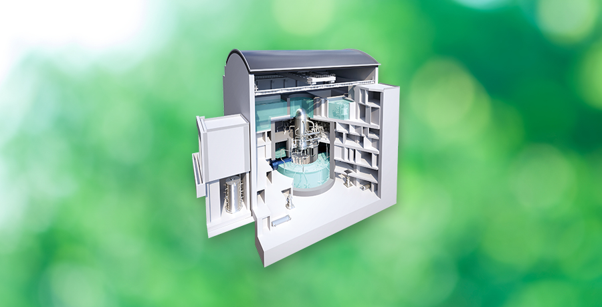
Fourth is the development of new reactor types. Alongside the BWRX-300 small light-water reactor, for which construction has begun in Canada and plans for introduction are advancing in other parts of North America and Europe, research is also progressing on technologies that reduce spent fuel, such as the Resource-renewable Boiling Water Reactor (RBWR). “We aim to leverage the outcomes of these R&D efforts to increase social acceptance of nuclear energy,” says Katono.

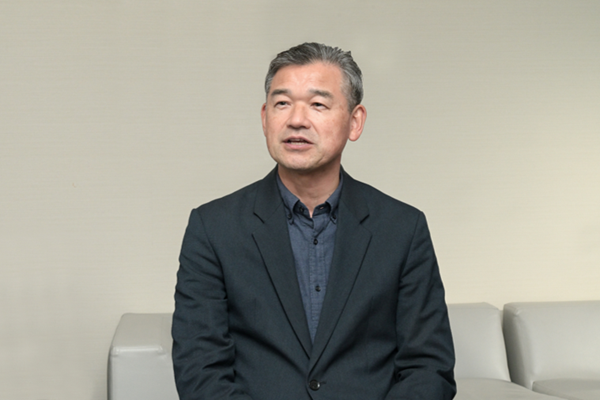
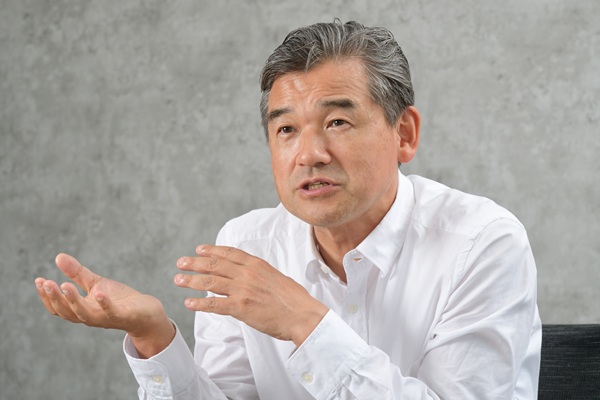
Kenichi Katono
Senior Manager of the Nuclear Energy Systems Research Department at the Environment & Energy Innovation Center

Resolve as a researcher, solidified by the Fukushima Daiichi Nuclear Power Station accident

Katono, originally from Iwaki City, Fukushima Prefecture, studied fluid mechanics at university and completed a master's degree in aerospace engineering before joining Hitachi in 2003. Although he didn't have a strong interest in nuclear energy at the time, he felt that “nuclear energy and aerospace engineering share common ground in terms of operating in extreme environments and being comprehensive engineering fields,” and dedicated himself to his research.

In 2011, just as his research was getting on track, the Great East Japan Earthquake and tsunami struck, confronting him with the Fukushima Daiichi Nuclear Power Station accident. “I was in my mid-30s, still considered an early-career researcher. While our superiors were scrambling to contain the accident, we were mainly providing logistical support. Amidst all of that, I felt immense anxiety about the future of our work,” he confides. He sensed the atmosphere around him had somehow fallen into a state of paralysis. He asked the younger researchers, “Is this really okay?” and launched voluntary research activities to conduct a multifaceted examination of Japan's energy future. After gathering data and engaging in thorough debates weighing both sides, the team concluded that nuclear power remained necessary from the perspectives of achieving carbon neutrality and ensuring national security. “That moment solidified my resolve,” he reflects. “I had made up my mind to continue with nuclear energy research.”

Proactive R&D for the next chapter of nuclear energy technology

Later, as project manager for the BWRX-300 small light-water reactor, Katono oversaw the final evaluation tests for regulatory approval in Canada.

In response to Matsui's question, “When a new project gets underway, doesn't everyone's outlook shift toward the future?” Katono nodded and replied, “In Japan, Shimane Nuclear Power Station Unit 2 has also resumed operations, and I sense a shift in mindset at Hitachi's R&D sites too.”

“After the Fukushima Daiichi Nuclear Power Station accident, the number of students applying for jobs in the nuclear energy field dropped significantly. On the other hand, because of this, we are now attracting highly motivated individuals with a strong desire to conduct proper research for the sake of Japan. This generation, entrusted with the future, has overcome a situation where R&D funding isn't particularly abundant, and their motivation to push forward from here is high. As someone overseeing nuclear energy research, my current mission is to firmly sow the seeds that will lead to the future growth of the nuclear energy business.”

When asked for a message to students aspiring to research careers, Katono spoke with strong conviction.

“While our approach in the past has been more defensive, I believe we've now entered a phase where we must shift gears and engage in proactive R&D. Of course, the importance of grounded research, never forgetting the lessons of the Fukushima Daiichi Nuclear Power Station accident, remains unchanged. At the same time, we are intensifying efforts in future-oriented research to refine and give shape to unique technologies. I want to convey, to both new graduates and mid-career hires, that Hitachi offers a place where you can work with excitement—both for Japan and the wider world—in the field of energy, contributing to the creation of a decarbonized society.”

After concluding his interview with Katono, Matsui summarized his impressions from his visit to the Research and Development Group's Ibaraki Site as follows.

“Through this visit, I was able to see firsthand the passion and resolve behind the technologies from those actually engaged in Hitachi R&D operations at the site. According to Katono, Hitachi engineers have long been called 'Nobushi' ('wild warriors'). I would like to add that I also gained the impression of a positive kind of almost stubbornly persistent dedication. It seems they were likened to nobushi for their spartan, bold, robust, proactive attitude, and their pioneering spirit. Seeing their dedicated and proactive approach across a wide range of fields, from grassroots research on materials and radiation to the application of cutting-edge digital technologies, I can somehow understand why. Thinking about what technologies might emerge next in nuclear energy R&D, which is shifting into a proactive phase, makes me feel excited too.”

*
Fundamental concept creation and prototype development for the shape-changing robot technology contributing to the decommissioning work at the Fukushima Daiichi Nuclear Power Station, as described in this article, were carried out by Hitachi, Ltd. and Hitachi GE Vernova Nuclear Energy, Ltd. The development of the actual unit and the demonstration tests conducted in 2015 and 2017 were carried out as International Research Institute for Nuclear Decommissioning (IRID) projects funded by subsidies such as the FY2013 Decommissioning and Safety Technology Development Subsidy for Nuclear Power Reactors, and the FY2013-2018 Supplementary Budget “Decommissioning and Contaminated Water Countermeasures Project Subsidy,” which are subsidy programs offered by the Agency for Natural Resources and Energy (ANRE).

Yasumasa Matsui

Yasumasa Matsui
Freelance Announcer and Journalist

Born in Inami, Nanto City, Toyama Prefecture. Graduated from Toyama Prefectural Takaoka High School. Graduated from the Department of Chemical Engineering, School of Engineering, Tokyo Institute of Technology (now Institute of Science Tokyo). In 1986, he joined TV Asahi as an announcer. He co-hosted Music Station with Tamori, served as a sportscaster on News Station, and worked as a news and information anchor on programs such as Station Eye, Wide Scramble, and Yajiuma Plus.
In 2008, he became the principal of TV Asahi's announcer school, Ask. During his two years in this role, he trained over 100 announcers who went on to work nationwide. In March 2011, following the 2011 Great East Japan Earthquake (and subsequent Fukushima Daiichi Nuclear Power Station accident), he transferred from the announcer department to the news department as a reporter covering the nuclear power plant accident. He later served as a reporter covering the Imperial Household Agency and weather-related disasters, and worked as a commentator. In 2023, after leaving TV Asahi, he established his own agency, OFFICE Yuzuki. He also serves as a plastic model history research advisor for Tamiya Inc., ambassador for Nanto City, Toyama Prefecture, and media advisor for sake company, DASSAI Inc.

Related Links

In order to read a PDF file, you need to have Adobe Acrobat Reader installed in your computer.