

Nearly fifteen years have passed since the Fukushima Daiichi Nuclear Power Station accident caused by a huge earthquake and tsunami. While the effects of the accident remain even today, at the site where decommissioning work aimed at recovery is underway, unprecedented challenges are being undertaken one by one, making steady progress toward the future.
Yasumasa Matsui, who became a journalist specializing in nuclear energy in the wake of the accident, revisited the Fukushima Daiichi Nuclear Power Station for the first time in around a decade to report on the frontlines of the decommissioning effort. He also paid repeat visits to the TEPCO Decommissioning Archive Center and J-Village to look back on memories from the time and see what recovery looks like with his own eyes. Is the decommissioning work currently underway at the Fukushima Daiichi Nuclear Power Station nothing more than a response following the accident, or does it represent the foundations supporting the future of nuclear energy? Matsui will seek that answer from voices in the field.
At 2:46 p.m. on March 11, 2011, a massive 9.0-magnitude earthquake with an epicenter off the Sanriku coast struck, subjecting a wide swath of eastern Japan to intense shaking. Many facilities operated by Tokyo Electric Power Company Holdings, Inc. (TEPCO) suffered damage due to the earthquake and ensuing tsunami, and at TEPCO's Fukushima Daiichi Nuclear Power Station, which was located close to the epicenter, the earthquake caused a loss of external power. Although the reactors operating at the time went into emergency shutdown as designed, the site was flooded by a 15m tsunami that arrived approximately 50 minutes after the earthquake struck, and almost all power needed to cool, monitor and control the reactors was lost.
As a result, Unit 1, Unit 2 and Unit 3, which were operating at the time, lost cooling capacity, leading to fuel meltdowns. The hydrogen produced as a result caused hydrogen explosions in the Unit 1, Unit 3 and Unit 4 buildings. A large amount of radioactive material was released into the environment. Immediately following the accident, the scope of evacuation orders issued by the government to residents extended to a 20-kilometer radius around the power station, forcing some 160,000 people to flee.
Due to the efforts of the Self-Defense Forces, firefighters, police, affiliated companies and others involved, the accident was brought under control thereafter, with all units achieving cold shutdown in December 2011. The situation has remained stable in the years since. As radioactive materials were decontaminated and infrastructure and living conditions improved, the evacuation orders were gradually lifted, and today only the so-called “difficult-to-return” zone remains unoccupied. While the daily lives of many people are still affected to this day, progress is still being made toward recovery.
In response to this accident, the decision was made to decommission all reactors at the Fukushima Daiichi Nuclear Power Station, including Units 5 and 6 that were shut down for scheduled inspections at the time of the accident. The decommissioning faces a long road ahead, and is expected to take at least thirty to forty years.
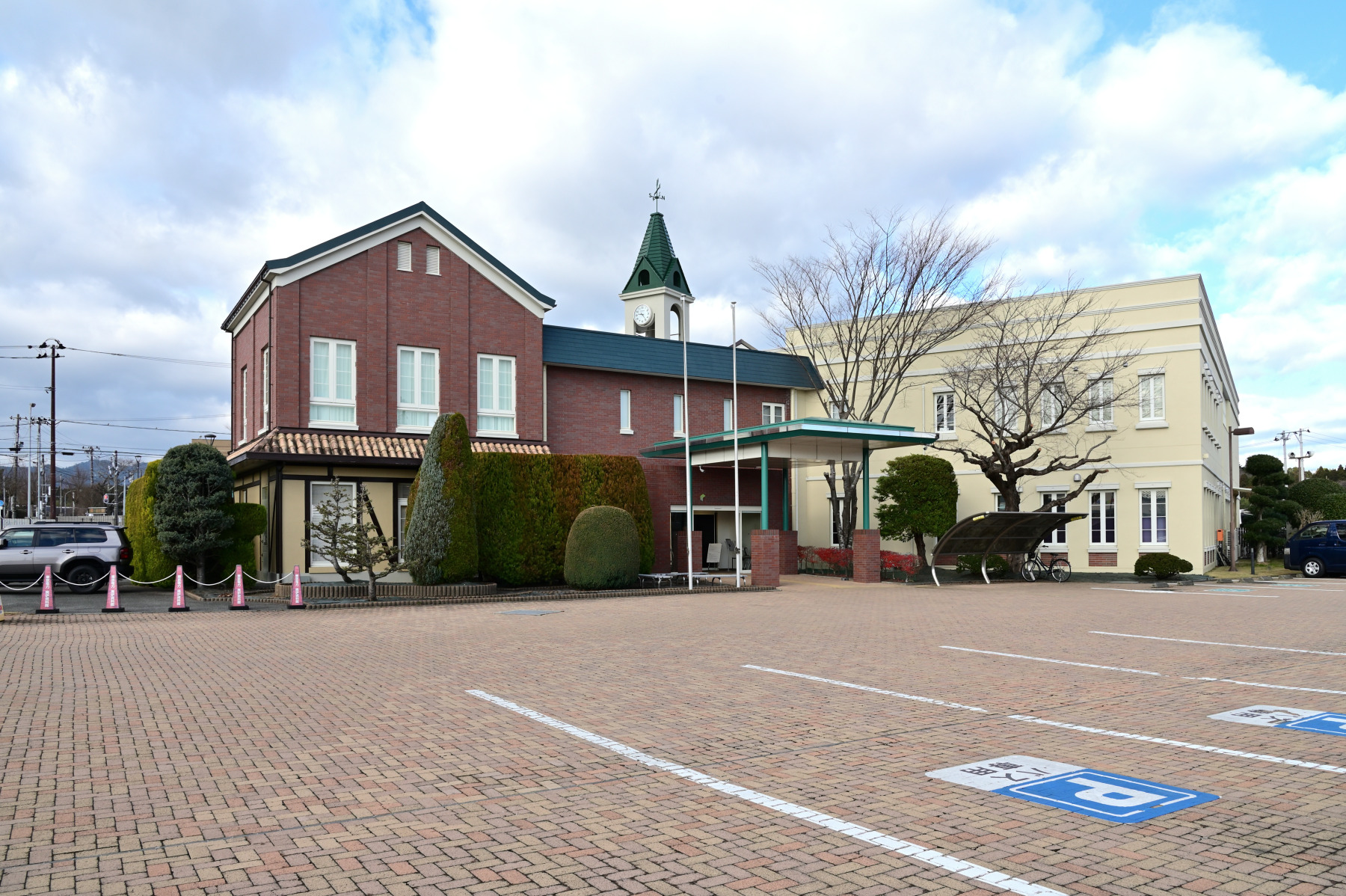
TEPCO Decommissioning Archive Center
In November 2018, TEPCO opened the TEPCO Decommissioning Archive Center as a place for visitors to learn about the accident and the current status of decommissioning efforts at the Fukushima Daiichi Nuclear Power Station.
Located around 15 minutes' walk from Tomioka station on the JR Joban line in Tomioka-machi, Futaba-gun, Fukushima Prefecture, the building was formerly called the TEPCO Energy Museum, and served as a PR facility for the Fukushima Daini Nuclear Power Station.
Visiting the Fukushima Daiichi Nuclear Power Station for the first time in a decade, Matsui first made his way to this Decommissioning Archive Center.
“I visited this facility once when it was known as the Energy Museum, and again when it had been renamed as the Decommissioning Archive Center, but the information on display may have changed a little since last time,” explains Matsui as he heads inside.
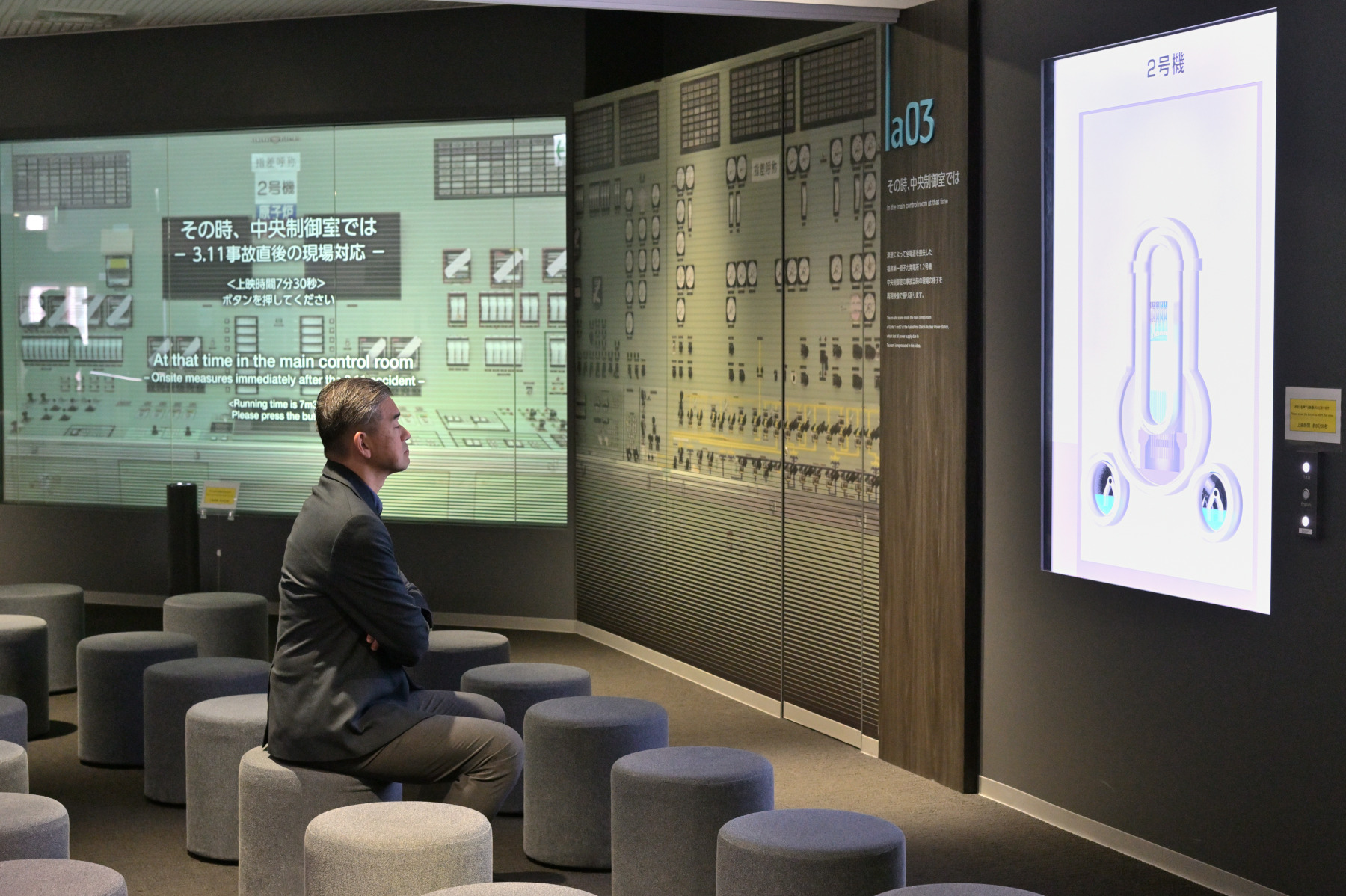
The TEPCO Decommissioning Archive Center is a two-story building. The first floor is a zone that presents various information about the decommissioning operations, while the second floor is a zone displaying memories and records of the accident, as well as the reassessment and lessons learned from it. At the entrance, Matsui was greeted by staff and first guided to the theater hall on the second floor. This is where visitors can watch a video that summarizes the events from when the Great East Japan Earthquake struck to the nuclear accident and the subsequent response. From the video, which tracks the progression of the accident in a factual manner, one gains a renewed sense of the tension that was present at the site at the time.
After watching the video, the tour proceeds to a series of displays that look back on what actually happened inside Units 1 through 4 during the accident from inside the reactors. In Unit 1, it is estimated that almost all of the fuel melted down through the reactor pressure vessel, turning into fuel debris that fell to the bottom of the primary containment vessel. In Unit 2, although a hydrogen explosion was avoided, it is believed that the amount of radioactive material released was the largest among all units. Details of the accidents that unfolded in Units 3 and 4 were also presented through videos, offering a way for visitors to gain an intuitive understanding of what took place.
Next, the tour was guided to the displays on “reassessment and lessons” from the accident. This section examines the root cause of the Fukushima Daiichi Nuclear Power Station accident and why it could not be prevented. The root cause of the accident was inadequate measures against tsunamis, insufficient preparations to deal with severe accidents, and a lack of preparations for incident response. On the question of why the accident couldn't be prevented, the displays describe the underestimation of risks, lack of safety awareness and an increasing technical dependence on manufacturers and partner companies in the areas of design and troubleshooting, highlighting that self-directed technologies and response capabilities to prepare for an accident were lacking. This section also describes how a “vicious cycle” developed in which factors such as insufficient on-site accident response drills and supply stockpiling along with inadequate dialogue with society interacted and reinforced one another.
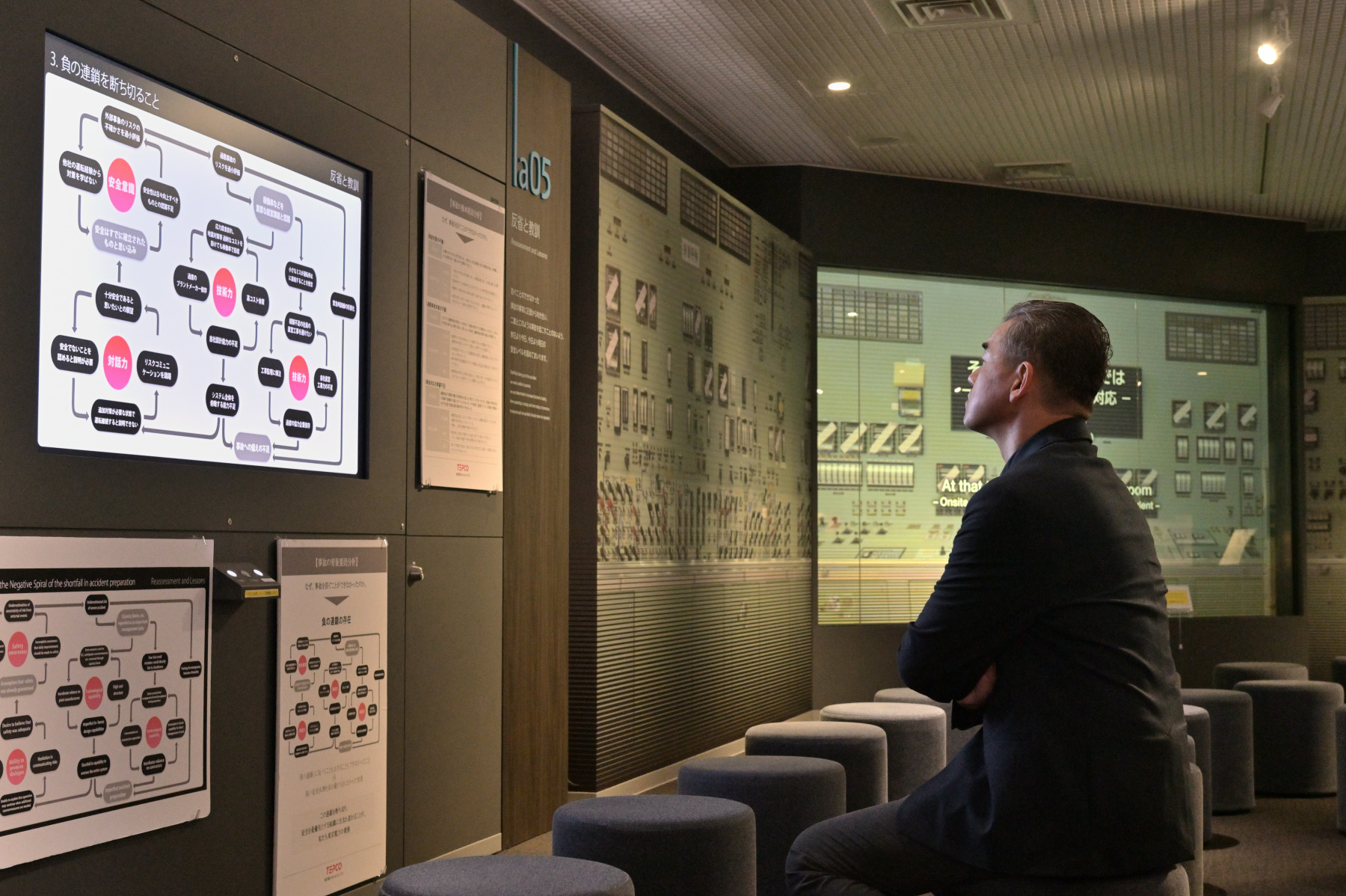
“Not dismissing the accident as 'unavoidable because it was a natural disaster,' and maintaining the narrative that it was something that could have been avoided through sufficient human efforts, is crucial.” (Matsui)
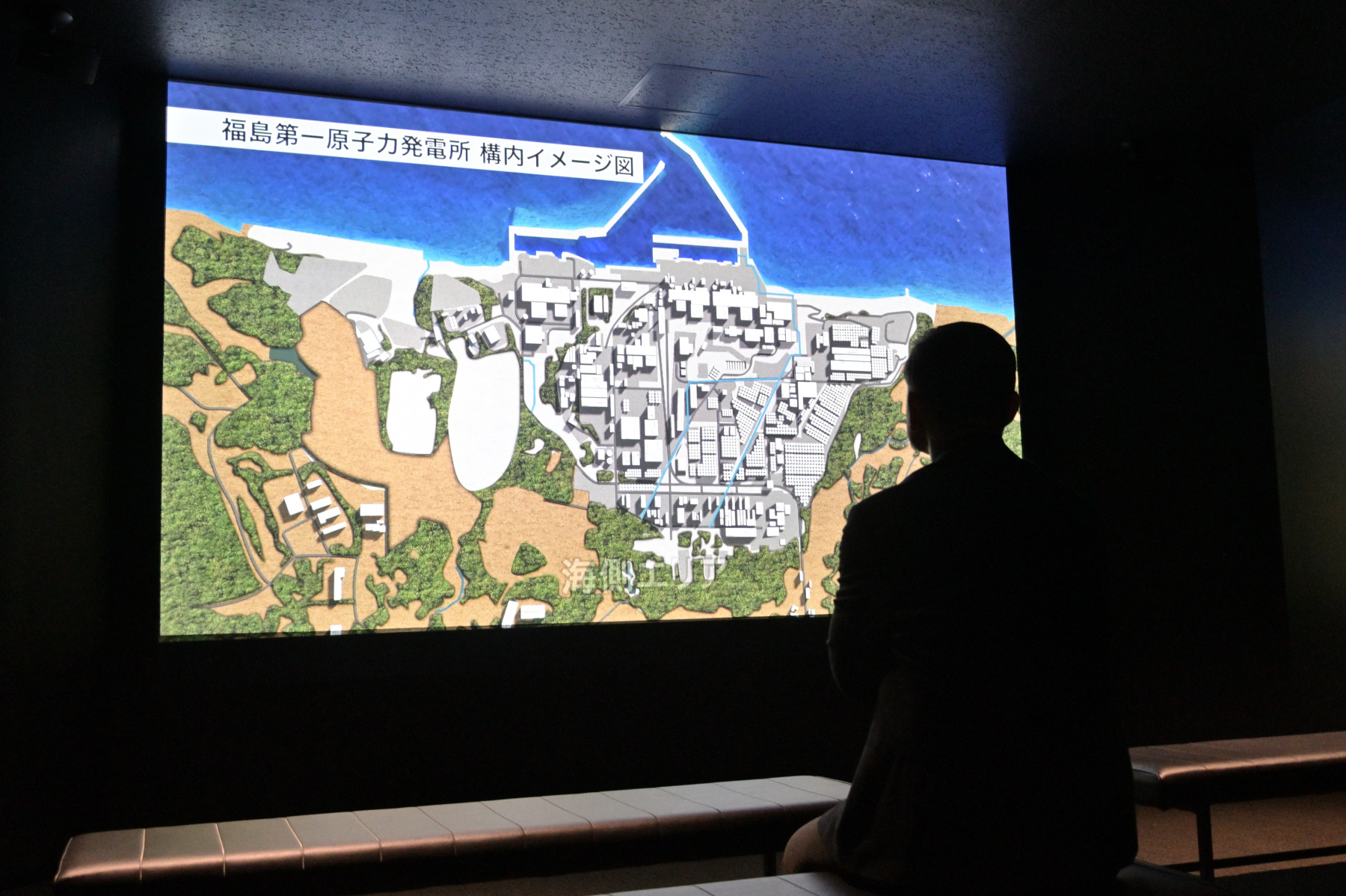
On the first floor, visitors are first directed to a video around ten minutes long which gives an overview of decommissioning work at the Fukushima Daiichi Nuclear Power Station.
Next, after going through panel displays explaining how radioactive waste is treated and stored, displays describe activities to investigate the interior of the primary containment vessels. The displays on investigations of the containment vessel interiors have models representing some of the robots used, including Hitachi's PMORPH shape-shifting robot that was used to investigate Unit 1. Visitors can also view a scale model of the fuel debris that was retrieved from Unit 2 on a trial basis in November 2024 as the first such effort following the accident. While the sample of small debris that was retrieved weighs just 0.7 grams, analyzing it will yield data to help study future retrieval methods, tool selection and worker safety measures. The section explains that a second retrieval was also completed in April 2025, noting that trial retrievals and analysis will continue in the future toward the full-scale fuel debris retrieval operations that are scheduled for the late 2030s.
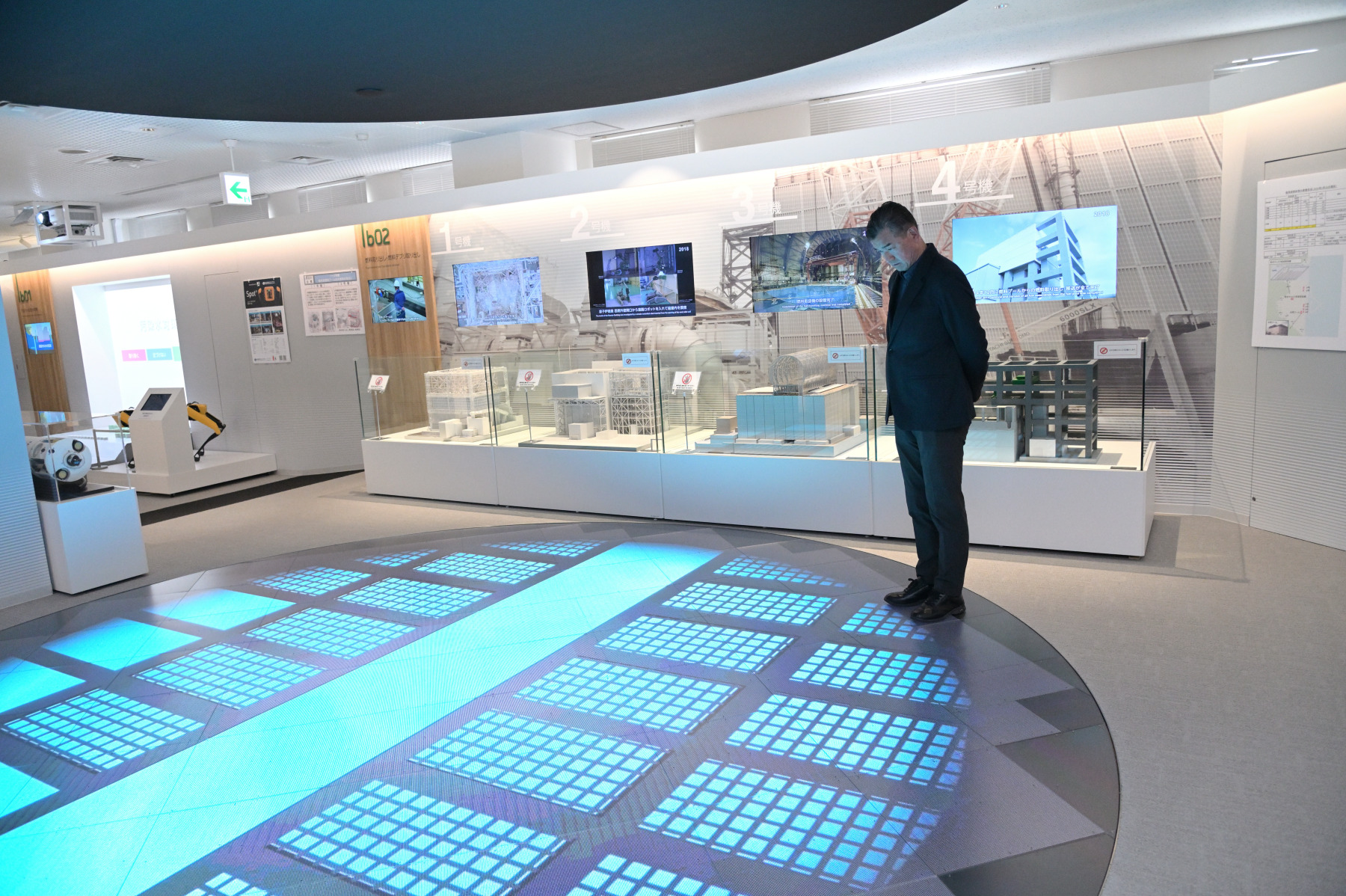
In a display showing activities to investigate the interior of the primary containment vessels, visitors can gain a feel for the actual size of the containment vessel through images projected on the floor.
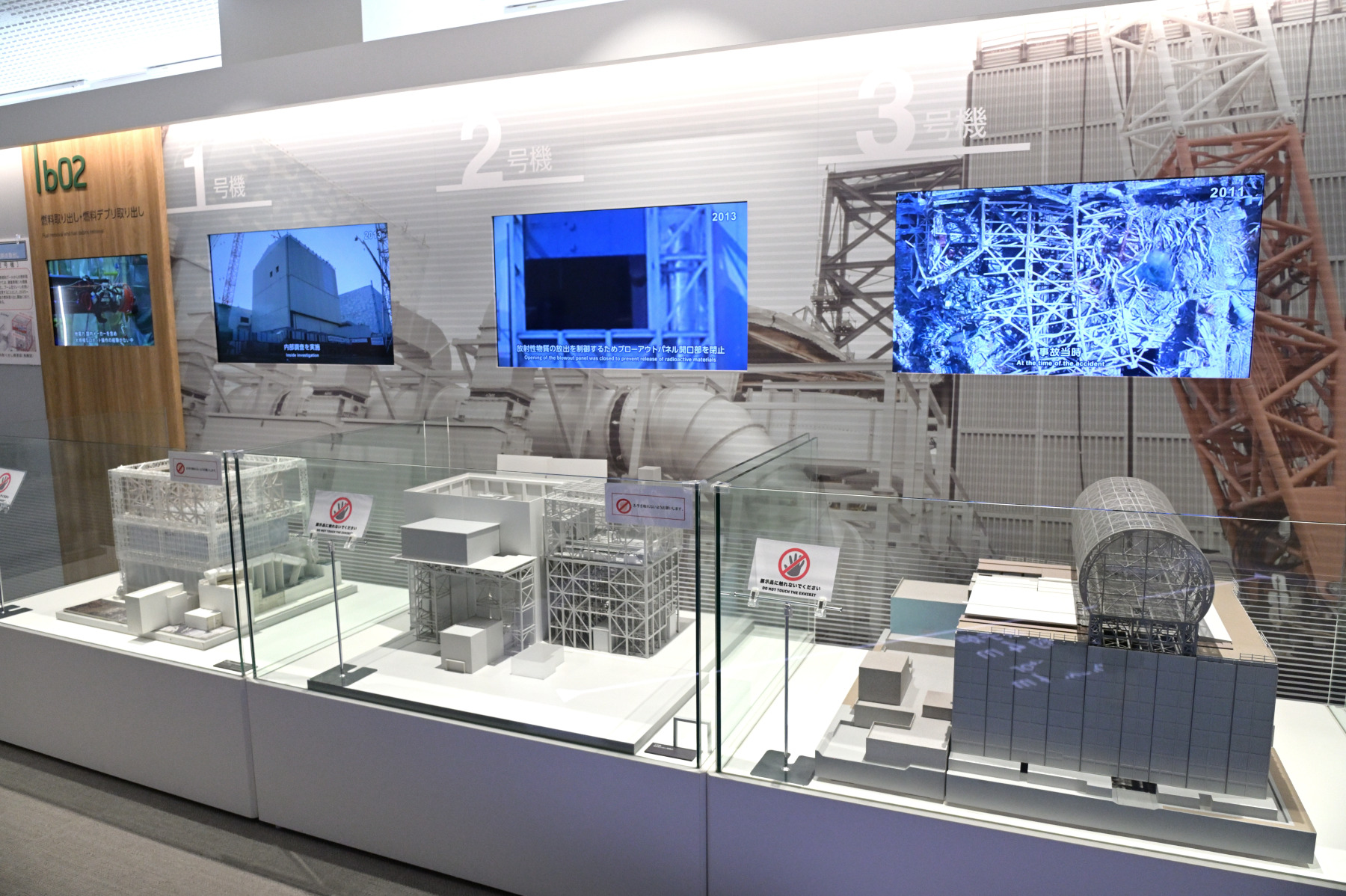
Models show the current state of the buildings housing Units 1 through 4.
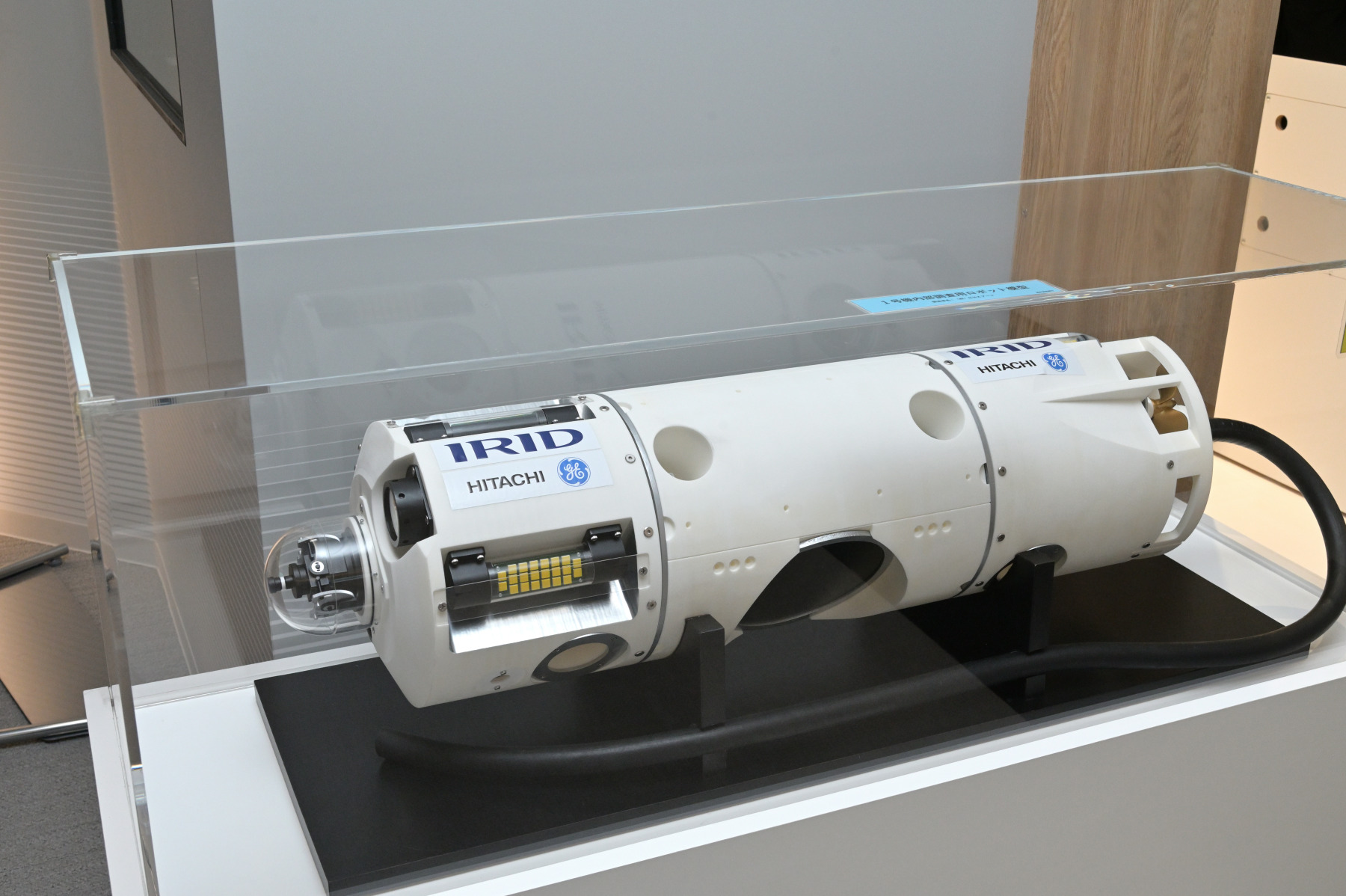
Model of a robot used to investigate the interior of Unit 1
Next, Matsui received an explanation of measures to deal with contaminated and treated water. The reactors are currently being injected with roughly 200 cubic meters of cooling water each day. A circulating water injection and cooling system is implemented, where cooling water that has been contaminated with radioactive material when coming into contact with fuel debris and other areas is sent to a treatment facility where it undergoes cesium and strontium removal and desalination treatment, after which it is again used for cooling. However, around 60 cubic meters of underground water and rainwater flows into the buildings each day, and the portion that cannot be used for circulating injection had been stored in tanks after being processed through an Advanced Liquid Processing System (ALPS) which removes most of the 62 radioactive nuclides other than tritium. However, due to the need to secure a site area for decommissioning work and other considerations, this treated water has been discharged into the sea since August 2023.
When the treated water is discharged into the sea, first checks are performed to ensure that 29 types of radioactive nuclides other than tritium fall below regulatory levels. Next, the treated water is diluted at least 700-fold with seawater, and once the tritium concentration falls below 1,500 becquerels per liter, it is discharged into the sea roughly one kilometer away from the power station site. At the time it is discharged, the tritium concentration in the water is less than 1/40th of Japanese regulatory standards and 1/7th of drinking water standards set by the World Health Organization (WHO). Information about the discharge of the treated water into the sea is disclosed in multiple languages on a “Treated Water Portal Site.”
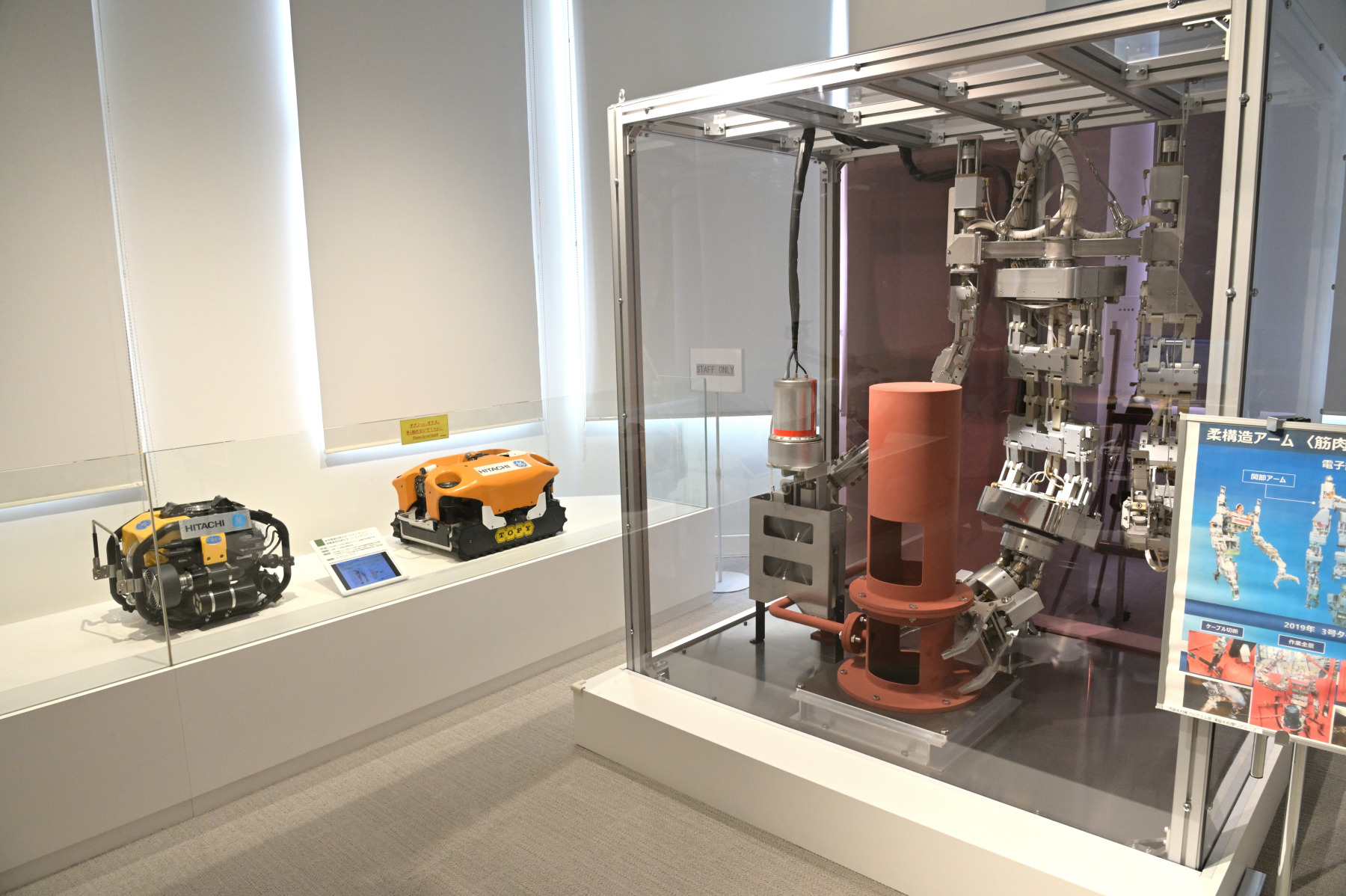
The Decommissioning Archive Center also has Hitachi's submersible swimming robot and submersible crawling robot which were used to investigate fuel debris on display, among other innovations.
The fast-paced tour on the day lasted a little over an hour, and given the time, there were a lot of things to see on display. “One of the factors that led to the accident was shown to be inadequate dialogue with society, and I got a feel for TEPCO's efforts to address that,” recounts Matsui. He then shared his impressions of the visit.
“The information being shared here was mostly already known to someone like me, who has been reporting on the accident since it occurred, but a great deal of ingenuity has gone in to presenting that information in a way that is this easy to understand, and I hope as many people as possible get the chance to see it. The problem is that this is not the kind of place you can decide to visit on a whim. I think a similar facility should be set up in Tokyo, so that the reassessment and lessons learned from the accident never fade.”
After visiting the Decommissioning Archive Center, Matsui's next stop was a tour of the Fukushima Daiichi Nuclear Power Station, where decommissioning work is proceeding to this day.
“It's been around ten years since I was last here, and a lot has changed,” remarks Matsui as he arrives at the site. He is greeted by Masato Ito, director of the Fukushima Site Office who is responsible for Hitachi's on-site decommissioning work, and is directed inside the grounds.
Visitors touring the facility must undergo stringent security checks before being allowed to enter. First, a copy of their personal identification is submitted in advance. On the day of the visit, after their identification is checked, and they are issued a temporary entry pass. Visitors also receive personal dosimeters, and once their passes are authenticated at the entrance gate, they are finally allowed inside. In the interests of security, cameras, smartphones, smart watches and other devices cannot be brought inside. Only photography using pre-authorized cameras is allowed.
Transport within the site was by car, and the tour first moved to the “Blue Deck,” which provides a clear view of Units 1 through 4. The deck is located close to Units 1 and 2, and after getting out of the vehicle, the buildings can be seen from close range (around 100 meters away if judged by eye). It is possible to move to nearly all locations within the site including the deck and the roads around the buildings without the use of protective clothing.
“When I first visited, we had to wear thick protective clothing and masks, and each time since, less and less equipment has been needed. But this time, I was shocked that it was possible to move around the site in normal work clothes without any protective clothing or masks whatsoever. It's become a lot easier for the workers to do their jobs,” explains Matsui.
Even so, protective clothing is required in the vicinity of the buildings and when moving inside, and around the exhaust stacks near the buildings and other areas, high radiation levels are still being recorded, says Ito.
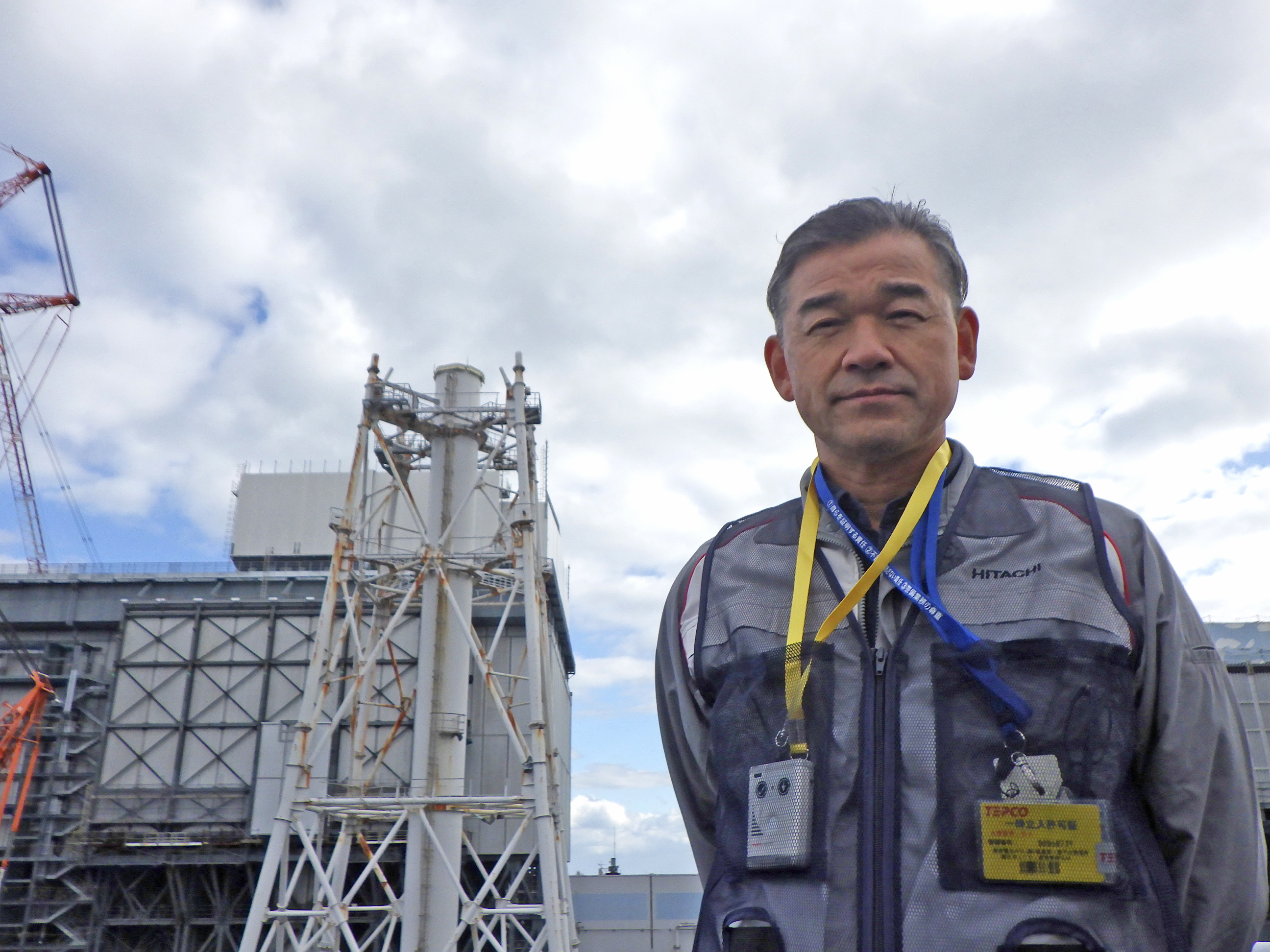
Visible on the left is the Unit 1 building and exhaust stack. During the tour, preparations were underway to install a large cover over Unit 1.
After stepping down from the Blue Deck and getting back into the car, Matsui views the line of ALPS treated water tanks, the ALPS treatment facility building, dry cask storage facility and other areas from a distance while heading toward the ALPS treated water dilution and discharge facility.
The facility, constructed on the shore near Units 5 and 6, plays the role of taking in seawater, mixing it with treated water, and discharging the diluted treated water offshore. From the “Green Deck,” which was installed to provide a view of the treatment facility, you can look out across the Pacific Ocean and also see large tanks that buckled due to the tsunami and have been left in place along the shoreline. The location gives a renewed appreciation for the forces imparted by the massive tsunami.
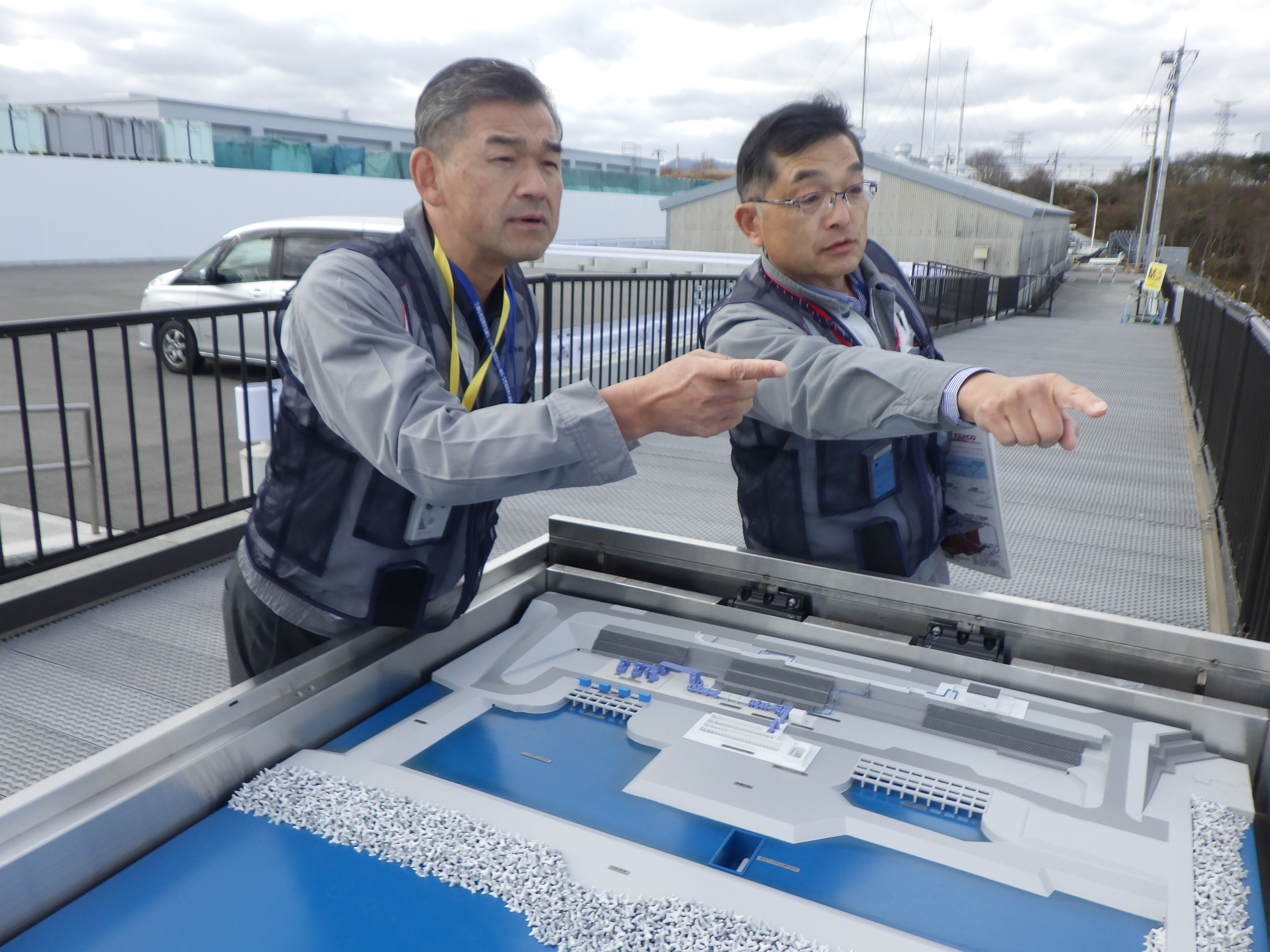
The Green Deck, which looks out over the ALPS treated water dilution and discharge facility, also features a scale model of the facility.
Next, after being shown locations that had been the planned construction sites for Units 7 and 8, now being used as waste storage locations, and a building used to store large-sized waste, Matsui returned to the entry control building.
When leaving, each visitor undergoes checks for contamination using a body surface monitor, and any items they are carrying, such as notebooks, are also checked for contamination. If there are no issues, visitors can pass through the gate, and after the readings on their individual dosimeters have been checked, they return their temporary entry passes, signaling the end of the tour. Incidentally, on this visit, the dosimeter recorded a minute reading of just 0.01 millisieverts.
Looking at the current state of decommissioning operations (as of February 2026), the Fukushima Daiichi Nuclear Power Station decommissioning site has changed dramatically from what it was a decade ago. At Unit 1, the installation of a large cover placed over the reactor building in preparation for the removal of fuel from the spent fuel pool is complete. Preparations are now being made to remove rubble from the operating floor. The removal of fuel from the pool is scheduled to commence sometime between fiscal 2027 and fiscal 2028. At Unit 2, preparations including the installation of fuel handling equipment are proceeding on the south side of the building ahead of the start of fuel removal scheduled for as early as the first quarter of fiscal 2026. The removal of fuel from inside the spent fuel pools of Units 3 and 4 is already complete.
In terms of measures to deal with tsunamis, the construction of a seawall with a maximum height of 16 meters above sea level with a total length of around one kilometer has been completed. The concrete blocks that make up the seawall were manufactured at factories located in Fukushima Prefecture.
Inside the site, pavement work to coat surfaces with sprayed mortar and other materials aimed at reducing the dispersion of radioactive materials and reducing radioactivity has been completed in most areas. At the time of the accident, it was necessary to wear protective clothing and full-face masks in all areas within the site, but thanks to this work, simple masks and regular work clothes have been able to be worn in around 96% of the areas in the site since May 2018. The working environment has also been dramatically improved, including areas that can now be accessed without the need for masks, gloves and similar equipment. The radiation exposure dosages of workers are managed so that they do not exceed 100 millisieverts every five years, and 50 millisieverts in any one year.
At a large rest house that was completed in 2015, a cafeteria serving hot meals prepared with ingredients grown in Fukushima Prefecture, a convenience store, shower rooms and other facilities have been set up to support the roughly 4,000 workers engaged in decommissioning work at the site. The entry control building is equipped with an emergency medical center and ambulances staffed 24 hours a day, along with a heliport equipped to transport people to outside medical facilities if needed.
Matsui shared his impressions after visiting the Fukushima Daiichi Nuclear Power Station again for the first time in about a decade.
“I visited the power station on November 11, 2011 as the sole representative of TV Asahi when it was opened to the press for the first time following the accident. After that, as far as I can remember, I visited six or seven times over a three-year period. At first, I had to be in full protective gear while keeping a close eye on the clock, and I remember reporting while being told, 'I can only be here for a few more seconds.' Now, the buildings can be seen with light clothing, and that makes it all the more profound. Having said that, the inside of the reactor buildings still has high levels of radiation, and it is expected to take a considerable amount of time to retrieve the fuel debris. I got the sense that this is something we must continue to face with the seriousness it deserves.”
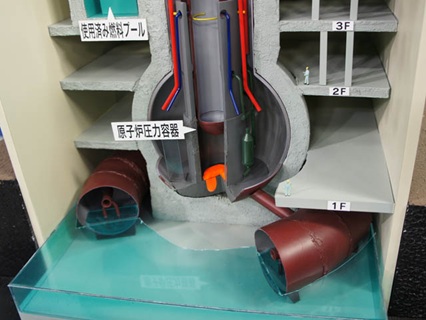
A 1/144th scale model of Unit 1 of the Fukushima Daiichi Nuclear Power Station that Matsui created himself at home in 2011 to explain the situation on news programs. The cutaway model of the pedestal section recreates the sight of how contaminated water accumulates and is designed to show how the melted-down fuel has eroded the bottom of the containment vessel.
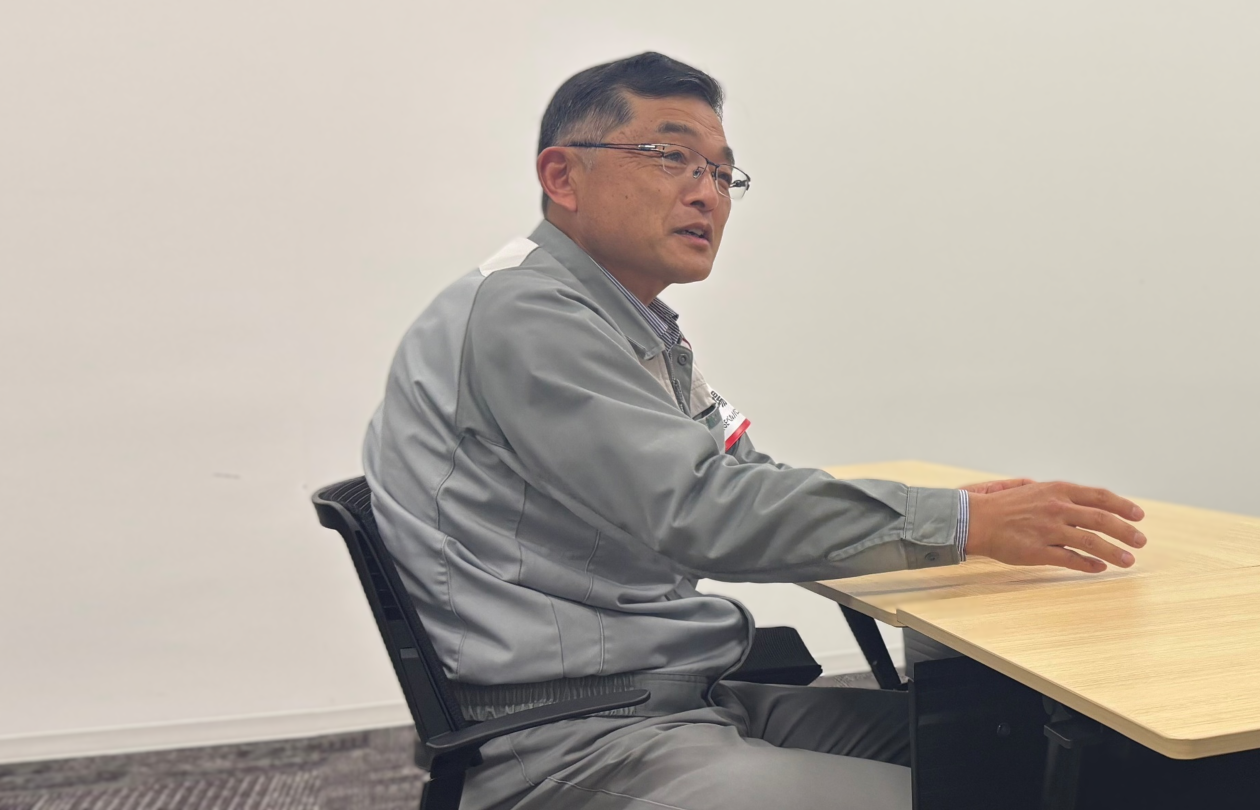
Masato Ito, Site Director, Fukushima Site Office
After the tour, Matsui sat down to interview site director Ito about the situation at the decommissioning site.
Ito joined Hitachi in 1991. Assigned to the Nuclear Design Department, he was involved in the design of large stainless steel structural elements embedded inside the reactor pressure vessel. Ito says he chose the field of nuclear energy out of a desire to try designing large things.
During his time gaining experience in the Design Department over ten or so years, he also went to work on formulating plans for preventive maintenance work and took part in major maintenance projects such as the replacement of shrouds inside reactors at the Tsuruga Nuclear Power Plant and other facilities. He later moved to the Manufacturing Division, where he was also involved with preventive maintenance work for power plants, in addition to production technologies for the reactor internals.
In 2011, when the Great East Japan Earthquake struck, he was assigned to the Shimane Nuclear Power Station, and on March 11 happened to be near Hitachi City. While he was in the middle of erecting scaffolding and conducting equipment testing at height at a partner manufacturer's factory, the area was hit with strong shaking, and he had to marshal all of his efforts to ensure his own safety.
Later, in 2012, Ito returned to the Nuclear Manufacturing Department at Hitachi's Rinkai Factory, and after once again becoming involved in manufacturing activities, he was dispatched to the Fukushima Site Office in March 2016 as deputy site director. Over the ten or so years since, he has dealt with the unprecedented project of the site's decommissioning, with his duties spanning a wide range of areas.
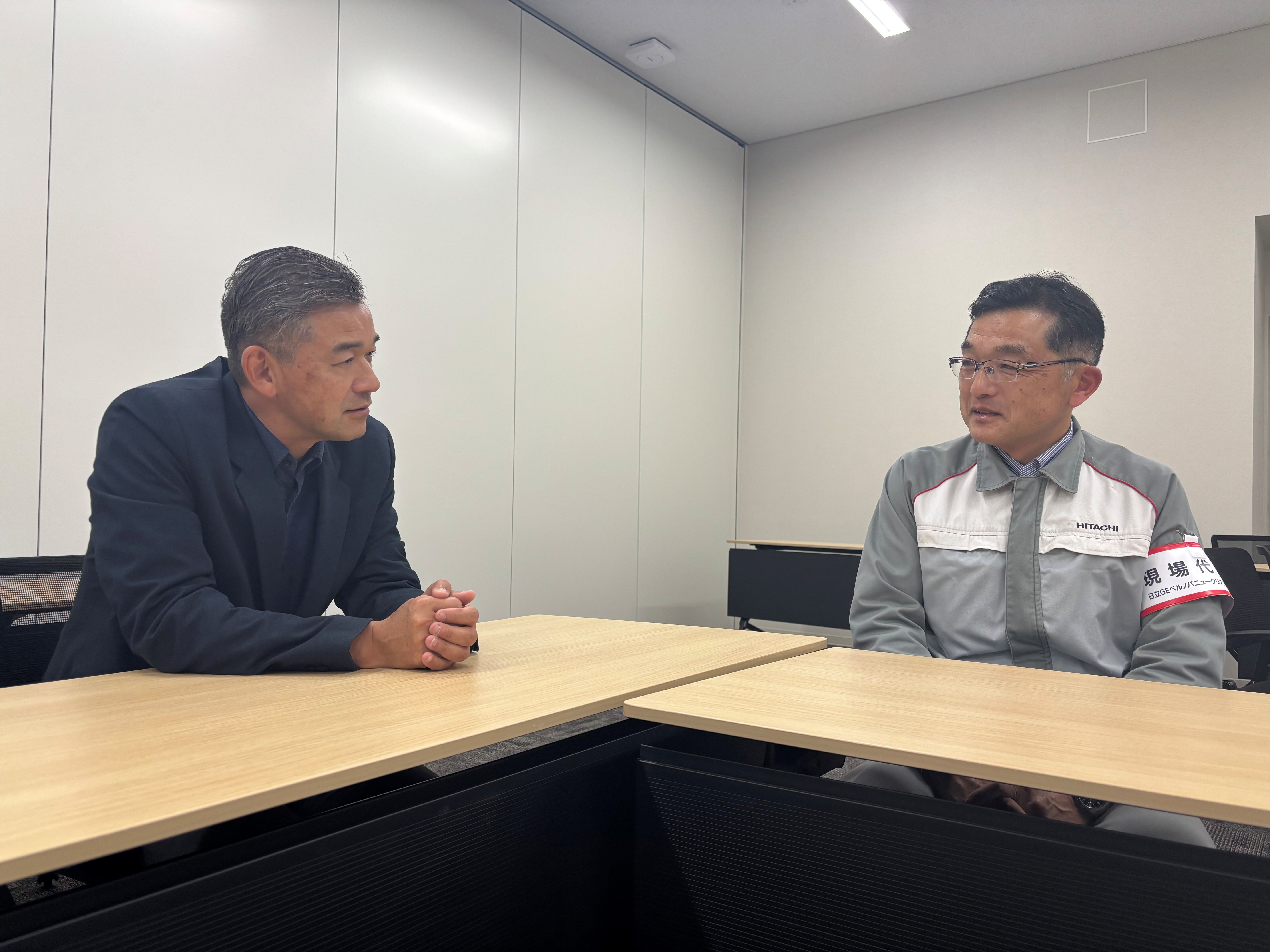
When Matsui asks, “The decommissioning is a project that will take dozens of years from here on out. How does everyone maintain their motivation?" Ito offers a clear answer.
“Many of the people working on site here are locals, and they have a strong desire to push the decommissioning forward through their combined efforts. To put it in grander terms, their sense of mission serves as motivation.”
Ito also pointed out that the decommissioning project is not just a challenge affecting the Fukushima Daiichi Nuclear Power Station.
“The knowledge cultivated here will not only benefit decommissioning efforts at other nuclear power plants, but it could also be applied to various other industrial fields. Moreover, I believe that steadily implementing the decommissioning is one of the fundamental elements influencing the future of Japan's nuclear energy policies.
It could also affect the restarting of other nuclear power plants and discussions on whether to build new ones. That is why I feel a sense of responsibility to ensure the job gets done right.”
Responding to Matsui's queries about the schedule seeming to lag initial plans, Ito was also clear: “The most important things are safety and quality.” The attitude of prioritizing safety over the schedule and “stopping if something feels wrong” is a sentiment shared across the whole site, he explains.
“In terms of the future outlook, we are first focused on removing the rubble and spent fuel from Unit 1. Once that is finished, we will formulate detailed future steps to retrieve the other fuel debris a little at a time. It is important to have an overall outlook while ensuring that steady, step-by-step progress is made on the more immediate schedule right in front of you.”
Reflecting on Ito's comments, Matsui wrapped up the interview.
“The decommissioning is not just dealing with the aftermath of the accident; it's also about laying the foundations to support the future of nuclear energy. I think the path to decommissioning also leads to the future of nuclear energy. From the remarks of Director Ito, someone who continues to stand on the front lines of this effort, I got a sense of his determination to shoulder the responsibility of passing this on to future generations.”
At the conclusion of his coverage at the Fukushima Daiichi Nuclear Power Station, Matsui moved on to J-Village, the national training center that played an important role at the time of the accident.
It was also Matsui's first time visiting this facility in around ten years. “When I entered the Fukushima Daiichi Nuclear Power Station after the accident as part of my reporting duties, I changed into protective clothing and put on a full-face mask here, and then bounced around on a bus heading to the power station for more than 30 minutes. This brings back memories of that time,” says Matsui. Guided by Shigenari Akashi, manager of the Planning and General Affairs Group at J-Village, Matsui reflects on the disaster while walking down J-VILLAGE STREET, which features wall displays some 60 meters in length depicting the history of J-Village.
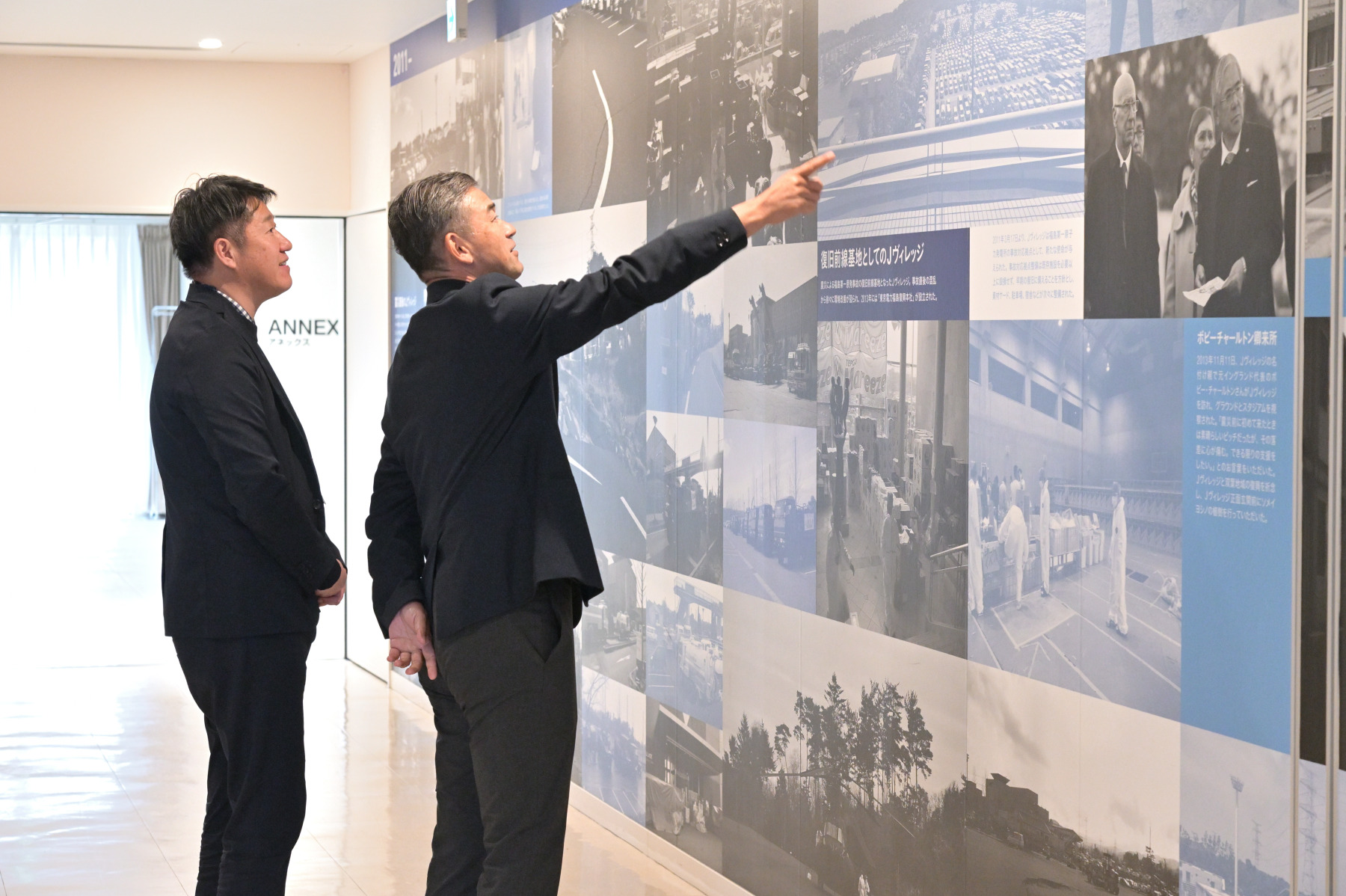
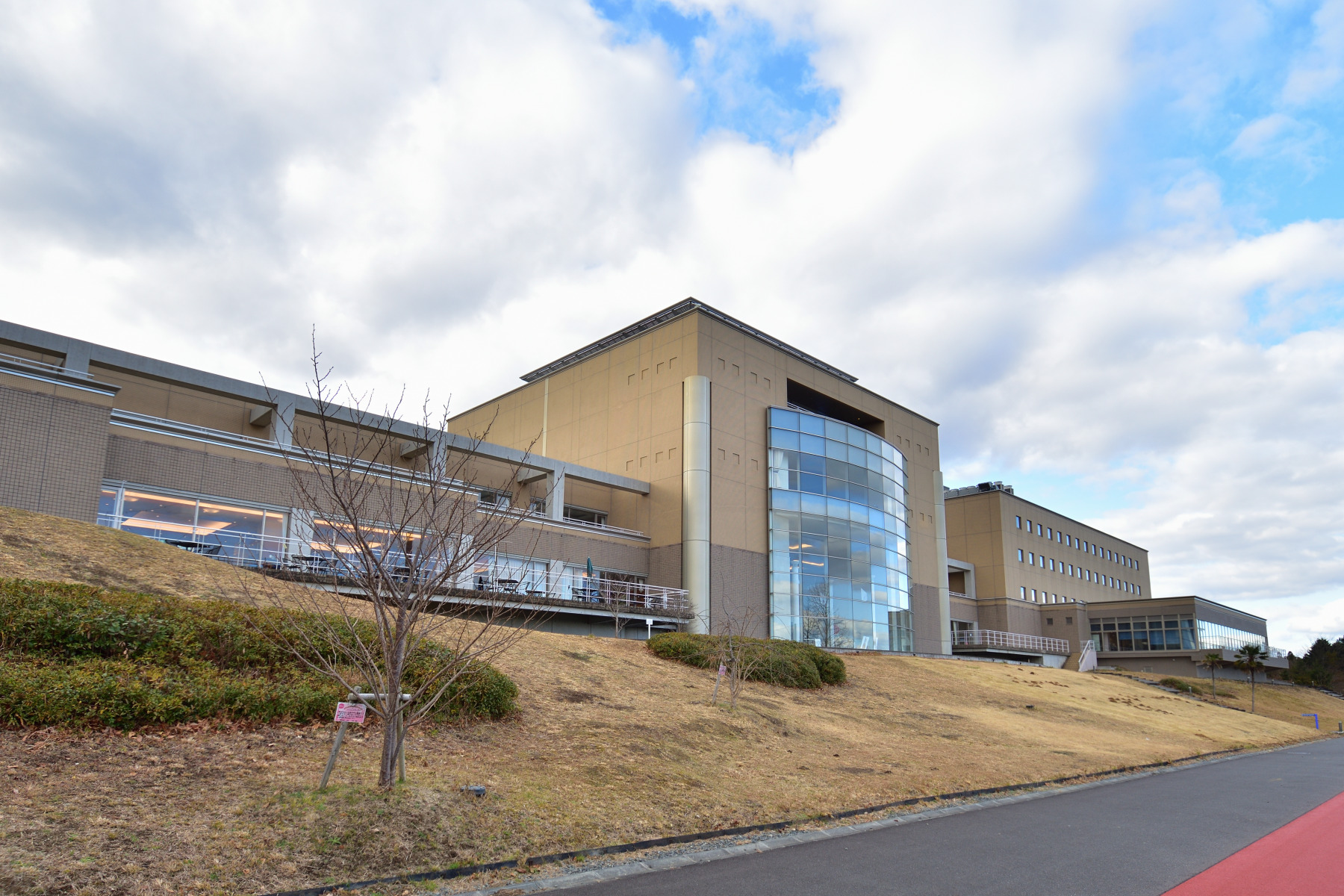
J-Village, which opened in July 1997, is one of Japan's leading sports facilities, boasting a site area of around 49 hectares (the equivalent of 10 Tokyo Dome baseball stadiums) that spans the towns of Naraha-machi and Hirono-machi in Futaba-gun, Fukushima Prefecture. Designed as Japan's first national training center for soccer, it has been used by powerful teams from both Japan and overseas, including the Japanese national team. Equipped with multiple soccer fields, accommodation facilities and other infrastructure, it is also used for various sports other than soccer, as well as for training camps and programs.
The pitch at J-Village, which has been visited by a host of top athletes and has been loved over the years as “sacred ground of soccer,” was transformed on March 11, 2011. Fissures formed in parts of the pitch due to the intense shaking, and the surrounding roads suffered cave-ins and cracking. As the main building of the facility escaped major damage, it was used as an evacuation center on the day of the disaster, but the following day when an evacuation order was issued due to the Fukushima Daiichi Nuclear Power Station accident, all staff were also evacuated. Several days after the earthquake, J-Village temporarily suspended operations as a sports facility, and assumed a role as the frontline operational base of the response to the Fukushima Daiichi Nuclear Power Station accident.
The once-lush green grass pitches were covered with crushed stones and repurposed as a parking area for workers assembled from all over Japan to respond to the disaster. In addition to serving as a staging location for workers, the main building was used as a warehouse to store the large number of supplies needed to respond to the accident, and cardboard boxes and other items were piled up. The expansive site grounds were used as supply yards, temporary accommodation and other facilities sprang up one after another, giving J-Village a vastly different appearance from a sports facility.
Later, the base functions for accident response were relocated inside the Fukushima Daiichi Nuclear Power Station site, and in response to Tokyo being selected as the host of the 2020 Olympic and Paralympic Games, from around 2013 efforts began to restore J-Village to its original functions as a national training center. TEPCO's Fukushima Revitalization Headquarters was set up inside J-Village (later relocated to the Hamadori Power Station Office in 2016), the natural grass of the soccer pitches was restored, and other progress was made, including the construction of an all-weather practice field. Then, a little over seven years after operations were suspended, at 2:46 p.m. on July 28, 2018, the hands of the clock at J-Village Stadium that had been stopped since the earthquake began moving again to coincide with the kickoff of a match to mark the facility's reopening. In April 2019, the following year, all facilities at J-Village were opened for use, marking the full resumption of operations.
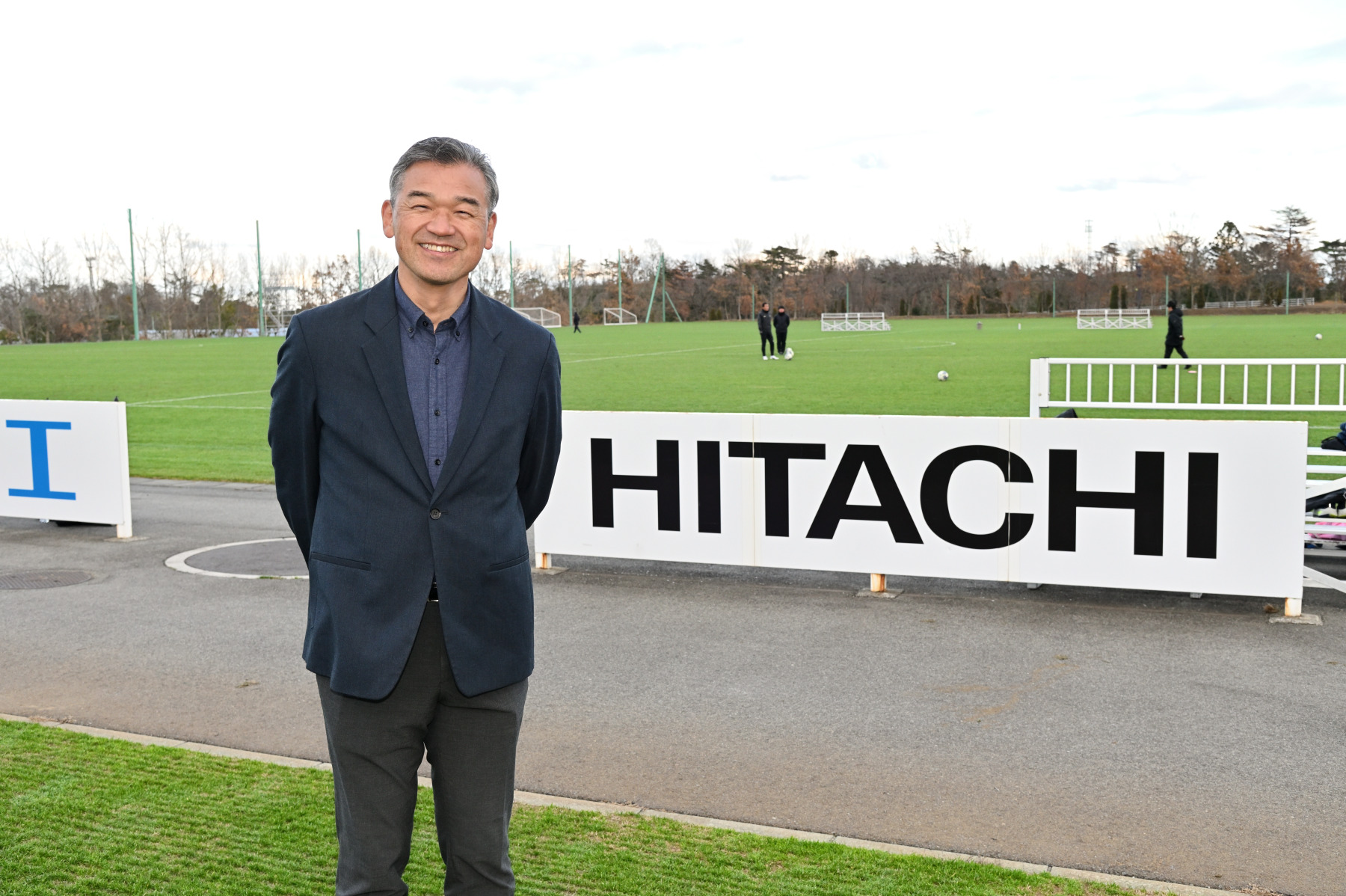
“At the time, there were Self-Defense Forces tanks parked here, and helicopters were landing and taking off. It feels like an entirely different time,” remarks Matsui, pausing in a moment of reflection as he looks at the current beautiful natural grass pitch of J-Village Stadium, before summing up the day's events.
“The Fukushima Daiichi Nuclear Power Station accident was an event that led to my becoming involved with reporting on nuclear energy, and now almost fifteen years later, I've been given a renewed appreciation for how fast time flies. Being away from the front lines of nuclear energy reporting and looking at things from the outside, you sometimes get the impression that the decommissioning and revitalization efforts are proceeding slowly, but when I actually entered these sites, I was struck by how much had changed. Although there are parts that still haven't changed, as we can see here at J-Village, this has been a day seeing signs of hope at the steady progress being made toward revitalization.”
Yasumasa Matsui
Freelance Announcer and Journalist
Born in Inami, Nanto City, Toyama Prefecture. Graduated from Toyama Prefectural Takaoka High School. Graduated from the Department of Chemical Engineering, School of Engineering, Tokyo Institute of Technology (now Institute of Science Tokyo). In 1986, he joined TV Asahi as an announcer. He co-hosted Music Station with Tamori, served as a sportscaster on News Station, and worked as a news and information anchor on programs such as Station Eye, Wide Scramble, and Yajiuma Plus.
In 2008, he became the principal of TV Asahi's announcer school, Ask. During his two years in this role, he trained over 100 announcers who went on to work nationwide. In March 2011, following the 2011 Great East Japan Earthquake (and subsequent Fukushima Daiichi Nuclear Power Station accident), he transferred from the announcer department to the news department as a reporter covering the nuclear power plant accident. He later served as a reporter covering the Imperial Household Agency and weather-related disasters, and worked as a commentator. In 2023, after leaving TV Asahi, he established his own agency, OFFICE Yuzuki. He also serves as a plastic model history research advisor for Tamiya Inc., ambassador for Nanto City, Toyama Prefecture, and media advisor for sake company, DASSAI Inc.
 Part 1|MESSAGE: What I Want to Know and Communicate as an Announcer with a Science Background - The Present and Future of Nuclear Power Generation
 Extra Edition|The Day to Realize the Importance of Energy in Future Society - Report on HSIF2025 JAPAN, OSAKA and Expo 2025 Osaka, Kansai
 Part 2|INTERVIEW: Interview with Kohei Hisamochi, President of Hitachi GE Vernova Nuclear Energy - Taking the Nuclear Energy Business to the Next Phase. (First Half)
 Part 2|INTERVIEW: Interview with Kohei Hisamochi, President of Hitachi GE Vernova Nuclear Energy - Taking the Nuclear Energy Business to the Next Phase. (Second Half)
 Part 3|FIELD REPORT: Chugoku Electric Power's Shimane Nuclear Power Station Unit 3 nears completion! The relentless pursuit of safety and reliability seen at the latest plant under construction
 Part 4|FIELD REPORT: The Hitachi Area in Ibaraki: A Journey that Explores Hitachi's Past, Present and Future (1) Tracing the origin of the Hitachi Founding Spirit and social innovation
 Part 4|FIELD REPORT: The Hitachi Area in Ibaraki: A Journey that Explores Hitachi's Past, Present and Future (2) How nuclear safety is engineered at Hitachi's factories
  Part 4|FIELD REPORT: The Hitachi Area in Ibaraki: A Journey that Explores Hitachi's Past, Present and Future (3) Research and development that write the next chapter in nuclear technology
 Part 4|FIELD REPORT: The Hitachi Area in Ibaraki: A Journey that Explores Hitachi's Past, Present and Future (4) Nurturing people and growing with the region: the spirit of Hitachi seen through the WorldSkills Competition and co-creation projects
 Part 6|MESSAGE: Facing the Current State of Nuclear Energy Through the Lens of the Field and Facts―What It Means to Build Up Trust From the Perspective of Hitachi's Nuclear Energy Business
 Part 7|Charting A New Chapter in the History of Safety and Trust Beginning With the Restart of the Kashiwazaki-Kariwa Nuclear Power Station [First Half]
 Part 7|Charting A New Chapter in the History of Safety and Trust Beginning With the Restart of the Kashiwazaki-Kariwa Nuclear Power Station [Second Half]