Hitachi

Part 4|FIELD REPORT
The Hitachi Area in Ibaraki: A Journey that Explores Hitachi's Past, Present and Future (4)
Nurturing people and growing with the region: the spirit of Hitachi seen through the WorldSkills Competition and co-creation projects

Share

  • Share to X
  • Share to Facebook
  • Share to Linkedin

Part 4|Yasumasa Matsui Explores the Frontlines of Nuclear Energy: Interpreting the Future of Energy Through Dialogues in the Field

We deliver a four-part series in which Yasumasa Matsui visits the Hitachi Group's facilities in Hitachi City, Ibaraki Prefecture, the birthplace of Hitachi. He reports on the origins of Hitachi, current operations and R&D initiatives in the nuclear sector, human resources development for the future, and coexistence with local communities.

For the fourth and final installment of his journey through the Hitachi area in Ibaraki, Matsui visited the Hitachi Works Training Center, which trains young employees who compete in the WorldSkills Competition, and the Hitachi Baseball Club. He then interviewed staff at the Hitachi Works Kaigan Factory about Hitachi's human resources strategy. By reporting on the culture of nurturing human resources passed down since the company's founding, current HR development initiatives, community relationship building through sports, and co-creation projects with Hitachi City, Matsui looks ahead to the future of Hitachi and the region.

Developing master craftsmen through the WorldSkills Competition

To learn about Hitachi's human resources development, Matsui visited the Hitachi Works Training Center. He was greeted by Deputy Manager Hideyuki Sato of the Human Resources Division, who first provided an overview of the center.

“One of the roles of this training center is to develop master craftsmen and human resources to support Hitachi's manufacturing through training for the WorldSkills Competition. While we used to accept many trainees from Hitachi Works' energy-related business divisions, since business restructuring, training is now limited to the Nuclear Energy division, focusing on an elite group of young and talented human resources,” explains Sato.

The WorldSkills includes both national and international competitions. The national competition—National Skills Competition Japan—is held annually, with young, skilled workers (in principle 23 years old or younger) competing in advanced skills specific to their trades. Trades range widely, from industrial and construction-related trades to information technology, beauty and cosmetology, culinary arts, and services. At the 63rd National Skills Competition Japan, held in October 2025, competitions were held in 42 trades with 1,025 participants. Competitors are comprehensively evaluated on accuracy, quality, speed, creativity, safety, and other factors, through tasks designed to mirror real-world work situations.
This national competition also serves as the selection event for representatives to the biennial international WorldSkills Competition, aiming to cultivate talent that will support the future of industry and widely communicate the societal value of such skills.

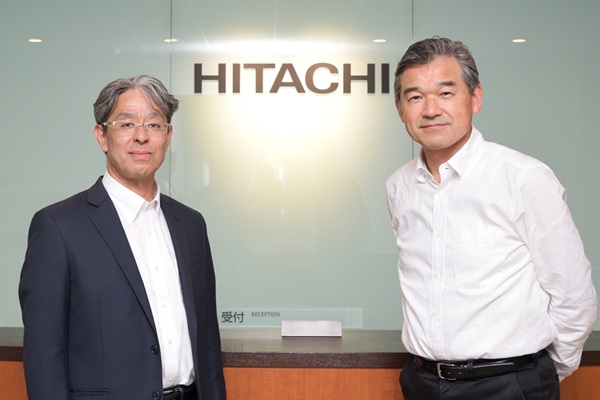
Matsui in front of the Hitachi Works Training Center (left), and Deputy Manager Hideyuki Sato (right)

Hitachi, Ltd. and other Hitachi Group companies have participated in the National Skills Competition Japan every year since its inception in 1963, winning numerous medals. At the most recent 63rd competition, 44 competitors from 10 trades across the Group participated, winning a total of 18 awards: 3 Silver medals, 7 Bronze medals, and 8 Fighting Spirit Awards. Hitachi has also competed in the international WorldSkills Competition since the event in Dublin, Ireland, in 1963. Cumulatively, including the 47th competition held in Lyon, France, in 2024, it has won 39 Gold, 21 Silver, and 22 Bronze medals.

“For the WorldSkills Competition, each Group company and workplace trains its own competitors. At this center, we currently train competitors in four disciplines essential to nuclear energy-related manufacturing: electric welding, construction steel work, manual turning, and mechanical drafting, which ties in directly with design work. In 2017, we established a training environment identical to the national competition specifications, enabling training under the same conditions as the actual event,” says Sato. At the competition, unlike in factories, participants must work within a limited space. This is a careful consideration to prevent competitors from becoming unsettled by the difference from their practice environment.

A tradition of training people, passed down at Hitachi Industrial Skills Academy

Currently, all Hitachi Works competitors are selected from among graduates of Hitachi Industrial Skills Academy. Hitachi Industrial Skills Academy (known commonly in Japan as “Nissenko”) is Hitachi, Ltd.'s in-house training academy. It is a three-year, full-time, residential vocational school. Through its partnership with the Kagaku Gijutsu Gakuen High School Hitachi, which operates a wide-area correspondence program, students can also obtain a high school diploma. The academy offers three departments: Electrical, Mechanical, and Welding. Students in each department study to obtain national skills certification qualifications. Upon graduation, graduates are active as immediately effective contributors at Hitachi's frontline manufacturing sites.

The origins of Nissenko date back to the Apprenticeship Training School, which was established by Hitachi's founder Namihei Odaira in 1910, the same year Hitachi Ltd. was founded. The Apprenticeship Training School was fully residential, with meals and clothing provided by the company. Students attended classes in the mornings and participated in factory training in the afternoons, led primarily by Kumeo Baba, who later became the first director of the Hitachi Research Laboratory. In 1921 (the year after Hitachi Ltd. became independent from Hitachi Mine as a corporation), the advanced course of Apprenticeship Training School was established, with Baba as its principal. Students worked in the factory during the day and attended classes in the evening.

Classroom scene at the Apprenticeship Training School (circa 1917)
Odaira's strong focus on education stemmed from his belief that the development of a business lies in its people. To train human resources capable of becoming core members on the front lines and eventually leading the organization, the curriculum focused not only on skills acquisition but also on character development. The Apprenticeship Training School and its advanced course merged in 1928 to become Hitachi Industrial Skills Academy. During the rise of Japanese manufacturing, graduates who had received practical training at Nissenko were often coveted and poached by other companies. But Odaira reportedly paid no mind to this, believing the school's purpose was to train capable engineers and industrialists for Japan as a whole. This reveals that Odaira had a broad-minded educational philosophy and vision that extended beyond simply training Hitachi engineers.

Hitachi's manufacturing culture passed down through the WorldSkills Competition

Approximately 70 students enroll annually at Nissenko, which is responsible for Hitachi's human resources development. Of these, around 30 take on the challenge of the WorldSkills Competition after graduation. “Some students have WorldSkills in mind from the moment they enroll, while others learn about the competition at school and decide to take on the challenge. The training period for competing in the international competition spans three to four years, during which they focus solely on training for the WorldSkills Competition. Instructors assigned to each trade are selected from among former WorldSkills competitors. During the training period, they are detached from manufacturing site duties to focus solely on instruction,” explains Sato. In coaching, they visualize each competitor's target skill level and current status with Hitachi's actual manufacturing sites in mind, aiming to enhance their skills while boosting their motivation.

“For hands-on trades, it seems like small-scale workshops might also have talented individuals. Are most contestants still from large corporations?” asks Matsui. “It depends on the trade,” replies Sato, “but in electric welding, for example, the cost of practice materials is not insignificant, so the majority of participants are employees of large corporations.” Manual turning also attracts many participants, and the hurdle to reach the national competition is high. Training a competitor capable of placing highly requires extensive practice.

“The reality is that it's difficult without sufficient personnel and funding resources,” notes Matsui, “but continuing to compete in WorldSkills is still necessary, isn’t that right?” Sato nods deeply in agreement.

“The on-site skills required in the nuclear energy field, which Hitachi handles, are at a very high level. Even gold medalists from the international WorldSkills Competition have said they were amazed by the skill level of senior technicians when they entered the actual workplace. Without intensive training through the challenge of WorldSkills to raise the starting level of our workforce, we cannot hope for them to reach the level of master craftsmanship required to entrust them with the manufacture of critical components,” he says.

While robots are used in some areas of nuclear manufacturing, human hands and experience remain indispensable in processes that ultimately determine final quality.

“That's precisely why systematic education and long-term HR development are indispensable. WorldSkills is not just a competition; it's a platform for nurturing human resources. This center, through training, is also a place to pass on not only skills but also Hitachi's manufacturing culture,” concludes Sato.
After the interview, Matsui, guided by an instructor, observed a competitor training session. He eagerly asked questions about the production and processing methods for the assigned workpieces.

Competitors train diligently in construction steel work for WorldSkills. Construction steel work involves creating structures by combining steel materials of various shapes. It uses advanced machining and joining techniques such as cutting, bending, and assembly. The competition demands high-dimensional accuracy of the finished product, finishing techniques for cut surfaces and welded joints, smoothness of sliding parts, and overall aesthetic quality.

A competitor concentrates on electric welding training. Electric welding (specifically arc welding) is a technique that joins metals by heating and melting them using the intense heat (approx. 5,000-20,000°C) generated by an electric arc discharge. Various methods exist, and the competition tests all welding-related skills, techniques, and knowledge, including the ability to correctly interpret drawings specifying construction methods, the aesthetic quality of the weld finish, dimensional accuracy, precision inspection using X-rays, and the strength of the workpiece after welding.

A competitor practicing manual turning, and the assigned workpiece for the 63rd National Skills Competition Japan. Manual turning is the skill of creating precision parts by rotating the material at high speed while applying a cutting tool (lathe tool) to shave it. The National Skills Competition Japan uses basic manual universal lathes. Competitors are required to machine the provided materials to product specifications with speed, high precision (within 0.01 mm), and excellent workmanship.

Matsui receives explanations from instructors about the characteristics and challenges of the competition. Instructors are selected from among young individuals with WorldSkills competition experience, not veteran engineers. While this is in part because it is difficult for veteran engineers to leave the production floor, having instructors closer in age to the competitors also facilitates better communication. Their instruction experience also benefits their development as junior staff on the frontlines.

After seeing the WorldSkills training site, Matsui spoke with conviction.

“Given the nature of the nuclear energy field, where failure is not an option, skills training can't simply start from scratch with on-the-job training (OJT). Workers need to acquire high-level skills before entering the workplace, which is precisely why WorldSkills and the intensive training for it are necessary. It's not so much that Hitachi can participate in WorldSkills because they're a large company. Rather, it's because they're such a large company, manufacturing products that carry a heavy burden of responsibility, that they must strive for the very pinnacle of engineering skill. I realized that training centered on WorldSkills isn't just aimed at individual skill improvement or glory. It's actually the foundation that supports the reliability of manufacturing and connects it to the next generation.”

Corporate sports and community ties: Hitachi Baseball Club

Next, Matsui visited Hitachi Baseball Club's home ground, Hitachi, Ltd. Ose Baseball Stadium, located across from the Training Center to learn about Hitachi's efforts to contribute to the community through corporate sports.

Founded in 1917, Hitachi Baseball Club is a prestigious corporate team in Japan’s industrial league baseball, deeply rooted in the local community. As of 2025, they have participated in the Intercity Baseball Tournament 41 times, with their best result being runner-up in the 2016 tournament. Their large cheering section, clad in the team's orange colors and filling the stands, has become a famous feature of the tournament. Matsui, who watched Hitachi's game during the 96th Intercity Baseball Tournament held in September 2025, remarks, “I was amazed by the strong sense of unity in their cheering.”

The Intercity Baseball Tournament is one of the two major titles in corporate baseball, with its inaugural tournament held in 1927, before the Japanese professional baseball league began. Inspired by the US Major League Baseball (MLB) system , in which each team represents a specific city, it began as a baseball tournament where teams representing their respective cities competed, carrying the pride of their region. This tradition continues today, with participating teams displaying the name of their home city alongside the team name as representatives of their region, and uniforms featuring their city's emblem on the right sleeve. The ceremonial first pitch before games is often thrown by former team members, corporate representatives, local government leaders, or other notable figures connected to the region.

The number of corporate teams in industrial league baseball has been increasing in recent years. At their peak, the number of corporate teams affiliated with the Japan Amateur Baseball Association exceeded 200, although this declined steadily after the collapse of Japan's economic bubble, falling to just 72 by 2010. Yet numbers have increased again in recent years, reaching 92 teams as of the end of February 2025. Corporate baseball is now being reevaluated from the perspectives of acquiring human resources, improving employee engagement, contributing to local communities, and enabling symbiosis with local communities through corporate sports.

The Hitachi Baseball Club also contributes to local sports promotion, with players conducting youth baseball classes for youth sports groups in Hitachi City and tee-ball (a pitcher-less game similar to baseball) classes at local nurseries and kindergartens.
Matsui—who is known for his passionate commentary showing his love of baseball as he covered numerous professional baseball games during his time as a TV announcer—watched the team practice and chatted briefly with Coach Jiro Hayashi. “I hear that local fans come to practice and exhibition games to cheer the team on. The Hitachi Baseball Club doesn't just carry the company name. It also embodies a strong bond with Hitachi City and a love for Hitachi,” he remarks, reaffirming the significance of corporate baseball.

“It's wonderful that young people aiming to compete in WorldSkills competitions and players striving to improve their baseball skills as part of corporate sports are training side by side in neighboring locations. I could feel the depth of Hitachi as a company and its culture that values nurturing people,” says Matsui.

Synergies among diverse specialized human resources born in the nuclear energy field

To conclude his coverage of the Hitachi area in Ibaraki, Matsui headed to the Hitachi Works Kaigan Factory for an interview with Yasuyuki Onishi, General Manager of Hitachi Works. Onishi, who also serves as Energy Chief Human Resources Officer (CHRO) at Hitachi, Ltd., discussed HR strategies in the nuclear energy business and coexisting with the local community.

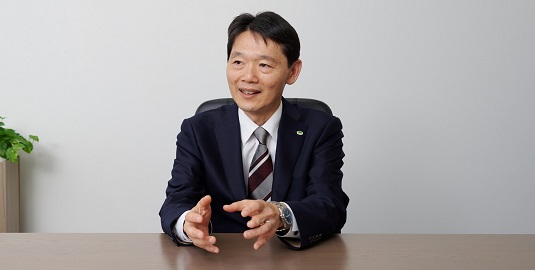
Yasuyuki Onishi, General Manager, Hitachi Works

With regard to human resources acquisition, Matsui first mentions that, immediately after the Great East Japan Earthquake in 2011, while the number of students aspiring to careers in nuclear energy at his alma mater (Tokyo Institute of Technology; now Institute of Science Tokyo) decreased, on the other hand, several students emerged with a strong determination to pursue careers in nuclear energy precisely because of the disaster. “I understand a similar trend was seen among students aspiring to research and development. Was this also true across the business division as a whole?” asks Matsui. Onishi nods.

“We've always had individuals who studied nuclear energy with a sense of duty and joined our company, but I do feel that such human resources have become more noticeable compared to before the disaster.”

In recent recruitment, individuals specializing in nuclear energy account for less than 20% of the total, with other technical human resources—such as those in mechanical or electrical engineering—making up the majority.

“Actually, there are many roles where people with non-nuclear backgrounds can excel, and we see this as an organizational strength. A more diverse organization is stronger and more creative. We're seeing effective synergies between human resources with nuclear backgrounds and those with expertise in other fields. We aim to leverage diverse values—including mid-career hires, female employees, and non-Japanese human resources—to drive innovation and create business opportunities.”

Knowledge management and technical succession through on-the-job training (OJT) in the nuclear energy field

Since the disaster in 2011, new nuclear power plant construction in Japan has remained suspended. “To put it in my own terms, imagine passing a rigorous announcer recruitment exam to join a TV company, only to be told, 'You won't appear on TV at all; just keep practicing the basics.' If that lasted six months to a year, it might be bearable, but facing five or ten years with no end in sight would break anyone's spirit. How have you maintained the motivation of employees working in the nuclear energy business?” asks Matsui. Onishi responds as follows.

“I believe that for the past decade or so, it has been difficult for people to feel a tangible sense of growth. On the other hand, by setting the goal of restarting nuclear power plants, we have increased morale by establishing a new mission in the nuclear energy field: to achieve restarts in compliance with the new regulatory requirements and deliver electricity to society.” In working toward the restart, young employees are also gaining experience, while supported by veteran personnel. In addition, with the movement to restart construction in Japan and the progress of new small light-water reactor construction projects overseas, the next horizon is becoming visible, and employee motivation is definitely rising.”

In addition to maintaining motivation, the transfer of skills has also become a challenge. In Hitachi's nuclear energy sector, the introduction of knowledge management has been underway since FY2017. Drawing on leading domestic and international examples, Hitachi first created “knowledge maps” for each technical domain. These maps clearly identify knowledge holders as well as the priorities, methods, and deadlines for knowledge transfer. In this way, Hitachi visualizes the tacit knowledge of highly skilled, experienced personnel and enables its efficient transfer to younger staff. This activity began in the design division, and is being expanded company-wide to project divisions and quality assurance departments, and on-site operations, aiming to ensure the sustainability of Hitachi's skills and technologies.

“Visualizing individual knowledge is crucial. However, that alone has limitations. We also strive to assign as many young employees as possible to plant restart and resumed construction projects, allowing them to gain frontline experience and learn skills through OJT,” emphasizes Onishi.
While continuing these steady efforts, Hitachi aims to increase the number of high-caliber personnel supporting the nuclear energy field for future growth. It also seeks to create an environment to ensure that the most suitable individuals can utilize their skills and strengths in the right places.

Deepening and expanding collaboration with Hitachi City: The Smart City Co-creation Project with Hitachi City

When Matsui asks about the relationship between the Hitachi Group and Hitachi City, Onishi says, “Hitachi City is our birthplace, and home to our main works. We have developed alongside the region, essentially as a kind of corporate “castle town.” From this perspective, Hitachi City holds a special significance for us as a Group, and I believe the citizens of Hitachi City feel the same way.” For many years, Hitachi, Ltd. has been affectionately referred to as “Nissei” (a shortened form of the company name) by residents of Hitachi City and its surrounding areas.

“This was partly to distinguish it from the city name 'Hitachi,' but it also demonstrates how deeply rooted the Hitachi Group is in the local community. While the 'Nissei' business in Hitachi City itself has changed in recent years due to group and business restructuring, I still felt upon arriving here that 'Nissei' has a special place in people's hearts.”

Based on this relationship, the Hitachi Group and Hitachi City signed a comprehensive partnership agreement in December 2023 for creating a “Next-Generation Future City” (Smart City) utilizing digital technology, and launched the Smart City Co-creation Project with Hitachi City in April 2024. This project aims to revitalize Hitachi City based on three pillars (Green Industrial City; Digital Health, Medical Care, and Nursing Care; and Smart Public Transportation), with the goal of creating a city that people can be proud of, that is safe and secure, and where people want to live.
Onishi explains the co-creation project as follows.

“We have contributed to the development of the local community through manufacturing in Hitachi City for many years. Now, we want to take this a step further and build a relationship in which we share the major goal of solving local community issues and utilize our capabilities and knowledge as a corporate group to achieve this goal. As of January 1, 2026, Hitachi City's population stood at just under 160,000. In recent years, it has been declining at a rate of about 2,500 people annually. The issue is not only due to natural decline, but also a significant net outflow of young people, making it crucial for us to make Hitachi City more appealing as a place to live. Many other regions across Japan are also facing similar challenges, and we are driving this project with the desire for Hitachi City and the Hitachi Group to demonstrate a model case for solving these issues that can be applied elsewhere.”

Currently, more than 100 personnel from Hitachi, including full-time and part-time staff, are participating in this co-creation project. More than a dozen city hall employees and Hitachi staff are also stationed within the city hall itself. Operating under a co-working system, the city and the company collaborate daily, working alongside community residents and businesses to address the challenges of building a bright future for the community.

Matsui in front of Hitachi City Hall

Both the company and the community are supported by people

Asking about the co-creation project with Hitachi City, Matsui mentioned, during his recent visit to the Hitachi Group's manufacturing, R&D, and HR development sites, he was particularly impressed by the vibrant energy of the young engineers and researchers.

“While some young people are intensely focused on honing their skills, others are enthusiastically introducing cutting-edge technologies like the metaverse and robotics. Seeing this, I felt strongly that it is really 'people' who support the company, and the same holds true for the local community.”

Onishi nods in agreement, stating, “Ultimately, it is people who shape the future of technology, the future of the company, and the future of the region.” For that reason, he explains, Hitachi is working to expand its mid-career hiring and develop new HR acquisition channels, not fettered by conventional practices and customs. He concludes, “In the face of intensifying competition for human resources, we must create appeal that makes people want to work for the company. When you really think about it, the fundamentals of community development and company development are the same. To forge new paths of development alongside the community, we will continue focusing our efforts on gathering, developing, and attracting people.”

Matsui on communication skills and Hitachi's future outlook

Matsui emphasizes the importance of honing communication skills during the process of nurturing people, offering the following advice.

“One of my beliefs is that communication skills are especially vital for science-oriented talent and engineers. To create an environment where diverse human resources both from within Japan and from abroad can thrive, we need people who can engage in dialogue and demonstrate leadership. It's not just about possessing technology and knowledge. I think that acquiring the ability to convey them effectively, communicate with people of different cultures and values, and deepen mutual understanding will pave the way forward.”

Finally, Matsui shares his reflections upon completing his journey through the Hitachi area, Ibaraki.

“Over the course of this series, I traced the history of Hitachi, Ltd. since its founding. I was struck deeply, once again, by how the founder's passion for technology and quality, the culture of nurturing people and philosophy of developing human resources, and the aspirations to contribute to society have been passed down for over a century. It's not just about preserving tradition, either. Hitachi reshapes its initiatives to align with the times. I believe this is one factor in ensuring the company's survival and advancement, and I have high hopes that Hitachi will continue to pioneer the future with this spirit of maintaining values while embracing new approaches. I also want to draw attention to their efforts in collaboration with Hitachi City, as they demonstrate a new form of symbiosis and development between a company and its region, distinct from the typical 'corporate castle town' model.”

The wall of the Kaigan Factory displays the Hitachi Founding Spirit: “Harmony, Sincerity, Pioneering Spirit”

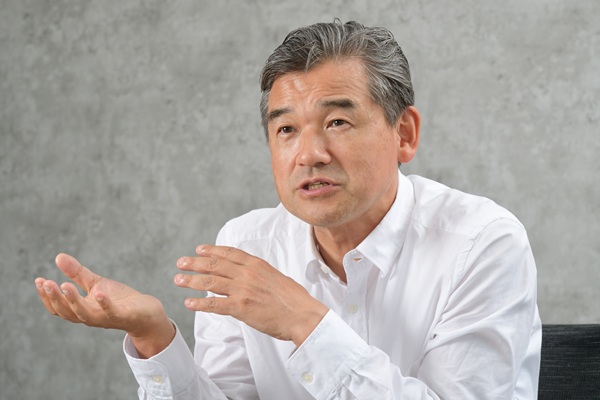
Yasumasa Matsui

Yasumasa Matsui
Freelance Announcer and Journalist

Born in Inami, Nanto City, Toyama Prefecture. Graduated from Toyama Prefectural Takaoka High School. Graduated from the Department of Chemical Engineering, School of Engineering, Tokyo Institute of Technology (now Institute of Science Tokyo). In 1986, he joined TV Asahi as an announcer. He co-hosted Music Station with Tamori, served as a sportscaster on News Station, and worked as a news and information anchor on programs such as Station Eye, Wide Scramble, and Yajiuma Plus.
In 2008, he became the principal of TV Asahi's announcer school, Ask. During his two years in this role, he trained over 100 announcers who went on to work nationwide. In March 2011, following the 2011 Great East Japan Earthquake (and subsequent Fukushima Daiichi Nuclear Power Station accident), he transferred from the announcer department to the news department as a reporter covering the nuclear power plant accident. He later served as a reporter covering the Imperial Household Agency and weather-related disasters, and worked as a commentator. In 2023, after leaving TV Asahi, he established his own agency, OFFICE Yuzuki. He also serves as a plastic model history research advisor for Tamiya Inc., ambassador for Nanto City, Toyama Prefecture, and media advisor for sake company, DASSAI Inc.

Related Links

In order to read a PDF file, you need to have Adobe Acrobat Reader installed in your computer.