

The special series for fiscal 2025, Yasumasa Matsui Explores the Frontlines of Nuclear Energy: Interpreting the Future of Energy Through Dialogues in the Field, began with an interview with Kohei Hisamochi, the President of Hitachi GE Vernova Nuclear Energy. Throughout the series, Yasumasa Matsui has reported from the field on nuclear energy from various sites, including Chugoku Electric Power's Shimane Nuclear Power Station Unit 3, works and research sites in Ibaraki Prefecture's Hitachi area, Tokyo Electric Power Company (TEPCO)'s Fukushima Daiichi Nuclear Power Station, as well as the extra edition reporting from the Hitachi Social Innovation Forum 2025 JAPAN, OSAKA, and EXPO 2025 in OSAKA, KANSAI.
Over the past year, with the environment surrounding energy undergoing dramatic change and efforts to restart nuclear power plants accelerating, Matsui has drawn on his experience and knowledge as a science-oriented announcer to delve deep and tell the story of the Hitachi Group's nuclear energy business, R&D, engineering, history, and human resources.
In this final installment, we will look back on the entire series, reflecting on the facts revealed through field reporting and dialogue on nuclear energy in the form of messages from Yasumasa Matsui himself.
Looking ahead, this special feature will continue in fiscal 2026, supported by the strong interest of our readers. Together with Matsui, we will continue to present the current state and future of nuclear power generation and Hitachi's initiatives in the nuclear energy business. Please stay tuned.
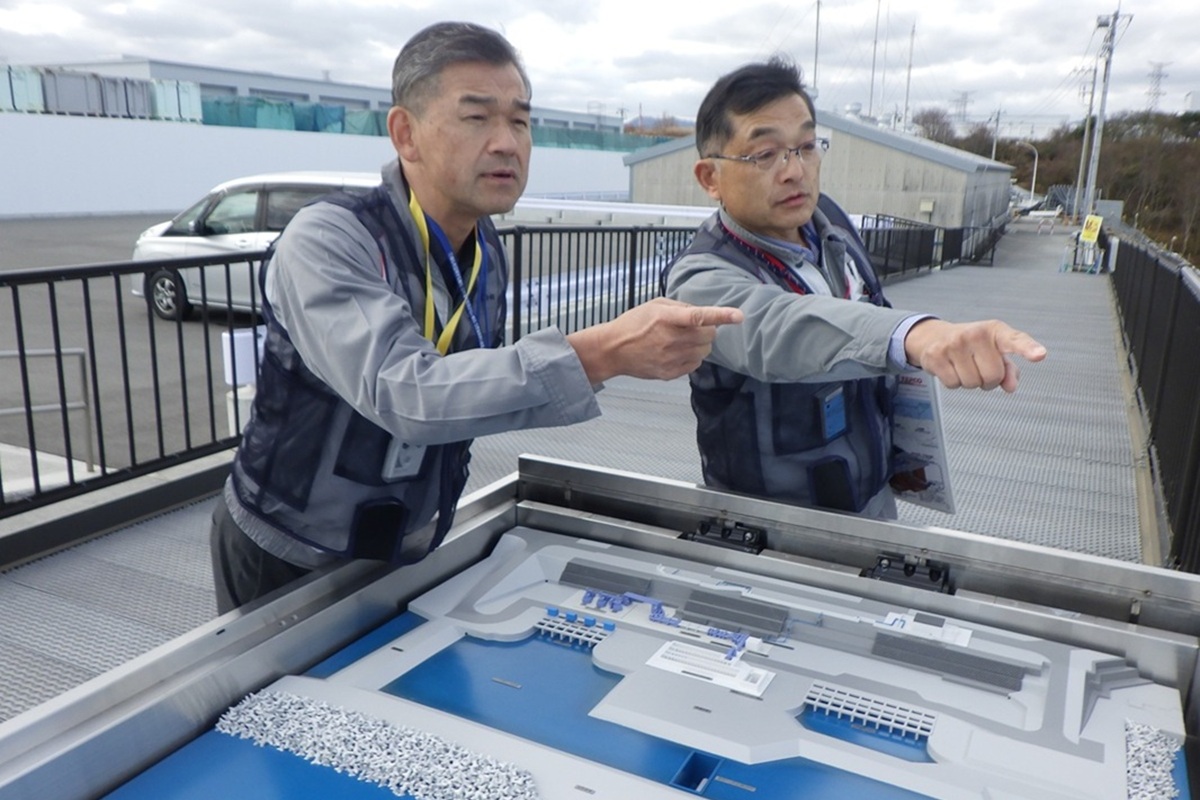
As I mentioned during the first installment of this series, it was the accident at the Fukushima Daiichi Nuclear Power Station that prompted me to become a journalist specializing in nuclear accidents. After remaining deeply involved with reporting on nuclear accidents for around four years thereafter, I stepped aside to focus on the development of the next generation. I was later assigned to reporting on the Imperial Household Agency and a new position reporting on meteorological disasters, but my involvement with reporting on the Fukushima Daiichi Nuclear Power Station was limited to providing materials and support for planning, etc. As a result, for the past decade or so I had not set foot inside the grounds of the Fukushima Daiichi Nuclear Power Station. I was anxious about the situation, but I didn't want to throw my weight around, because I thought it was important to give the next-generation space to develop. That's why on this occasion, revisiting the site of the response to the nuclear accident and seeing it with my own eyes after being away for so long, being able to be there firsthand and get a true sense of how far things have come made it a truly special experience for me.
At the same time, on a more personal level, I realized there were a lot of things I hadn't been aware of at the time. At the time of the accident, we were told that all reporting basically had to go through TEPCO, and I was unable to directly interview partner companies. As a result, from our field of view on the side of the press, we could only see TEPCO.
This time, however, through a series of interviews with people at Hitachi, including President Kohei Hisamochi, I learned that engineers from manufacturers such as Hitachi were right in the thick of things during the response to the accident in the field, and I feel I was newly confronted with the fact that the technologies of various companies had parts to play in the response. If you think about it, it makes sense that TEPCO wouldn't be able to do everything on its own; it is only with Hitachi and many other partner companies and affiliates that a power plant is developed. The efforts of many people lie behind those arrangements. I thought I had the whole picture, but I hadn't seen everything. Looking back now, I regret that I should have delved deeper in my reporting and fulfilled my role in conveying the voices of those on the front lines to the world. Both in the sense of communicating the facts about the response to the nuclear accident and in encouraging people to think about it as something that affects them personally, I have come to feel that we need to convey who was there and what resolve they drew upon at the time.
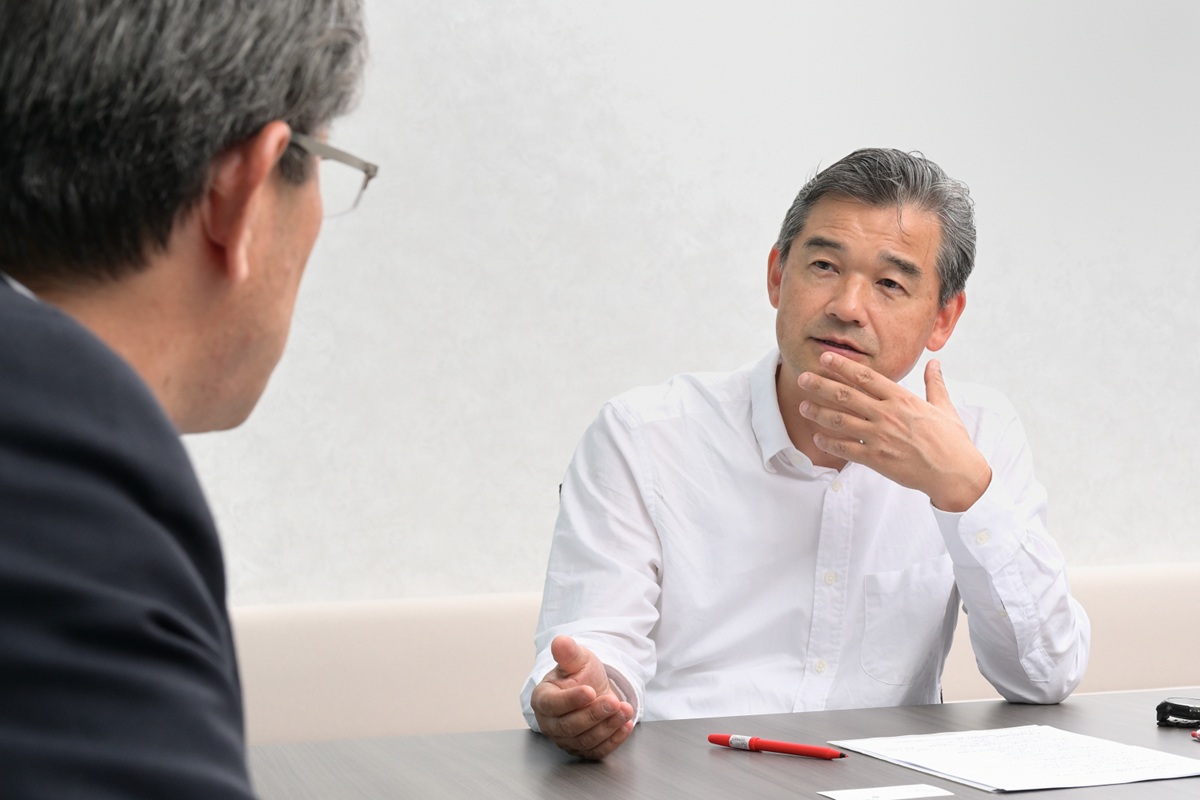
After the accident, nuclear power generation became a question that was difficult to handle and associated with uneasiness in Japanese society. Of course, as I have said in the past, a similar accident can never be allowed to happen again. On the other hand, if you look at efforts to release treated water into the ocean, at a personal level there are parts of me that question, “Is it really necessary to go that far?” The tritium contained in treated water is also something generated from the operation of regular nuclear power plants, and its dilution to levels below regulatory limits for release into the sea or atmosphere is a common practice being implemented by nuclear power plants around the world. In the release of treated water from the Fukushima Daiichi Nuclear Power Station into the ocean, figures that are far stricter than the international guidelines for drinking water quality adopted by the World Health Organization (WHO) were set, and what's more, the water was released offshore. I can understand that it is better to demonstrate such considerations than not, and that the measures were aimed at avoiding reputational harm and reassuring the public. However, I do honestly have doubts as to whether the time and cost of doing so were justified.
What's important is not how things look, but accumulating facts by properly producing figures and data.
But fifteen years on from the accident, the level of interest among the general public has waned. “That's a tough problem,” “It's certainly a serious issue,” people will say when pressed, but many people have little to no actual interest in it. I think that goes some way to explaining why many people's impression stops at “I'm not really sure” or “It makes me feel uneasy somehow.”
Even under those conditions, decommissioning work on nuclear power plants is advancing, and in reality the people of Hitachi are diligently engaged in fieldwork and the development of related technologies. To make that known, I think it is important to continue reporting that people are still working hard on this, and that a considerable degree of progress has been made at this point. If you know the facts, it will surely expand your understanding.
In today's world, the means to disseminate information have expanded, and companies are in a position to convey information in their own words. Provided that trusted sources clearly state their own positions and speak while presenting accurate data on nuclear energy, I think it represents a form of communication that society needs.
Through this series, I have spoken with many people at Hitachi, and to sum up the impression I have of Hitachi as a company involved in the nuclear energy business, it would be “sincere dedication,” expressed as the Japanese word guchoku. There may be people who interpret this term in a negative light, but I use it with the aim of offering the highest praise.
President Hisamochi struck me as someone with nerves of steel who answered even my curveball-type questions with sincerity. At the construction site for Unit 3 of the Shimane Nuclear Power Station, diligent work was underway to rebuild a facility that was almost completed to comply with new rules in order to ensure the safety of nuclear energy. And at the Fukushima Daiichi Nuclear Power Station, people were tackling the task of decommissioning with patience and persistence, despite it being difficult to see the way forward. From those people working on the site, I got a sense of the single-minded commitment to pursuing the safety and reliability of nuclear energy.
To underscore this, in Hitachi City, Hitachi is actively investing in research, to the extent that it has built a huge research facility. Then there is the development of engineers, as symbolized by their participation in the WorldSkills Competition. These represent steady efforts to refine skills, pass them on, and support the reliability and quality of manufacturing. In fields such as nuclear energy, where there is a responsibility to ensure safety and reliability across timespans measured in 30- or 50-year increments, a single-mindedness driven by that sincere dedication is needed. Hitachi has taken on technologies and businesses that are conceptualized over a long timeline, not beholden to short-term profits or one-time efficiencies or passing trends. I got a sense of the weight of that responsibility by witnessing the sites.
The co-creation project underway with Hitachi City, the birthplace of the company, was another example of a long-term initiative aimed at building a next-generation future city. It's not just Hitachi City that is grappling with issues such as population decline. If companies and local governments tackle these challenges front-on and create success stories for others to follow, it can spark hope at a national scale. When considering how to sustain Japan's regional cities going forward, I think these efforts can provide valuable clues.
Whether it's nuclear energy or community development, I got the feeling that a comprehensive company like Hitachi can expand future prospects by grounding their technological capabilities and perspectives along a single long-term axis.
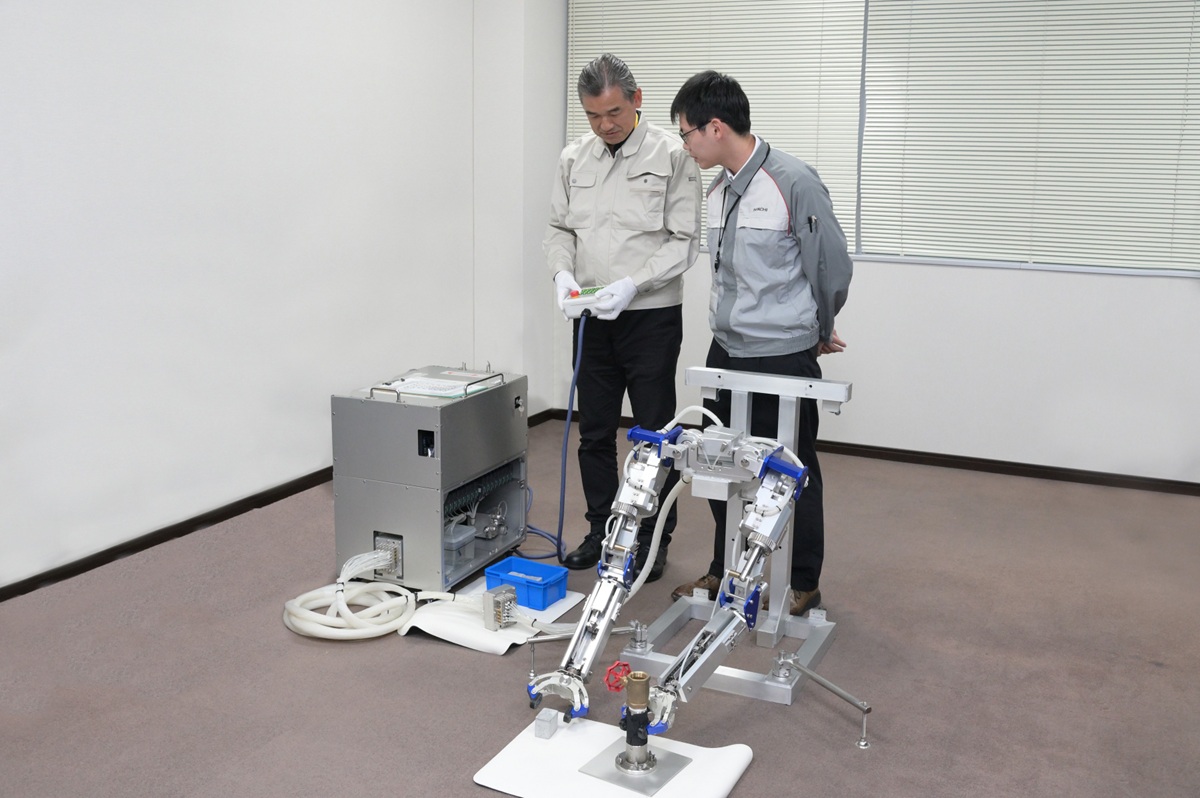
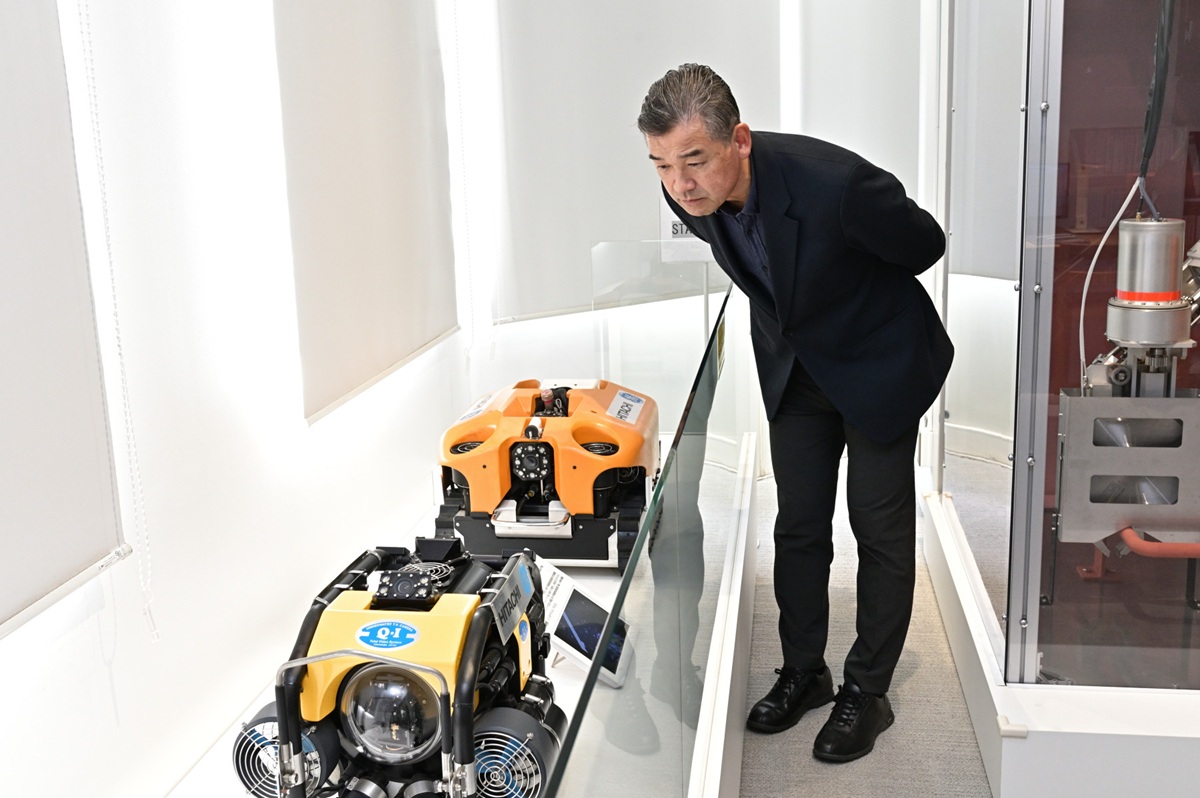
Over the course of this series, I've had the opportunity to learn about the technologies paving the way to the future of nuclear energy, from small light-water reactors and innovative light-water reactors to the utilization of digital technologies such as the metaverse.
With the decommissioning of the Fukushima Daiichi Nuclear Power Station, although conditions have improved, the end is not yet in sight, and the responsibility will pass from our generation to the next. But while that reality has not changed, with the demand for electricity rapidly increasing with the advance of AI, the utilization of nuclear energy is essential when considering our immediate energy challenges. That is why I want Hitachi to continue demonstrating to society the future potential of nuclear energy and its significance.
The unfortunate reality is that a certain number of people have a negative impression of nuclear energy. As a humble member of the community with a science and technology background, I've always wanted to correct that misunderstanding. This is not about whether you are for or against it; the fact is that right now, around the world, nuclear power plants exist as an energy technology and play a significant role in the supply of energy. I want this fact to be widely understood. While prioritizing safety above all else, I hope people will not fall into the mindset of immediately disqualifying nuclear power generation under any and all circumstances, without leaving room for further consideration.
With that in mind, I think that one of my roles is to disseminate fact-based information about nuclear energy, utilizing my science- and technology-oriented perspectives and knowledge. Through my reporting for this series, I have learned that despite the headwinds facing nuclear power generation, Hitachi has been diligently continuing its efforts to support the safety and quality of nuclear energy behind the scenes, and I hope that this becomes more widely known. While there may be limits to my own abilities to spread the word, I am filled with a renewed resolve to continue disseminating information about the current status of the decommissioning project, channeling that same “sincere dedication.”
With respect to Hitachi as a company, as chance would have it, nearly all of the home appliances at my family home happened to be Hitachi, so it is a brand with which I have long been familiar. On this occasion, through the opportunities for dialogue with Hitachi's many engineers and researchers, I felt a sense of connection, having come from a similar science and technology background, and developed a deep affinity for what they do.
I was delighted to see that many Hitachi-made railcars are running in London, where my daughter lives, and before I knew it, I had personally become a supporter of Hitachi.
People naturally develop a trust when they see an attitude of sincerity toward technology, and one of the things I got a strong sense of during this series is that the accumulation of that trust builds the future.
Personally, I spent an enjoyable time that stimulated my intellectual curiosity. I would like to express my appreciation to everyone who spent time reading this series of articles. Thank you very much.
Yasumasa Matsui
Freelance Announcer and Journalist
Born in Inami, Nanto City, Toyama Prefecture. Graduated from Toyama Prefectural Takaoka High School. Graduated from the Department of Chemical Engineering, School of Engineering, Tokyo Institute of Technology (now Institute of Science Tokyo). In 1986, he joined TV Asahi as an announcer. He co-hosted Music Station with Tamori, served as a sportscaster on News Station, and worked as a news and information anchor on programs such as Station Eye, Wide Scramble, and Yajiuma Plus.
In 2008, he became the principal of TV Asahi's announcer school, Ask. During his two years in this role, he trained over 100 announcers who went on to work nationwide. In March 2011, following the 2011 Great East Japan Earthquake (and subsequent Fukushima Daiichi Nuclear Power Station accident), he transferred from the announcer department to the news department as a reporter covering the nuclear power plant accident. He later served as a reporter covering the Imperial Household Agency and weather-related disasters, and worked as a commentator. In 2023, after leaving TV Asahi, he established his own agency, OFFICE Yuzuki. He also serves as a plastic model history research advisor for Tamiya Inc., ambassador for Nanto City, Toyama Prefecture, and media advisor for sake company, DASSAI Inc.
 Part 1|MESSAGE: What I Want to Know and Communicate as an Announcer with a Science Background - The Present and Future of Nuclear Power Generation
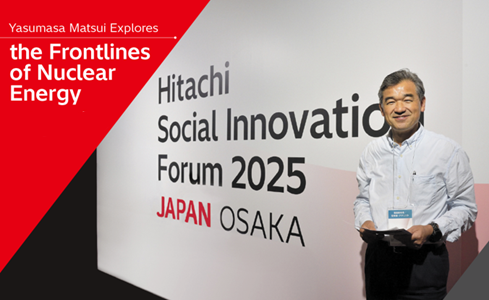 Extra Edition|The Day to Realize the Importance of Energy in Future Society - Report on HSIF2025 JAPAN, OSAKA and Expo 2025 Osaka, Kansai
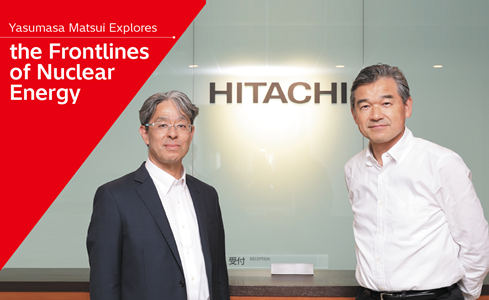 Part 2|INTERVIEW: Interview with Kohei Hisamochi, President of Hitachi GE Vernova Nuclear Energy - Taking the Nuclear Energy Business to the Next Phase. (First Half)
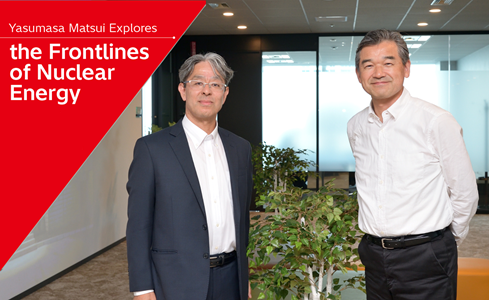 Part 2|INTERVIEW: Interview with Kohei Hisamochi, President of Hitachi GE Vernova Nuclear Energy - Taking the Nuclear Energy Business to the Next Phase. (Second Half)
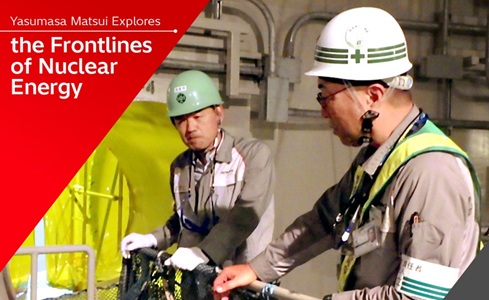 Part 3|FIELD REPORT: Chugoku Electric Power's Shimane Nuclear Power Station Unit 3 nears completion! The relentless pursuit of safety and reliability seen at the latest plant under construction
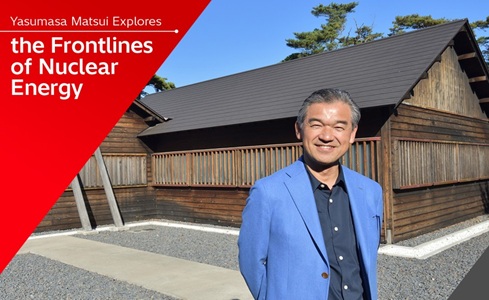 Part 4|FIELD REPORT: The Hitachi Area in Ibaraki: A Journey that Explores Hitachi's Past, Present and Future (1) Tracing the origin of the Hitachi Founding Spirit and social innovation
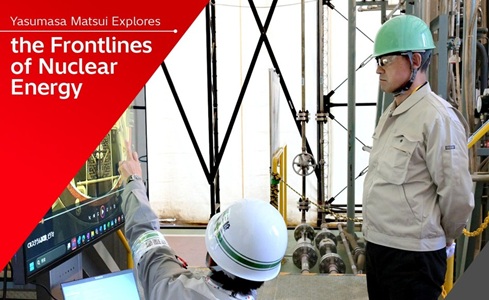 Part 4|FIELD REPORT: The Hitachi Area in Ibaraki: A Journey that Explores Hitachi's Past, Present and Future (2) How nuclear safety is engineered at Hitachi's factories
 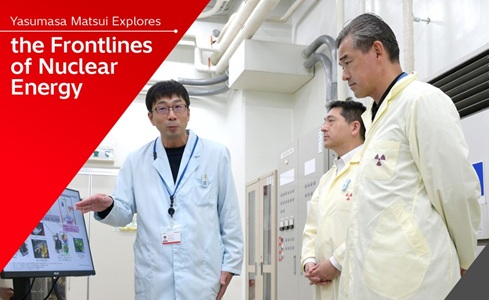 Part 4|FIELD REPORT: The Hitachi Area in Ibaraki: A Journey that Explores Hitachi's Past, Present and Future (3) Research and development that write the next chapter in nuclear technology
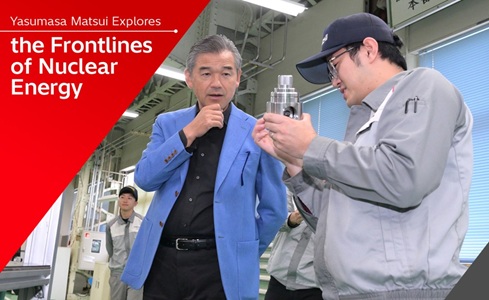 Part 4|FIELD REPORT: The Hitachi Area in Ibaraki: A Journey that Explores Hitachi's Past, Present and Future (4) Nurturing people and growing with the region: the spirit of Hitachi seen through the WorldSkills Competition and co-creation projects
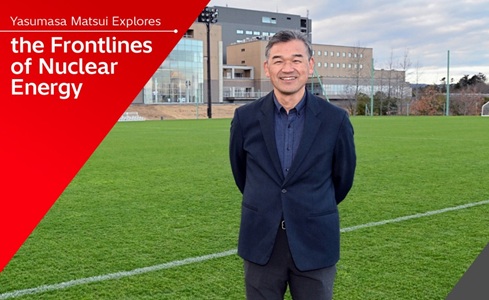 Part 5|FIELD REPORT: To the Frontlines of the Decommissioning of Fukushima Daiichi Nuclear Power Station―Tracing the Path Forward through Reporting from the Field
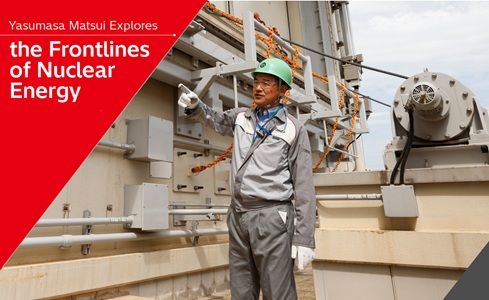 Part 7|Charting A New Chapter in the History of Safety and Trust Beginning With the Restart of the Kashiwazaki-Kariwa Nuclear Power Station [First Half]
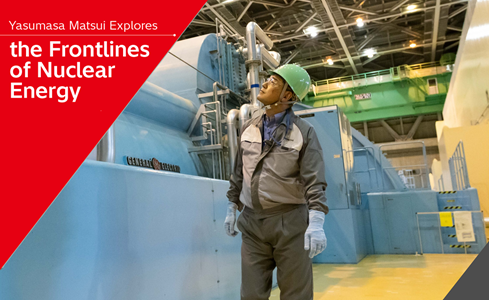 Part 7|Charting A New Chapter in the History of Safety and Trust Beginning With the Restart of the Kashiwazaki-Kariwa Nuclear Power Station [Second Half]