



Sep 2, 2026
Hitachi demonstrates the feasibility of structured radio wave technology for three-dimensional, space-based monitoring of infrastructure and disasters
Supporting a shift from post-event response to preventive and predictive maintenance in disaster monitoring and social infrastructure management
Tokyo, September 2, 2026 - Hitachi, Ltd. (TSE: 6501, "Hitachi") today announced proof-of-principle results demonstrating the feasibility of deploying structured radio wave technology*1 on satellites for three-dimensional, space-based monitoring of infrastructure and disasters. The technology reduces beam divergence while maintaining the wavefront structure, thereby enabling highly directive radiation*2 in a specified direction. Hitachi has confirmed the feasibility of this approach using an antenna configuration designed for future satellite deployment. The aim is to simultaneously capture the three-dimensional distribution of atmospheric data and objects on the ground, a capability that has been difficult to achieve using conventional methods. In experiments, the satellite-oriented antenna configuration achieved higher directivity than a uniform circular array (UCA)*3 alone while preserving the wavefront structure*4 (Fig. 1). By maintaining the radio-wave intensity required for observation, the technology could support wide-area, round-the-clock, all-weather monitoring that detects small changes at an early stage, enabling faster and more effective decision-making in disaster monitoring and infrastructure management and supporting a shift from post-event response to preventive and predictive maintenance.
Looking ahead, Hitachi plans to conduct outdoor transmission and reception tests and collaborate with companies, universities, and research institutions to advance the technology toward practical applications in disaster monitoring and social infrastructure management. These efforts are intended to enhance wide-area, space-based observation, support earlier anomaly detection, and enable faster decision-making.
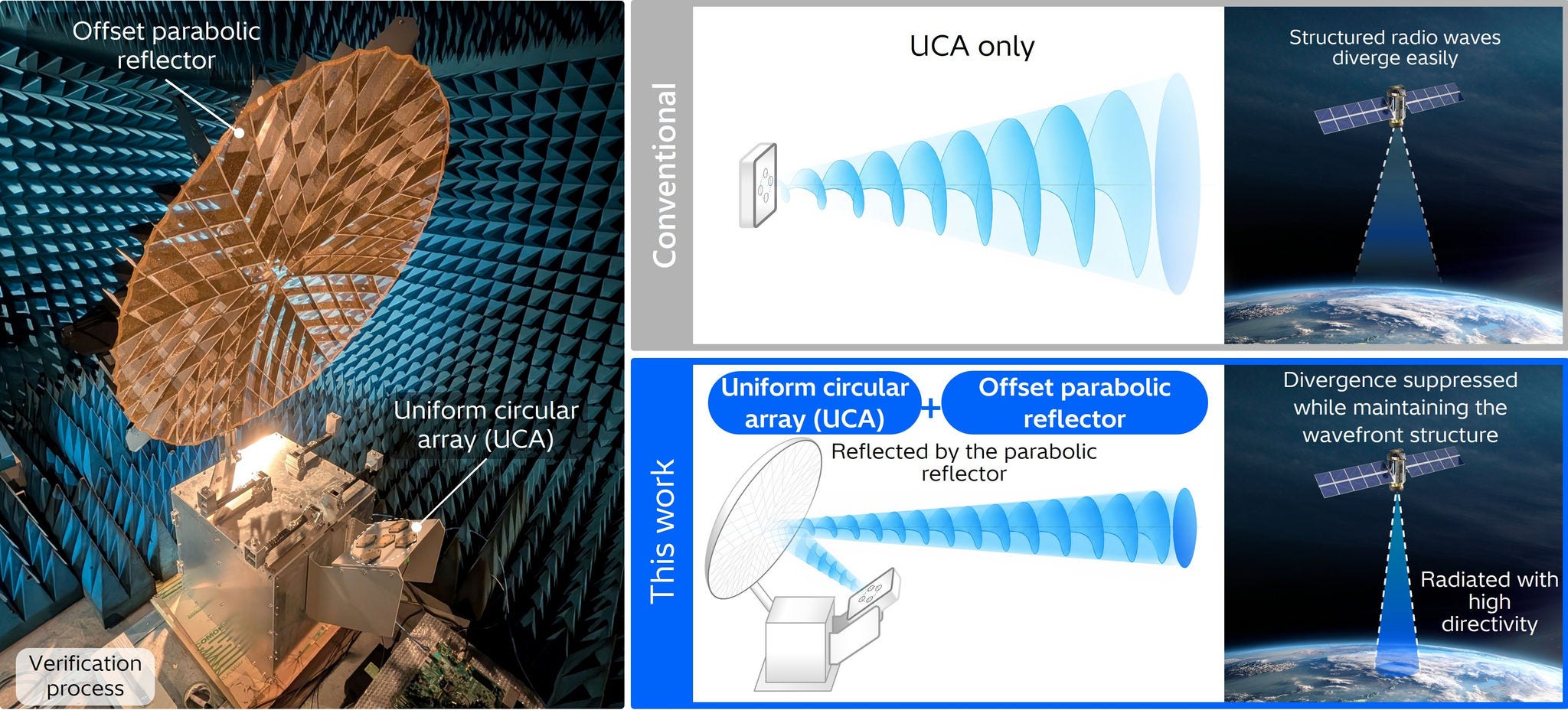 Figure 1. Overview of technology for radiating structured radio waves in a specific direction, verified with an antenna configuration designed for on-orbit deployment
- 1. Structured radio waves: Radio waves for observation that Hitachi is independently researching and developing, created by controlling the degrees of freedom in properties such as polarization state, phase, and frequency. The experiments used a superposition of vortex wavefronts.
- 2. Directivity: The degree to which radio waves radiated from an antenna are concentrated in a specified direction.
- 3. Uniform circular array (UCA): An antenna in which multiple antenna elements are uniformly arranged in a circle to generate radio waves with a helical phase structure.
- 4. Wavefront structure: The shape and phase distribution of the wavefront as a radio wave travels through space.
Background and issues
In recent years, aging urban infrastructure and the increasing severity of natural disasters associated with climate change have created a growing need for continuous, wide-area monitoring of social infrastructure—including railways, power transmission networks, and roads—to detect early signs of anomalies.
However, weather conditions and the difficulty of distinguishing target objects in areas where man-made and natural features overlap have traditionally limited monitoring to post-event damage assessment and recovery. Preventing damage from spreading requires the early detection of small changes and prompt action at the first sign of a problem. Conventional ground inspections and sensor measurements can capture detailed information about individual facilities, but continuously monitoring a wide area with these methods requires considerable time and effort. This challenge has increased interest in efficient space-based observation as a complement to detailed ground-based measurements, helping identify where countermeasures are most urgently needed.
To address these societal challenges, Hitachi has been developing structured radio wave technology. In August 2025, acoustic proof-of-principle experiments demonstrated the potential to capture multiple object features, including shape and motion.*5 Building on this achievement, Hitachi aims to realize higher-precision, three-dimensional observation from space, including height information. This requires radio waves to reach the ground with sufficient intensity (Fig. 2). However, with the conventional configuration consisting only of a UCA, the beam diverges as it propagates, making it difficult to maintain the required intensity. Stable acquisition of object-feature information therefore requires a radiation method that could reduce beam divergence while preserving the wavefront structure.
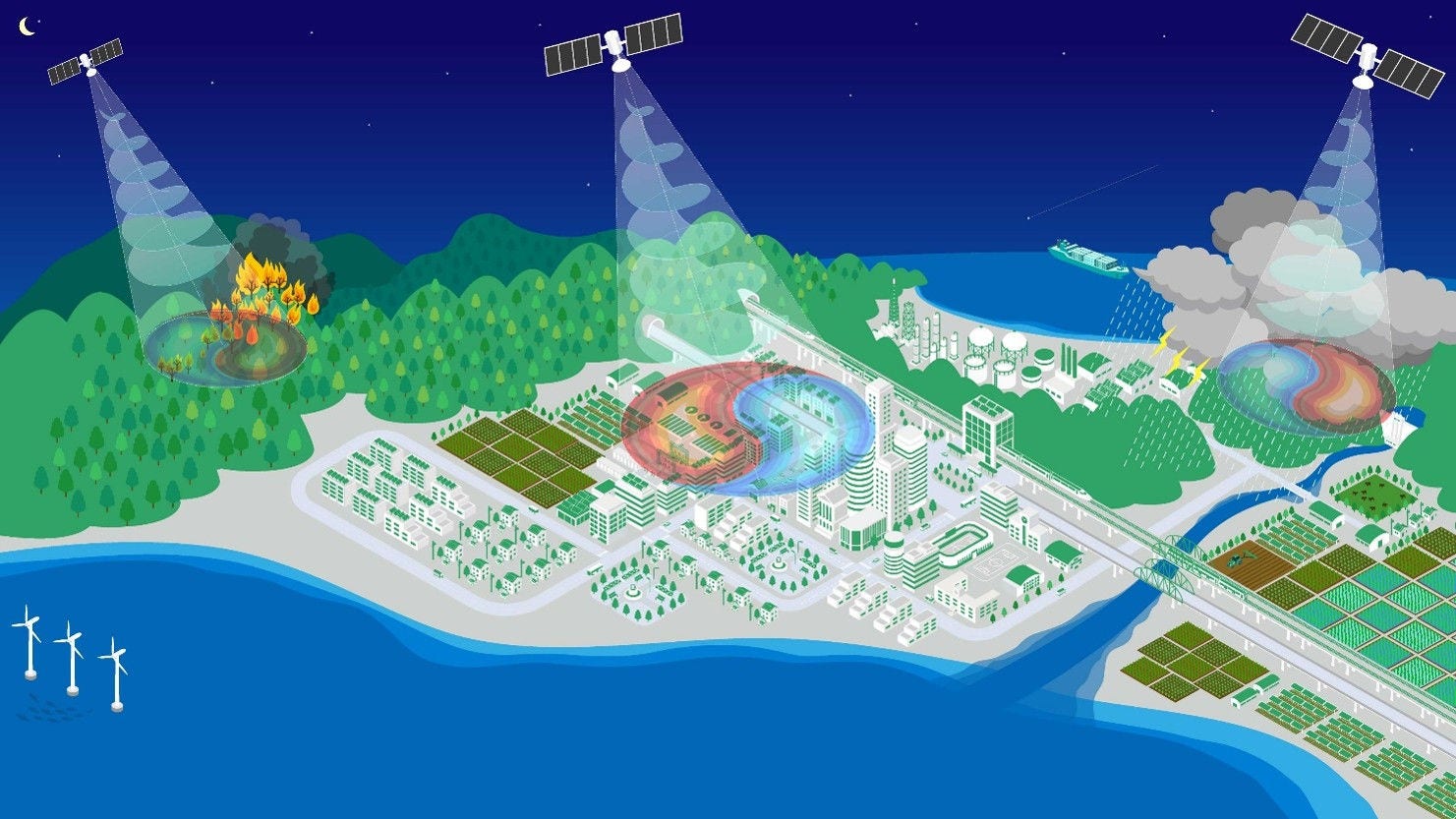 Figure 2. An illustration of Earth observation using structured radio waves (Source: see note 5)
Features of the technology developed to solve these issues
With satellite-based observation in mind, Hitachi developed a technology for radiating structured radio waves with high directivity in a specified direction. The features of the technology are as follows.
1. A foundational technology for the stable generation of structured radio waves that contributes to three-dimensional observation, including height information
Hitachi confirmed that phase control of the elements in a UCA can stably generate the helical phase structure characteristic of structured radio waves. This approach could enable high-precision three-dimensional observations that capture height information in addition to object shape and motion.
2. A satellite antenna configuration that delivers structured radio waves to the ground at the required intensity
Hitachi confirmed that reflecting structured radio waves generated by the UCA from an offset parabolic reflector*6 reduces the beam divergence angle*7 while preserving the wavefront structure, thereby achieving higher directivity than a UCA alone. Electromagnetic field simulations*8 showed that the beam divergence angle decreased from 29 degrees to 6 degrees, and anechoic-chamber measurements yielded a similar value of approximately 6 degrees. These results validate the antenna configuration envisioned for satellite deployment and indicate a path toward maintaining the radio-wave intensity required for space-based ground observation.
- 6. Offset parabolic reflector: A reflector-type antenna that uses an off-axis portion of a parabolic reflector, with the feed located away from the main axis. It is used to concentrate radiation in a specified direction while suppressing radio wave blockage by the feed assembly. When mounted on a satellite, it can also be configured as a deployable reflector.
- 7. Beam divergence angle: Indicates the degree to which a radio wave or light beam radiated from an antenna or other source diverges as it propagates. The smaller the divergence angle, the more readily the beam travels in the specified direction over long distances.
- 8. Electromagnetic field simulation: A method for reproducing and analyzing on a computer how electromagnetic fields propagate and interact. Here, a UCA was combined with an offset parabolic reflector, and the divergence, intensity, and phase distribution of the radiated radio waves were evaluated under conditions using a frequency of 2.4 GHz.
Looking ahead
Going forward, Hitachi will accelerate efforts toward practical application by conducting outdoor demonstrations of structured radio wave transmission and reception. In line with its Inspire 2027 management plan, Hitachi will also develop specific Lumada solutions that combine space-derived big data with social infrastructure and industrial data and AI-based analytics. Continuous, wide-area monitoring of atmospheric conditions, ground-surface height, and changes in these parameters could help reduce disaster risk and improve the efficiency of infrastructure management. Through these efforts, Hitachi will work to minimize its environmental impact and contribute to sustainable and resilient social infrastructure.
Introduction at Hitachi Social Innovation Forum 2026 JAPAN
Some of these results will be showcased at "Hitachi Social Innovation Forum 2026 JAPAN" held from September 3rd (Thu) to 4th (Fri) in Tokyo.
Learn more about these results at the exhibition “EX56: Structured Radio Waves for 3D Sensing.”
For more information on "Hitachi Social Innovation Forum 2026 JAPAN", please visit the official website at: https://www.service.event.hitachi/en/regist/
Trademark Notice: All trademarks and product names are the property of their respective owners.
About Hitachi, Ltd.
Through its Social Innovation Business (SIB) that brings together IT, OT(Operational Technology) and products, Hitachi aims to be a global leader in continuously transforming social infrastructure through digital, contributing to a harmonized society where the environment, wellbeing, and economic growth are in balance.
Hitachi operates worldwide across four sectors – Digital Systems & Services, Energy, Mobility, and Connective Industries – as well as a Strategic SIB Business Unit focused on new growth areas. With Lumada at its core, Hitachi creates value by combining data, technology and domain knowledge to solve customer and social challenges.
Revenues for FY2025 (ended March 31, 2026) totaled 10,586.7 billion yen, with 606 consolidated subsidiaries and approximately 290,000 employees worldwide. Visit us at www.hitachi.com.
Contact
Hitachi, Ltd.
Research & Development Group
Share this:
Categories
Latest Press Releases


