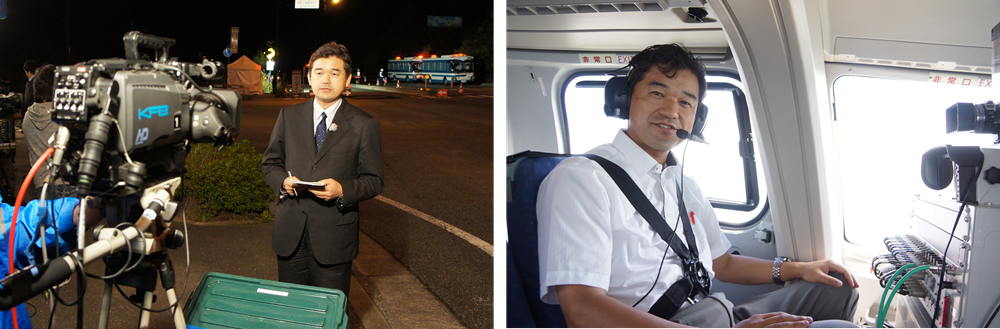
My career as an announcer began with this severe accident, and for nearly 25 years I continued to work on the frontlines as an announcer with an understanding of science. Later, when I became a manager in the announcer department, I began to question whether I was truly doing what I should be doing. After a period of deep reflection, I concluded that addressing the lack of nuclear energy knowledge within television stations—a point previously raised by my senior from my university days—was my responsibility. As I mentioned earlier, unlike NHK and major newspapers, commercial broadcasters such as TV Asahi did not have dedicated science departments or specialist reporters. For this reason, even if a nuclear power plant accident were to occur, TV Asahi would not have reporters with specialist knowledge to provide detailed coverage, and no department for it either. I felt that this was a significant issue, and wrote a proposal to upper management expressing my desire to acquire specialist knowledge about nuclear power generation.
Fortunately, my proposal was approved, and in January 2011, I began visiting Tokyo Electric Power Company (TEPCO) for research. As many of you will be aware, the 2011 Great East Japan Earthquake —and consequently the Fukushima Daiichi Nuclear Power Station accident—occurred two months later, on March 11.
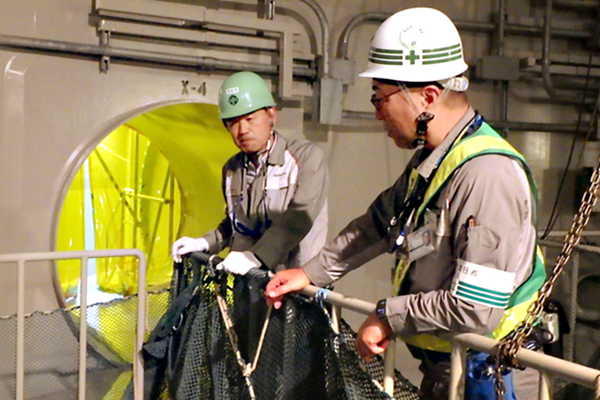
On March 2 and 3, just before the disaster, I visited the Kashiwazaki-Kariwa Nuclear Power Station, and was given a tour of the interior of Unit 4 by a TEPCO representative. The next day, I visited the Monju, the prototype fast breeder reactor. The following week, on March 10, I was taken by the aforementioned senior from my university days to visit the Rokkasho Reprocessing Plant. Upon completing the tour and exiting the building on March 11, we were struck by the massive magnitude 7 earthquake centered off the Sanriku coast.
Upon hurriedly returning to Tokyo, I remained on the news floor, becoming one of the key figures in the coverage of the nuclear accident. In July, I was transferred to the news department as part of a personnel reshuffle. After that, I worked as a reporter specializing in nuclear accidents, attending daily press conferences at the Nuclear and Industrial Safety Agency (NISA), the Nuclear Regulation Authority, and TEPCO, reporting continuously on the content of those briefings. Through my studies on nuclear energy prior to the disaster, I had established a trusting relationship with TEPCO, and this background proved invaluable during my reporting, enabling me to provide valuable insights while maintaining an impartial stance. Since then, I have been involved in nuclear energy-related reporting for over a decade, which has led me to where I am today.






_thumb.jpg)
_thumb.jpg)