Matsui's next stop was the storage facility for reactor internals destined for the Ohma Nuclear Power Plant operated by Electric Power Development Co., Ltd. (J-Power) in Ohma-machi, Aomori Prefecture. Construction work on the Ohma Nuclear Power Plant, which began in May 2008, was initially progressing with the aim of starting operations in 2014. The reactor, designed and built by Hitachi, was a full MOX-ABWR (Advanced Boiling Water Reactor), a type of reactor developed and designed with the goal of using MOX fuel for all of its fuel. The use of MOX fuel is an essential requirement for establishing the aforementioned nuclear fuel cycle. The plan for Ohma Nuclear Power Plant was to gradually increase the proportion of MOX fuel used after coming online, ultimately achieving the world's first use of 100% MOX fuel for the entire core.
However, construction was suspended following the March 2011 Fukushima Daiichi Nuclear Power Station accident. Construction is now proceeding while implementing safety measures, including enhanced earthquake and tsunami countermeasures and severe accident management measures based on the new regulatory requirements enacted in 2013.
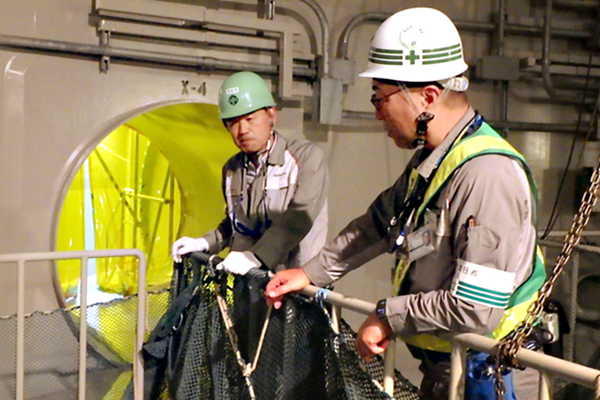
Hitachi had begun manufacturing reactor internals prior to March 2011, and major parts such as the steam dryer, upper grid plate, and shroud were already completed. Since construction was suspended, Hitachi's Rinkai Factory constructed storage facilities for these components. Measures to prevent deterioration, such as nitrogen purging, and regular inspections are conducted to maintain quality while awaiting the start of reactor installation work.
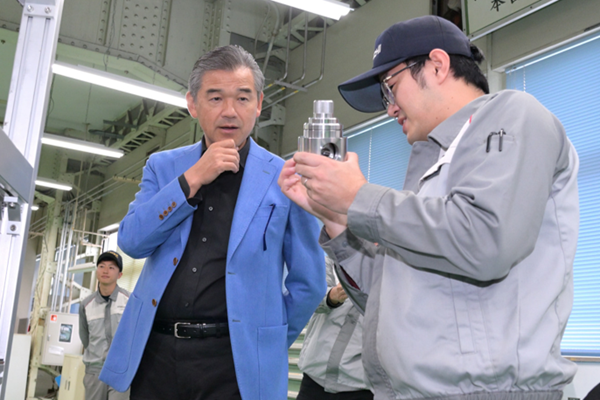
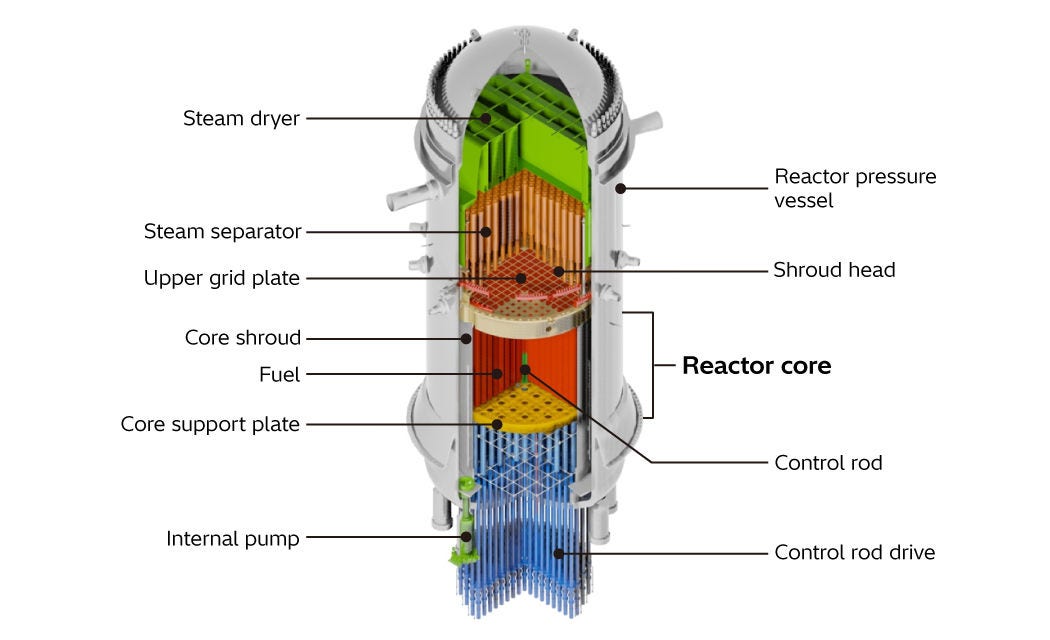
Although these reactor internals will no longer be visible once the reactor is assembled and operation begins, this storage facility allows close-up viewing of the shroud head, which is the top cover of the shroud, and Matsui examined it intently.
The shroud is a cylindrical structure that surrounds the fuel assemblies within the core. It holds the fuel assemblies and plays a role in creating the channels for cooling water to flow inside the core. The shroud head is a dome-shaped metal plate, positioned at the top of the shroud, and integrated with the steam separator. The steam separator consists of numerous metal cylinders with a special internal structure. As its name suggests, it is a device that separates gas and water. Boiling water reactors (BWRs), including the ABWR, operate by boiling the cooling water within the reactor and sending the resulting steam directly to a turbine for power generation. However, steam freshly generated in the core contains a large number of water droplets, and sending this steam directly to the turbine would lead to reduced efficiency and pipe corrosion. For this reason, steam is first passed through a steam separator to remove water droplets, then through a steam dryer to remove as much moisture as possible before it is sent to the turbine.






_thumb.jpg)
_thumb.jpg)