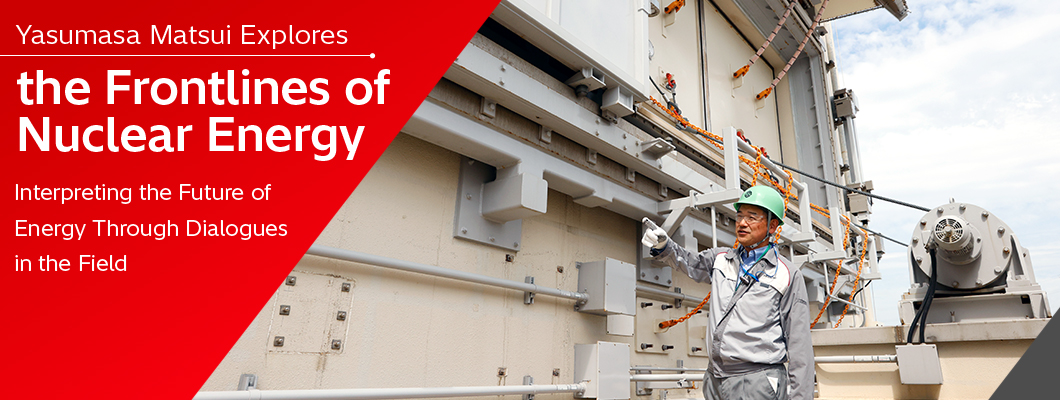


Owned and operated by Tokyo Electric Power Company Holdings, the Kashiwazaki-Kariwa Nuclear Power Station is a vast site approximately 4.2 million square meters in size (approximately the size of 90 Tokyo Domes) facing the Sea of Japan, with seven reactors spanning two municipalities, Kashiwazaki City and Kariwa Village, in Niigata Prefecture. It has a total output of 8,212 megawatts, boasting the world’s largest installed electric output for a single nuclear power station. All of seven reactors had been shut down in the wake of the Great East Japan Earthquake. However, on April 16, 2026, commercial operation of Unit 6 resumed.
In this installment of the Energy Highlights series, Yasumasa Matsui visits the site of Unit 6, currently operational, as well as Unit 7, which is undergoing preparations for a restart, to report on safety equipment that is designed to comply with new regulatory requirements. Matsui’s report will be presented in two parts.
Matsui first went inside the Kashiwazaki-Kariwa Nuclear Power Station for a tour in 2011, and the location represents a point of origin from which he took his first steps as a journalist focusing on nuclear energy.
Visiting the site again for the first time in 15 years, for Matsui it was a journey to view first-hand how the power station has changed in significant ways in pursuit of greater safety, and to reaffirm the enduring commitments of the people who uphold the site’s safety and trust. In the first half, Matsui will learn about the pillars of safety measures in place across the entire power station, and also look at the scene inside Unit 6.
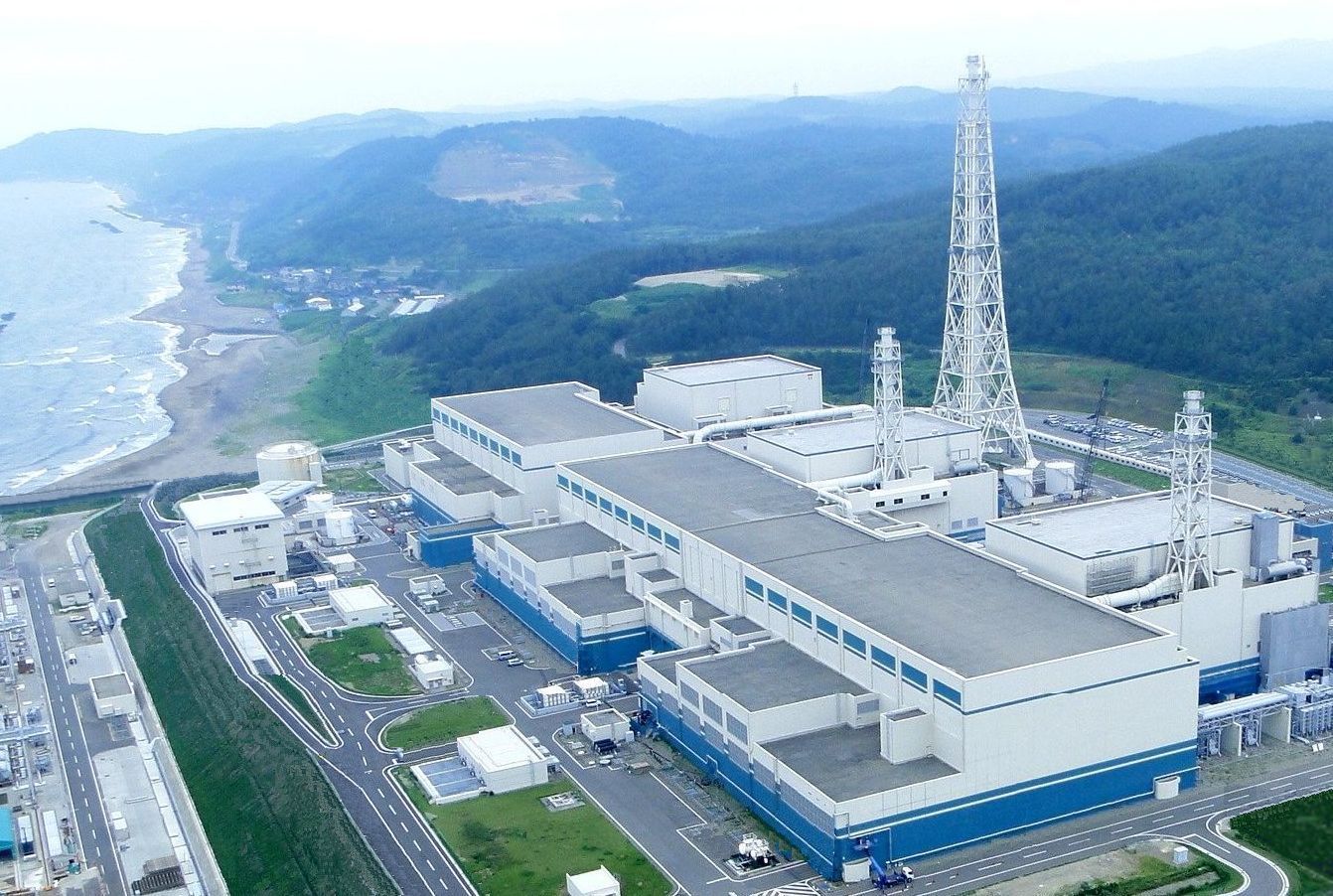
Kashiwazaki-Kariwa Nuclear Power Station Units 5 - 7 (photo courtesy of Tokyo Electric Power Holdings, Incorporated)
The Kashiwazaki-Kariwa Nuclear Power Station is situated approximately 10 km from central Kashiwazaki City, a car ride of about 20 minutes. Arriving at the site, Matsui first heads to the Service Hall, a PR facility in front of the power station, where he receives explanations about the history, overview and safety measures of the power station construction from Mr. Masaki Daito, Deputy Superintendent of the Kashiwazaki-Kariwa Nuclear Power Station.
Niigata Prefecture has long been known as a crude oil production region, and from the Meiji era to the beginning of the Showa era, the area around Kashiwazaki greatly prospered from the oil industry.
Out of the local community’s desire to continue to support Japan’s energy needs as oil production in the region declined over time, in 1969 the Kashiwazaki City Council and Kariwa VIllage Council passed a resolution to welcome construction of the nuclear power station by Tokyo Electric Power. In response, construction of the Kashiwazaki-Kariwa Nuclear Power Station began in 1978.
Commercial operation of Unit 1 started in 1985. Construction proceeded apace thereafter, culminating in 1997, when Unit 7 commenced commercial operation.
The power generated by the facility was sent to the Tokyo metropolitan area, a major hub of power consumption, and this stable supply of power has supported the development of the Japanese economy and industry, and the daily lives of people over the years.
Of the power station facility’s seven reactors, Units 1 through 5 are boiling water reactors (BWRs), while Units 6 and 7 are advanced boiling water reactors (ABWRs), the first of their kind in the world to be constructed and enter operation. (*1) All seven reactors had been shut down since March 2012, following the Great East Japan Earthquake. However, on April 16, 2026, Unit 6 resumed commercial operation and has been steadily operating since. While Unit 7 has already passed reviews by regulatory authorities, construction including a Specialized Safety Facility (*2) is still underway, and the restarting of the unit is expected to take some more time.
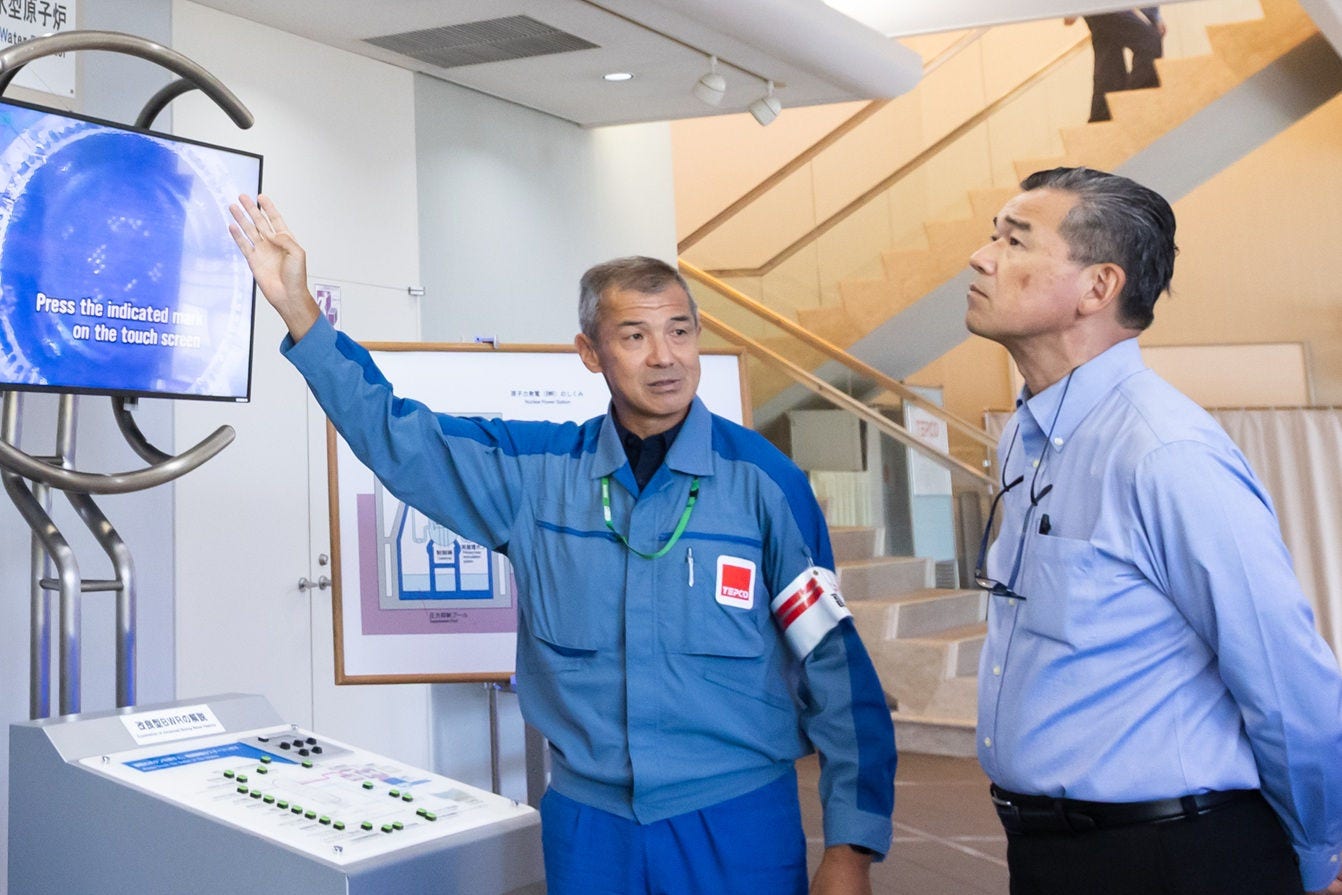
Mr. Masaki Daito (left), Deputy Superintendent of the Tokyo Electric Power Holdings Kashiwazaki-Kariwa Nuclear Power Station, providing an overview of the facility in the Service Hall, and Yasumasa Matsui (right), visiting for the first time in 15 years.
Deputy Superintendent Daito explains how safety measures at the site have been strengthened to comply with new regulatory requirements that were developed based on the lessons learned from the accident at the Fukushima Daiichi Nuclear Power Station. The measures are broadly classified into four pillars. The first pillar is “measures to protect against tsunamis.” This included erecting seawalls, approximately 15 m above sea level taking into account the elevation of the site as well as making critical areas watertight, and sealing pipe penetrations to prevent water ingress.
Under the second pillar, “measures to ensure a continuous power supply,” in addition to emergency diesel generators, three units of which were already in place for each power generation facility, four sets of air-cooled gas turbine generator trucks and 18 power supply vehicles were newly deployed.
For the third pillar, “measures to continuously cool the nuclear reactor,” 30 fire trucks for water injection and 9 alternative heat exchanger trucks (*3) were deployed, while inside the reactor building, a high-pressure alternate cooling system (HPAC), which will be described later, was installed. A new freshwater reservoir with a capacity of approximately 20,000 tons was also newly constructed, ensuring that over a week’s worth of fresh water for injection can be supplied.
The fourth pillar is “measures to prevent the release of radioactive materials,” and involved the installation of a filter vent system and hydrogen treatment equipment. When an accident occurs and accumulated gas is purged from inside the reactor containment vessel to prevent a rise in pressure, the purged gases are passed through this filter vent system to reduce the amount of radioactive materials released to around one-thousandth. (The hydrogen treatment equipment will be explained later)
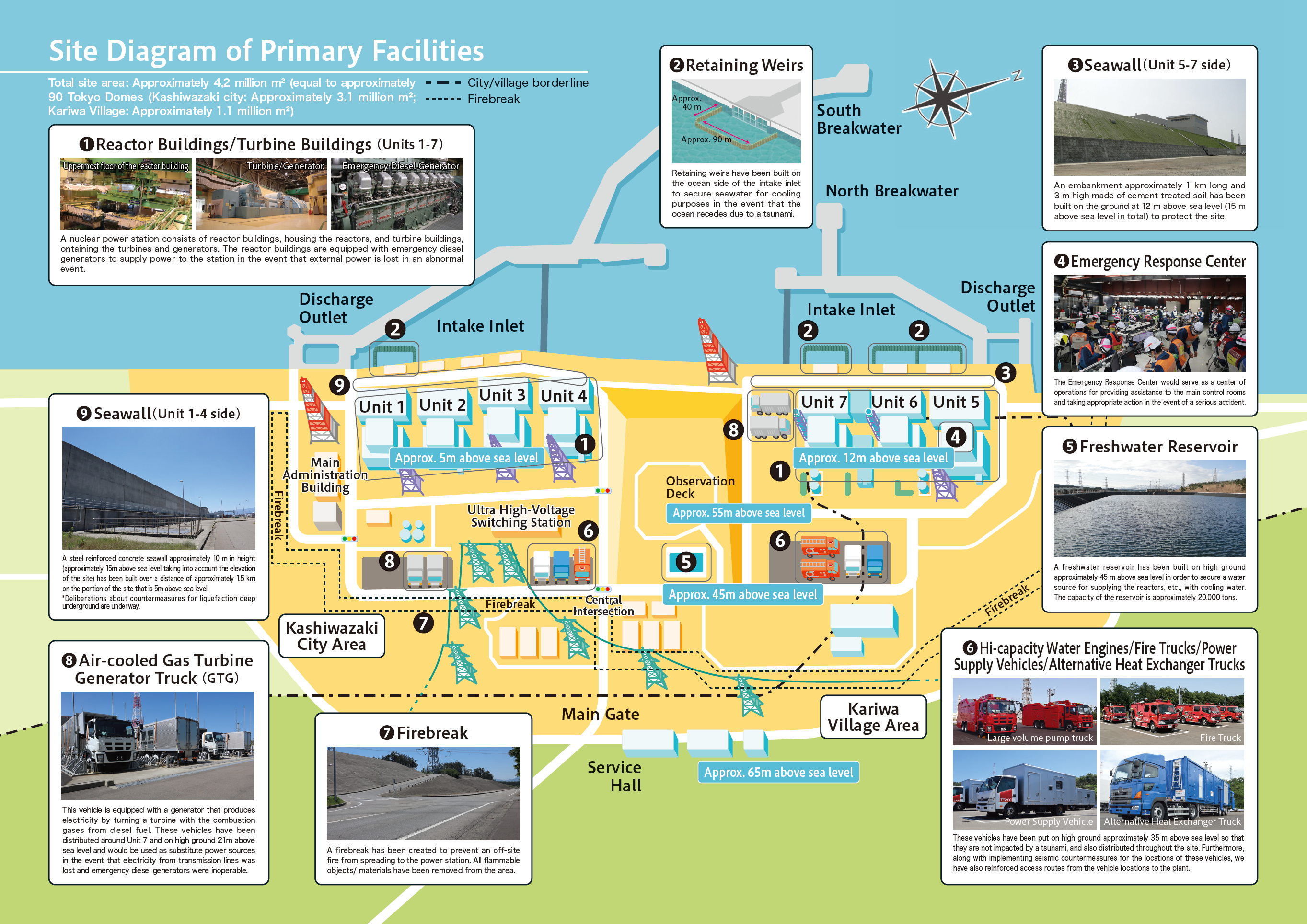
Site Diagram of Primary Safety Facilities (photo courtesy of Tokyo Electric Power Holdings, Incorporated)
View larger image
In addition to these safety facilities, site-wide comprehensive drills are conducted at least once a month, and have taken place more than 200 times since the 2011 earthquake. A cumulative total of more than 34,000 drills covering individual elements have also been conducted, putting in place systems to ensure that only on-site personnel at the power station can carry out an initial response in the event of an emergency.
The briefing also went over initiatives being promoted to revitalize communication and “value people.” This included a greeting campaign instituted at the suggestion of Superintendent Takeyuki Inagaki, who was involved in bringing the situation under control during the accident at the Fukushima Daiichi Nuclear Power Station as head of the recovery team, along with an effort to hand over greeting cards containing messages of thanks. Counting the employees of Tokyo Electric Power and its affiliates, approximately 6,600 people (as of June 2026) work at the Kashiwazaki-Kariwa Nuclear Power Station. It was explained that a key to ensuring safety lies in efforts reflecting Superintendent Inagaki’s strong commitment to developing an environment in which everyone can work with a sense of pride and vitality.
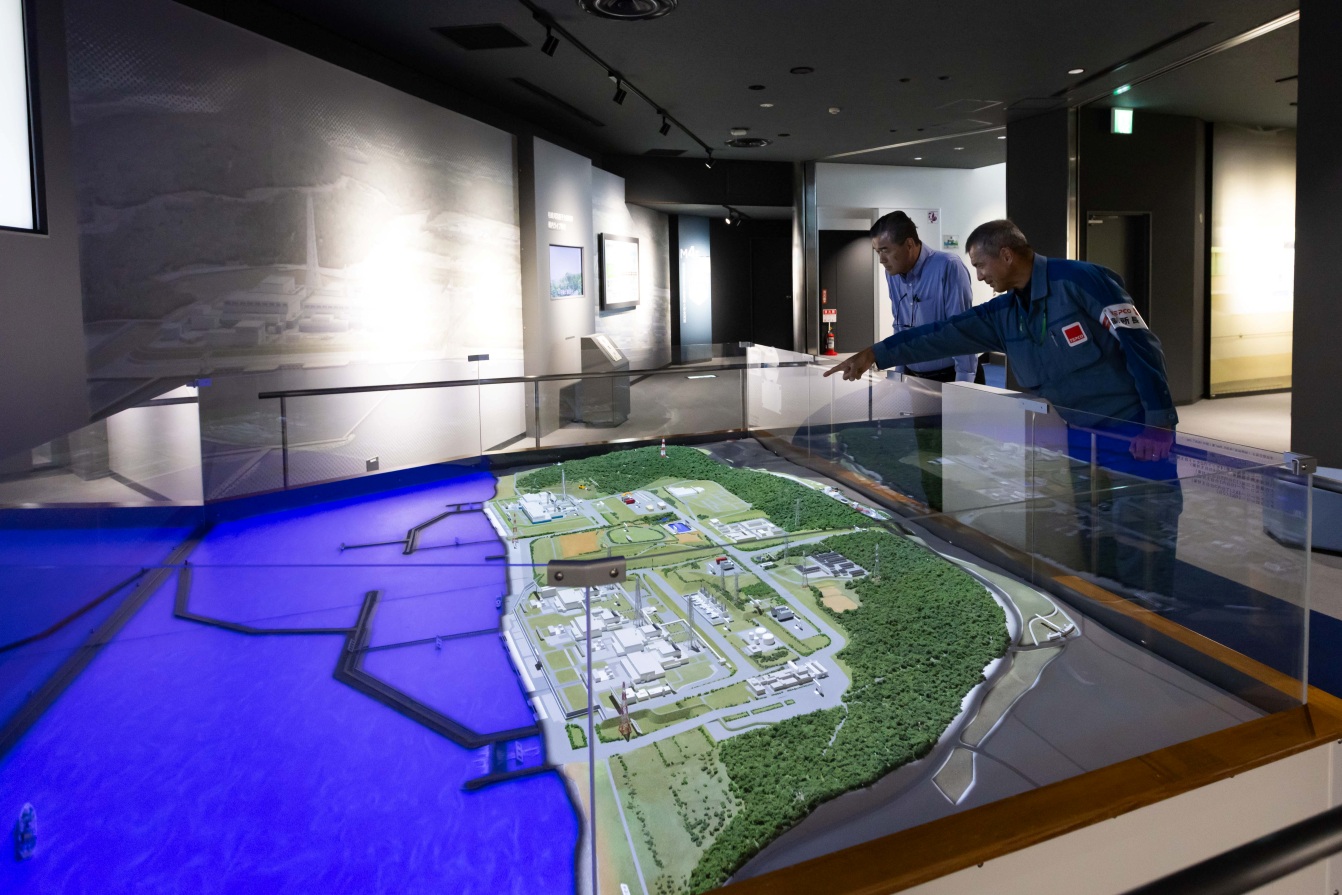
Scale model showing the entire Kashiwazaki-Kariwa Nuclear Power Station site on display in the Service Hall
Once the briefing concludes, Deputy Superintendent Daito finally guides Matsui into the power station. This time, the tour will focus on the newly added safety facilities.
The inside of the site is divided into zones according to security level, and strict security checks are carried out at gates when entering each zone. When Matsui enters the reactor building, he is first guided to the main control room for Units 6 and 7. “When I enter this room, I feel a sense of calm tension, just as I did on my previous visit,” remarks Matsui. “Operators are monitoring Unit 7 as well, which is not currently operational. I suppose they are watching over its shut-down state.”
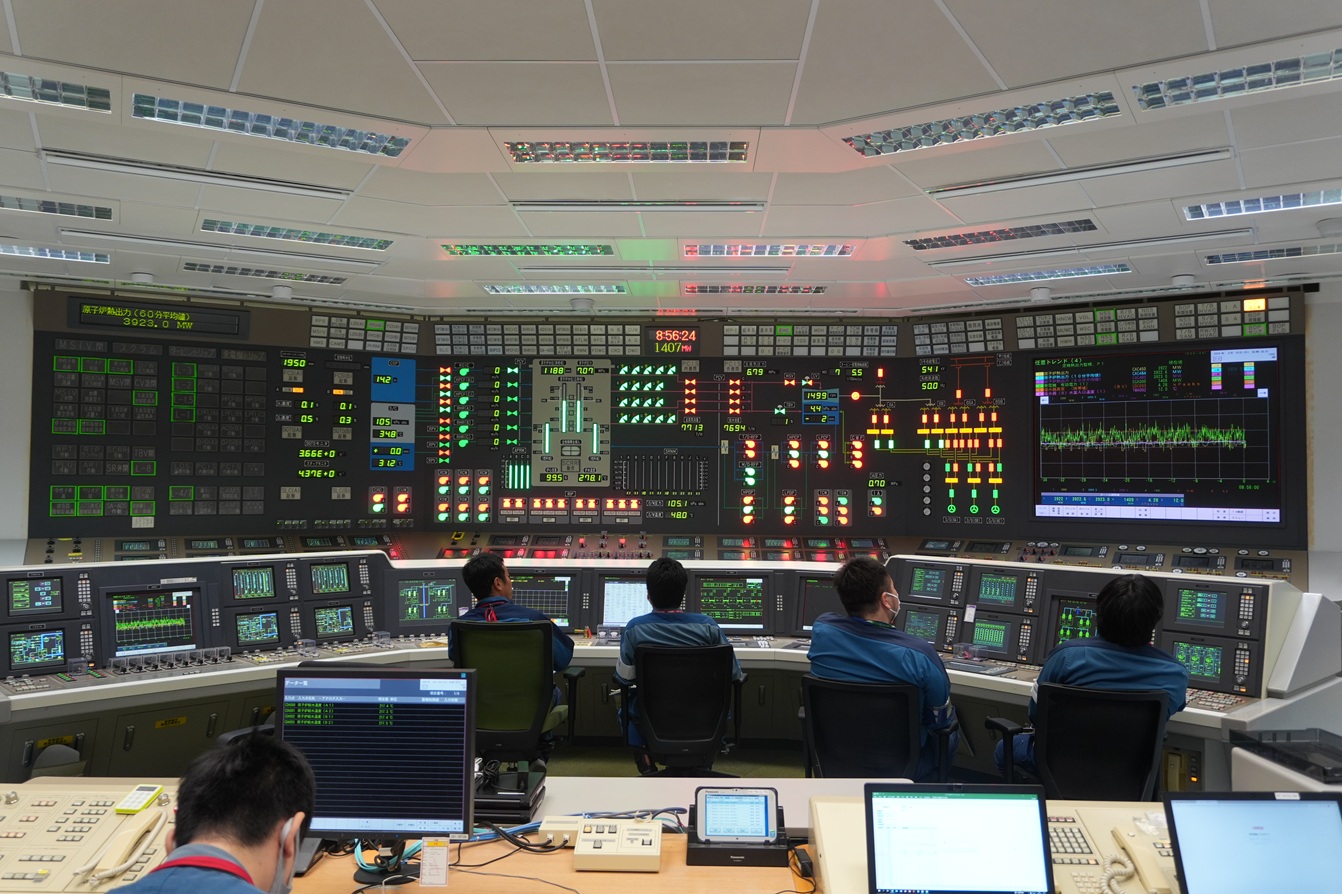
Main Control Room. The main control room is where the status of the nuclear reactors, turbines and generators, etc. are monitored, and their operation is controlled (photo courtesy of Tokyo Electric Power Holdings, Incorporated)
Next, Matsui heads to an observation room that looks out on the operating floor situated directly above the Unit 6 reactor. The walls of the operating floor are fitted with 56 hydrogen treatment equipment in anticipation of the generation of hydrogen in the event of an accident. These equipment use palladium-based catalysts with the capacity to absorb over 900 times their volume of hydrogen at room temperature. The equipment prevents hydrogen explosions by reacting hydrogen with oxygen and reverting it to water without the use of power, thereby keeping the concentration of hydrogen within the reactor building below 4%, the lower limit in the concentration range at which combustion or explosion can occur.
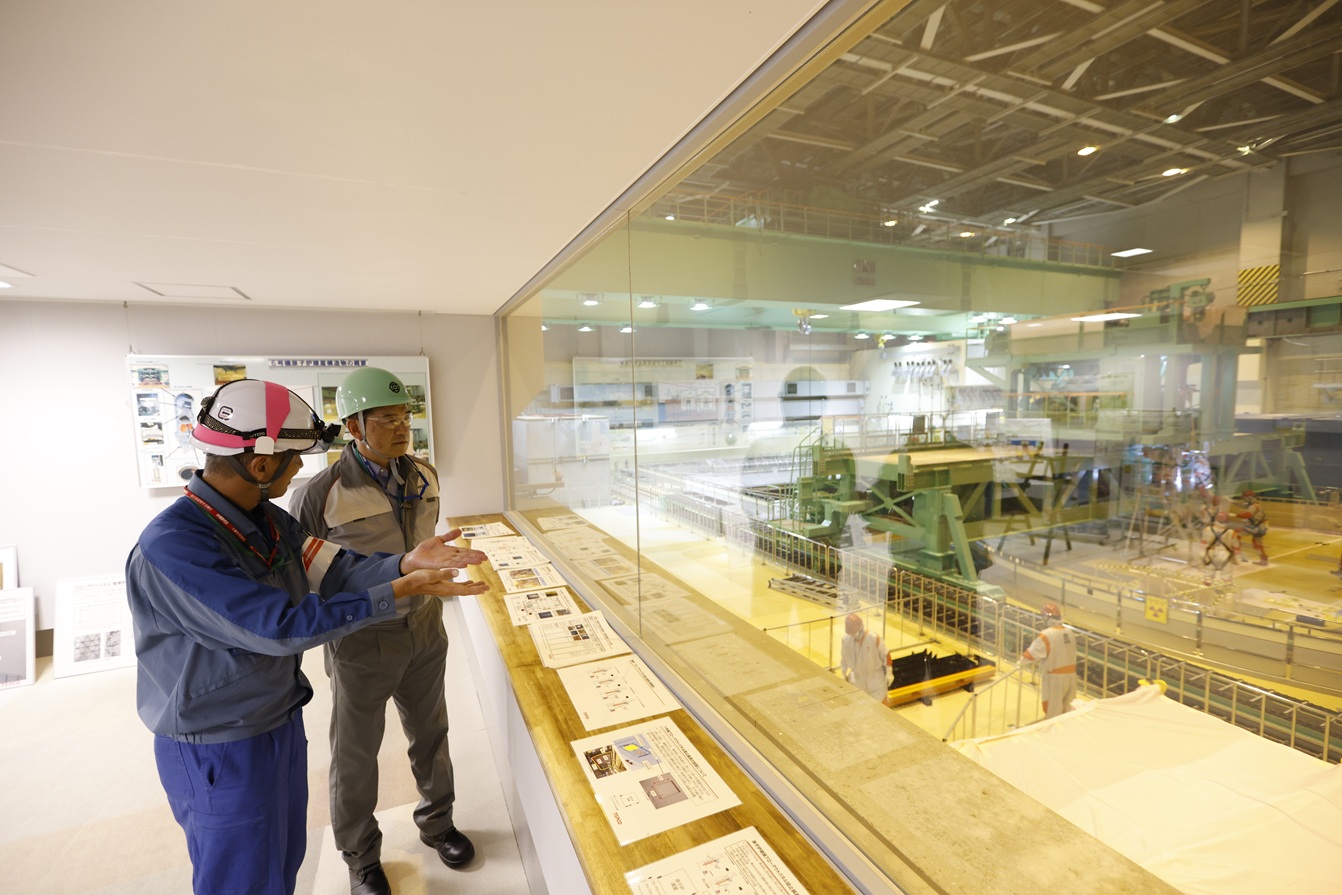
Looking out at the Unit 6 operating floor
There are also blowout panels installed in the upper part of the floor. Previously, the panels were designed so that if there was an abnormal increase in pressure within the reactor building due to a pipe rupturing or other issue, they would automatically detach to relieve the pressure and protect the building from damage. In light of the lessons learned from the accident at the Fukushima Daiichi Nuclear Power Station, equipment was added so that when the concentration of hydrogen within the building increases and there is a risk of explosion, connected wires are wound with a winch from the outside to force the panels open and release the hydrogen. To prepare for a situation in which the hydrogen concentration still increases, top vent equipment to release hydrogen from the top of the building was installed as an additional measure.
Additional equipment was also installed to allow the blowout panel openings to be closed as necessary once they have been opened. These are designed for basic motorized operation, but can also be manually opened and closed. From outside the building, the large winch of the forced-opening equipment and the massive door of the closure equipment could be seen up-close.
Heading outside the reactor building, Matsui is next guided to the Unit 6 turbine building. In the second half, Matsui will experience the vibrations and sound that convey that the power station is operating, and learn about the commitment of those working in the field toward the restart of Unit 7.
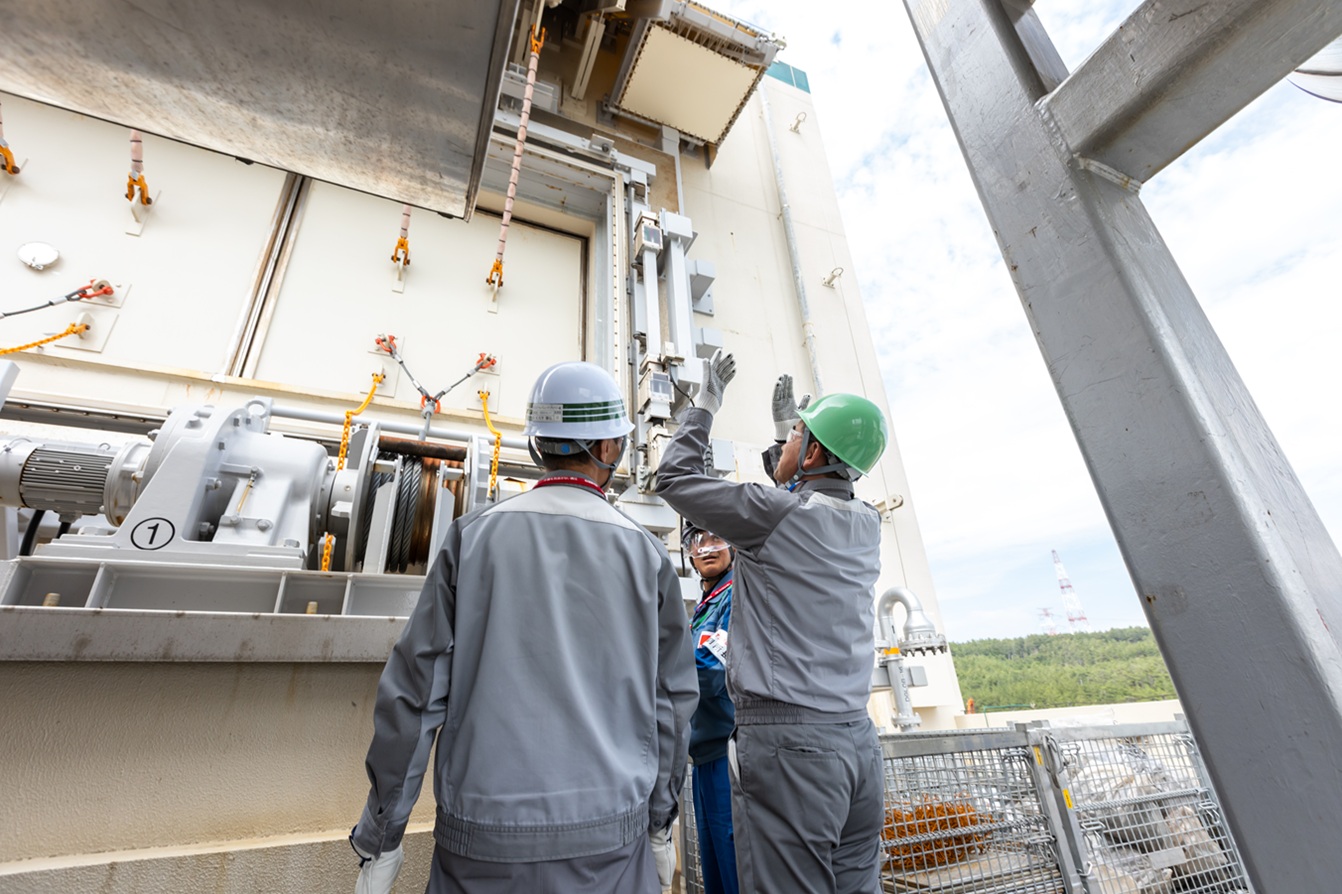
Blowout panels and large winch of the forced-opening equipment
(*1) A nuclear power station that significantly improves upon the safety, operability and economy of a conventional boiling water reactor (BWR).
(*2) This is a backup facility designed to prevent rupture of the containment vessel and the release of large amounts of radioactive material even in the event of a serious accident, such as the intentional crashing of a large aircraft or a terrorist attack that damages the reactor. All nuclear power stations are required to install such facilities based on new regulatory requirements instituted by Japan’s Nuclear Regulation Authority.
(*3) Mobile emergency cooling equipment that exchanges heat between high-temperature water in the nuclear reactor or containment vessel and seawater to release heat to the outside when the existing heat exchange (heat removal) equipment can no longer be used.
(Click here to read the second half)
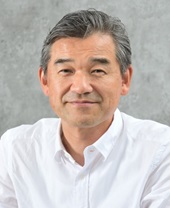
Yasumasa Matsui
Freelance Announcer and Journalist
Born in Inami, Nanto City, Toyama Prefecture. Graduated from Toyama Prefectural Takaoka High School. Graduated from the Department of Chemical Engineering, School of Engineering, Tokyo Institute of Technology (now Institute of Science Tokyo). In 1986, he joined TV Asahi as an announcer. He co-hosted Music Station with Tamori, served as a sportscaster on News Station, and worked as a news and information anchor on programs such as Station Eye, Wide Scramble, and Yajiuma Plus.
In 2008, he became the principal of TV Asahi's announcer school, Ask. During his two years in this role, he trained over 100 announcers who went on to work nationwide. In March 2011, following the 2011 Great East Japan Earthquake (and subsequent Fukushima Daiichi Nuclear Power Station accident), he transferred from the announcer department to the news department as a reporter covering the nuclear power plant accident. He later served as a reporter covering the Imperial Household Agency and weather-related disasters, and worked as a commentator. In 2023, after leaving TV Asahi, he established his own agency, OFFICE Yuzuki. He also serves as a plastic model history research advisor for Tamiya Inc., ambassador for Nanto City, Toyama Prefecture, and media advisor for sake company, DASSAI Inc.
 Part 1|MESSAGE: What I Want to Know and Communicate as an Announcer with a Science Background - The Present and Future of Nuclear Power Generation
 Extra Edition|The Day to Realize the Importance of Energy in Future Society - Report on HSIF2025 JAPAN, OSAKA and Expo 2025 Osaka, Kansai
 Part 2|INTERVIEW: Interview with Kohei Hisamochi, President of Hitachi GE Vernova Nuclear Energy - Taking the Nuclear Energy Business to the Next Phase. (First Half)
 Part 2|INTERVIEW: Interview with Kohei Hisamochi, President of Hitachi GE Vernova Nuclear Energy - Taking the Nuclear Energy Business to the Next Phase. (Second Half)
 Part 3|FIELD REPORT: Chugoku Electric Power's Shimane Nuclear Power Station Unit 3 nears completion! The relentless pursuit of safety and reliability seen at the latest plant under construction
 Part 4|FIELD REPORT: The Hitachi Area in Ibaraki: A Journey that Explores Hitachi's Past, Present and Future (1) Tracing the origin of the Hitachi Founding Spirit and social innovation
 Part 4|FIELD REPORT: The Hitachi Area in Ibaraki: A Journey that Explores Hitachi's Past, Present and Future (2) How nuclear safety is engineered at Hitachi's factories
  Part 4|FIELD REPORT: The Hitachi Area in Ibaraki: A Journey that Explores Hitachi's Past, Present and Future (3) Research and development that write the next chapter in nuclear technology
 Part 4|FIELD REPORT: The Hitachi Area in Ibaraki: A Journey that Explores Hitachi's Past, Present and Future (4) Nurturing people and growing with the region: the spirit of Hitachi seen through the WorldSkills Competition and co-creation projects
 Part 5|FIELD REPORT: To the Frontlines of the Decommissioning of Fukushima Daiichi Nuclear Power Station―Tracing the Path Forward through Reporting from the Field
 Part 6|MESSAGE: Facing the Current State of Nuclear Energy Through the Lens of the Field and Facts―What It Means to Build Up Trust From the Perspective of Hitachi's Nuclear Energy Business
 Part 7|Charting A New Chapter in the History of Safety and Trust Beginning With the Restart of the Kashiwazaki-Kariwa Nuclear Power Station [Second Half]