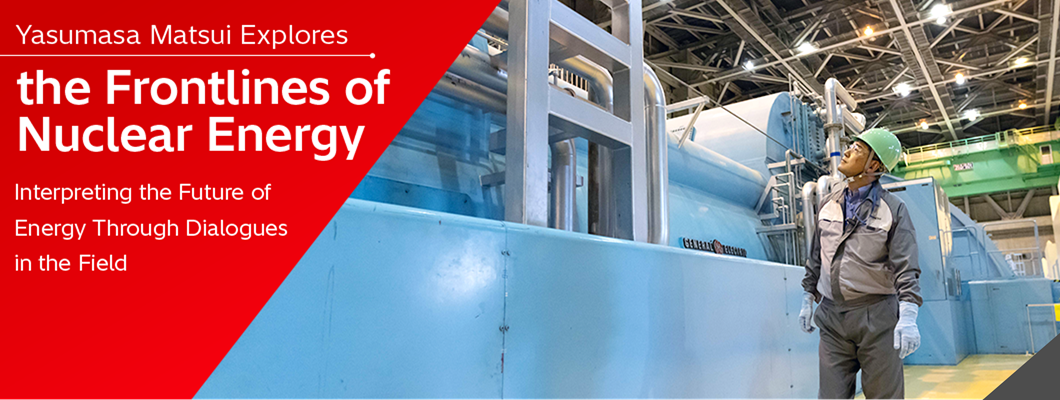


Yasumasa Matsui was visiting the Tokyo Electric Power Holdings Kashiwazaki-Kariwa Nuclear Power Station for the first time in 15 years. In the first half, he received an explanation about the pillars of safety measures covering the entire power station and reported on the situation inside the Unit 6 reactor building.
The second half will focus on the turbine building for Unit 6, which has started commercial operation, the scenes inside Unit 7 as it prepares for restart, and the commitment of Katsuhiro Ohira, the Manager leading Hitachi’s regional office.
(Click here to read the first half)
When entering the turbine building, the atmosphere changes completely. The large amount of noise generated by the equipment for operating Unit 6 fills the interior, and the vibrations produced can be felt in one’s feet through the floor. The electricity produced here is stepped up to 500,000 volts through the main transformer, and then sent to the Tokyo metropolitan area. From the transformer outside the building, a continuous low hum is produced by the iron core inside.
“This is the sound of electricity being transmitted,” explains Deputy Superintendent Daito. Matsui responds with awe, “from the vibrations and sounds, you can really get a sense that the power station is actually operating.”
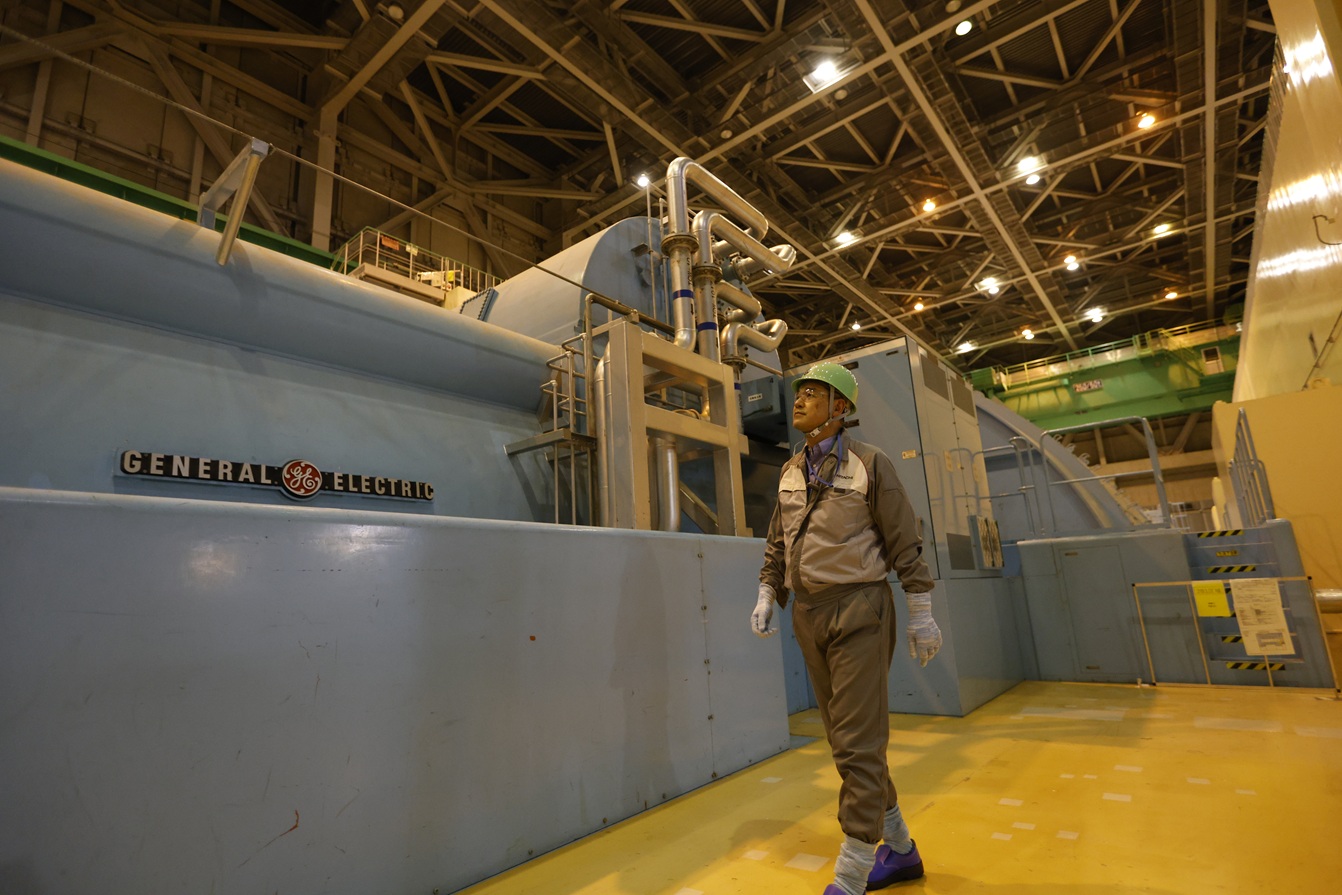
Unit 6 has an output of 1,356 megawatts (the same output as Unit 7), and the turbine building generates large amount of power equal to that consumed by 450,000 average households.
Next, Matsui visited Unit 7. Due to the work that was underway, the interior of the building is filled with scaffolding, supporting work to further enhance safety and upgrade equipment to enable stable operation. Matsui is first shown the high-pressure alternate cooling system (HPAC). The HPAC uses steam generated by the decay heat continuously produced inside the reactor even after shutdown to run a small turbine. This power is used to continuously inject water into the reactor even in the event of power loss. The system was installed in a small space previously used for other purposes, in order to comply with new regulatory requirements.
“To incorporate new safety measures into an existing power station, you not only need to find the space, but you also have to carry out painstaking new construction work, and this introduces many difficult challenges on the technical side,” explains Deputy Superintendent Daito. Supports have been welded on to each of the densely packed pipes underneath the reactor to improve their earthquake resistance. Hearing that welds in places that cannot be directly viewed are made with the use of mirrors, Matsui got a strong sense of the challenges the engineers have faced and the pride they must feel from seeing the difficult work through to completion.
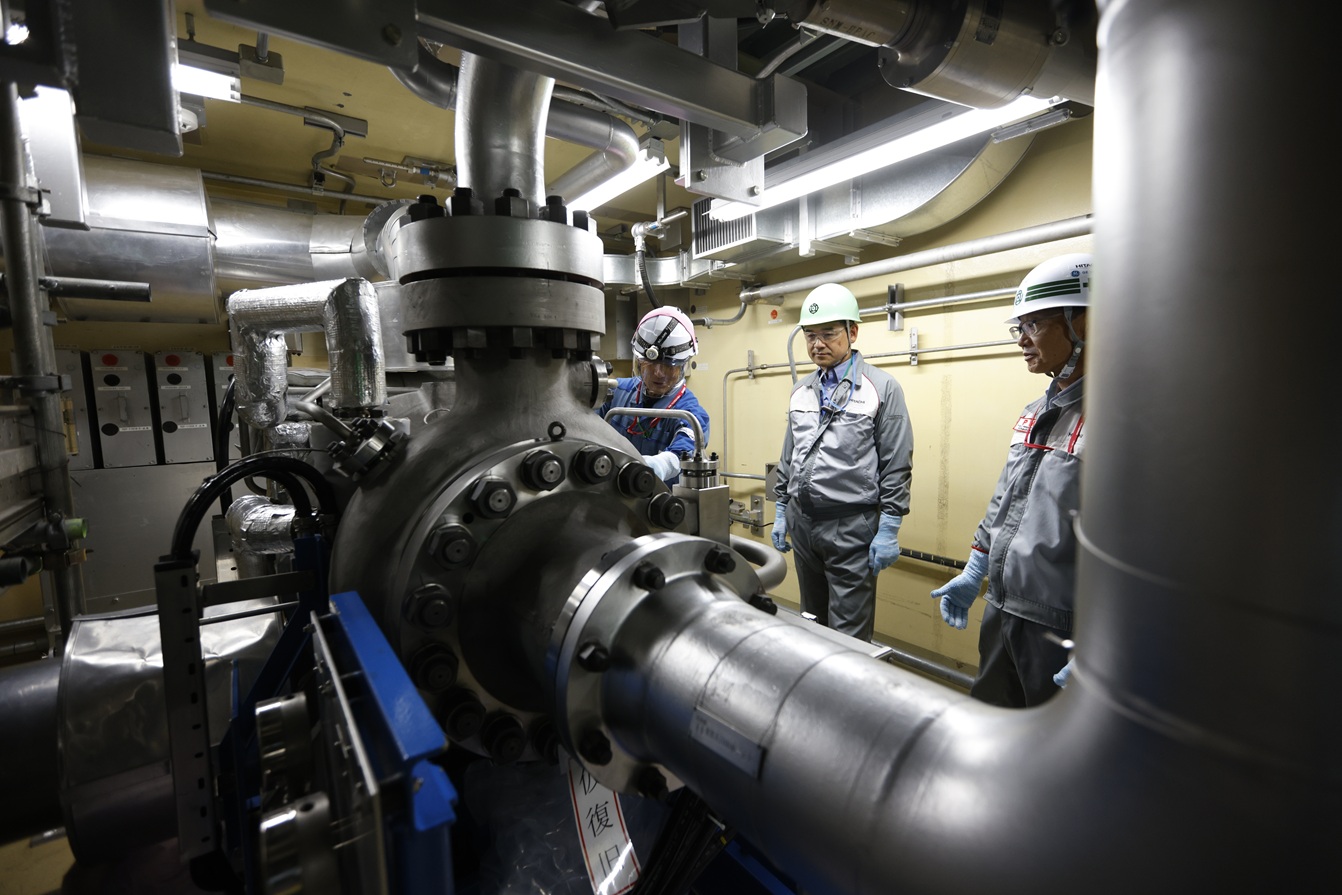
The high-pressure alternate cooling system (HPAC). The system is able to inject water into the reactor without using electricity during an emergency.
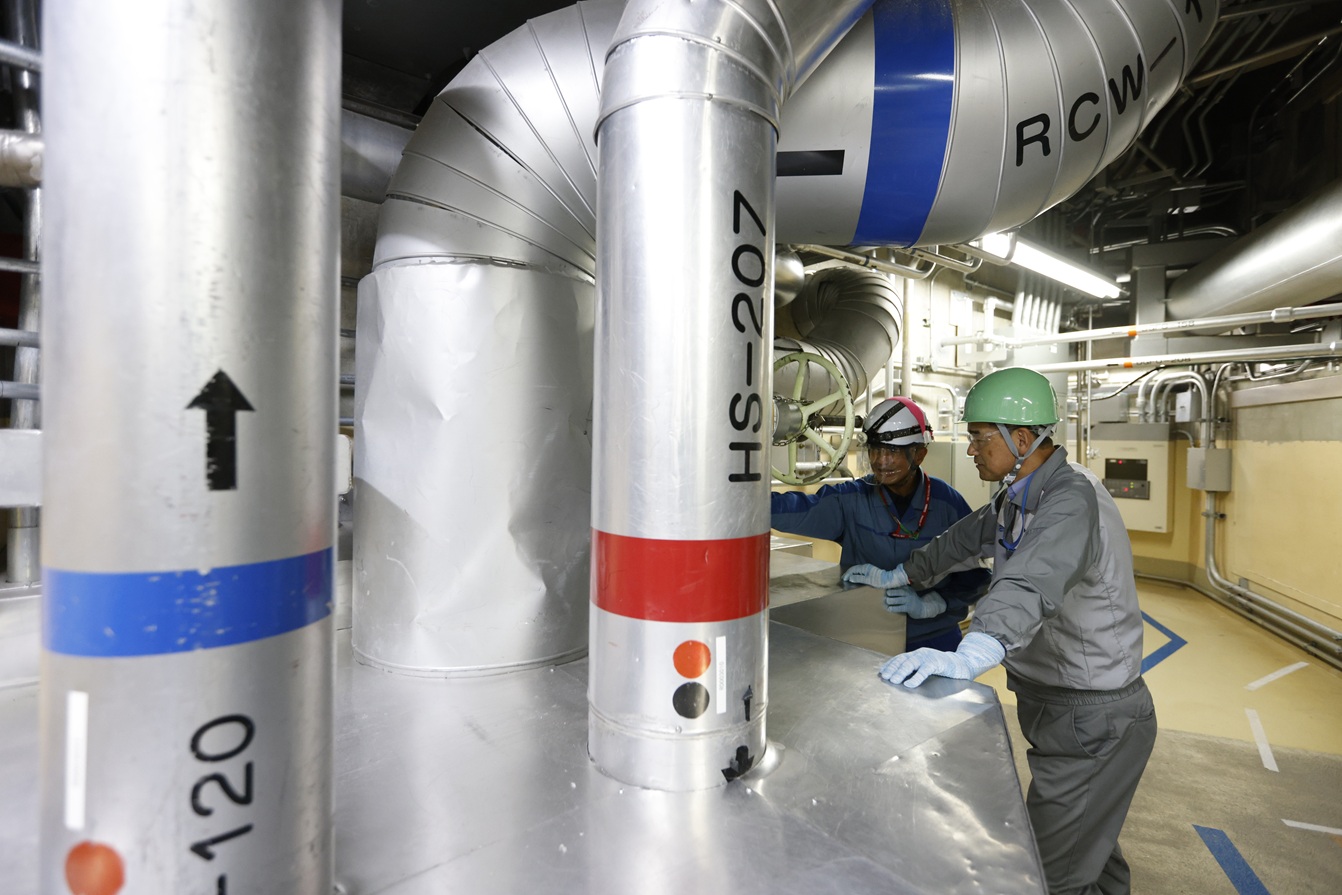
Handles in various locations are coated with phosphorescent paint to make identification easier in the dark.
When exiting the radiation control zone, workers and their belongings are checked for contamination, and radiation levels are also checked based on dosimeter readings. After confirming that the contamination checks showed no issues and that the dosimeter is at 0.00 millisieverts, Matsui has left Units 6 and 7 and sums up his feelings at the end of the visit.
“The blowout panel closure device and forced-opening equipment are designed so that they can ultimately be operated manually even if power is lost, instead of relying on complex mechanisms. Even the measures to prevent hydrogen combustion involve multiple layers of backups, and this gives me a renewed appreciation for the importance of the lessons learned from the Fukushima Daiichi Nuclear Power Station accident.
I was also impressed by how no compromises have been made even down to the finest details, like wrapping cables in coverings that are highly fire-resistant, and coating valves with phosphorescent paint so that they can be manually operated even in the dark. Seeing these improvements, I get a strong sense that a lot of careful thought has gone into not only preventing an accident, but stopping the spread of damage if an accident does occur.”
At the end of his visit, Matsui interviews Katsuhiro Ohira, the Manager of Hitachi’s Kashiwazaki-Kariwa Regional Office. Ohira has been in charge of construction management at the Kashiwazaki-Kariwa Nuclear Power Station since 2011. The Great East Japan Earthquake occurred shortly thereafter.
At the time, many of the personnel in Hitachi’s nuclear energy division had been dispatched to Fukushima to help with the response to the accident at the Fukushima Daiichi Nuclear Power Station. Ohira was among those who volunteered, believing that “as someone involved with nuclear energy, I had to do something.” He arrived at the site a week after the accident. He was tasked with laying temporary cables to restore the external power supply to the site. As the thick cables used for power transmission cannot be carried by a person on their own, large groups of workers lined up at one-meter intervals to carry the cables on their shoulders. The work took three to four hours to complete, as the workers wore full face masks over their protective clothing, and were also subject to dose limitations. The experience further strengthened Ohira’s commitment to the safety of nuclear energy.
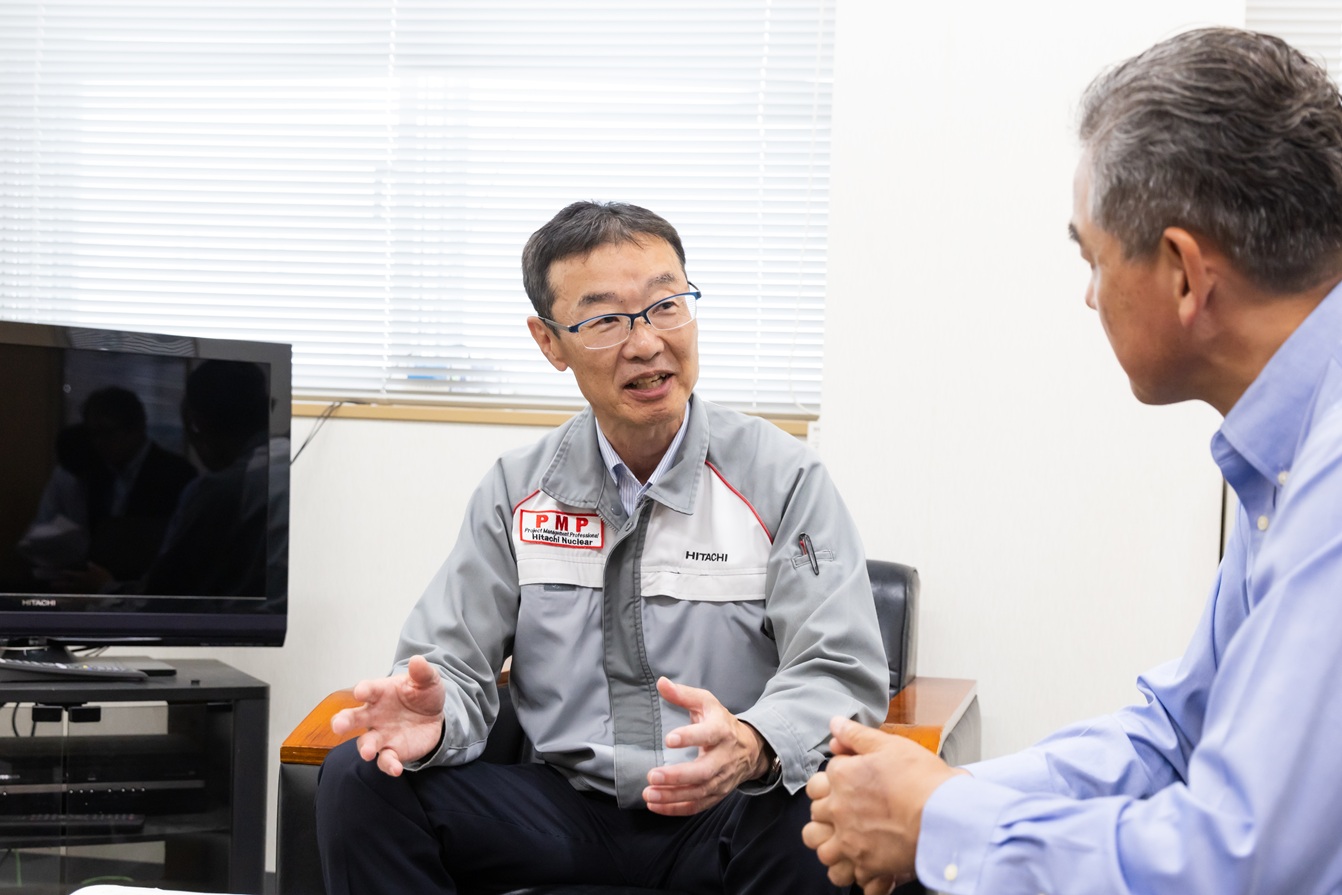
Katsuhiro Ohira, Manager of the Hitachi GE Vernova Nuclear Energy Kashiwazaki-Kariwa Regional Office
Following the Great East Japan Earthquake, construction work to comply with new regulatory requirements began at the Kashiwazaki-Kariwa Nuclear Power Station. However, designs and construction work had to be repeatedly redone to accommodate detailed rule changes and other developments. Work to strengthen earthquake resistance in particular involved a large number of locations, and when there are existing facilities in the area to be reinforced, analysis would have to be performed again. As a result, the construction schedule had to be repeatedly reworked.
“But we knew this was necessary for safety. Together with the customer, we’ve worked with the single-minded determination that whatever it takes, we will restart the power station safely,” explains Ohira.
When asked about how he felt after the successful restart of Unit 6, Ohira replies with a smile. “To be honest, I was delighted.” “This was the first restart of a TEPCO BWR since the accident at the Fukushima Daiichi Nuclear Power Station. The site had long been stuck consuming electricity, and it finally returned to being a power station. That’s why I see the restart not as the end goal, but as the starting point.”
Work is currently proceeding toward the restart of Unit 7 step by step, including the construction of a Specialized Safety Facility and preventive maintenance work. During the long period of work for the restart, many employees reached mandatory retirement age while still saying “maybe it will restart next year,” and there were times when it was difficult to keep workers motivated. Despite these challenges, Ohira kept telling his colleagues to think positively, encouraging them to avoid thinking something “cannot be done,” and instead think of “what can we do to make it happen?”
“Our job doesn’t end with the delivery of the equipment. As the plant manufacturer, we are also responsible for upkeep and maintenance, and providing support for stable operation.
We are working on co-creation activities with the customer to develop and implement ways to perform the work more efficiently with fewer people by leveraging digital technologies and AI in the future. At the same time, we are working with a sense of urgency and positive thinking to return Unit 7 to operational status as a power station as soon as possible.”
Even though Unit 6 and Unit 7 are both ABWRs, there are differences in terms of the manufacturers of various pieces of equipment, and the fine details. As a result, the work does not proceed in the same way. The necessary adjustments and checks are expected to continue for a while longer.
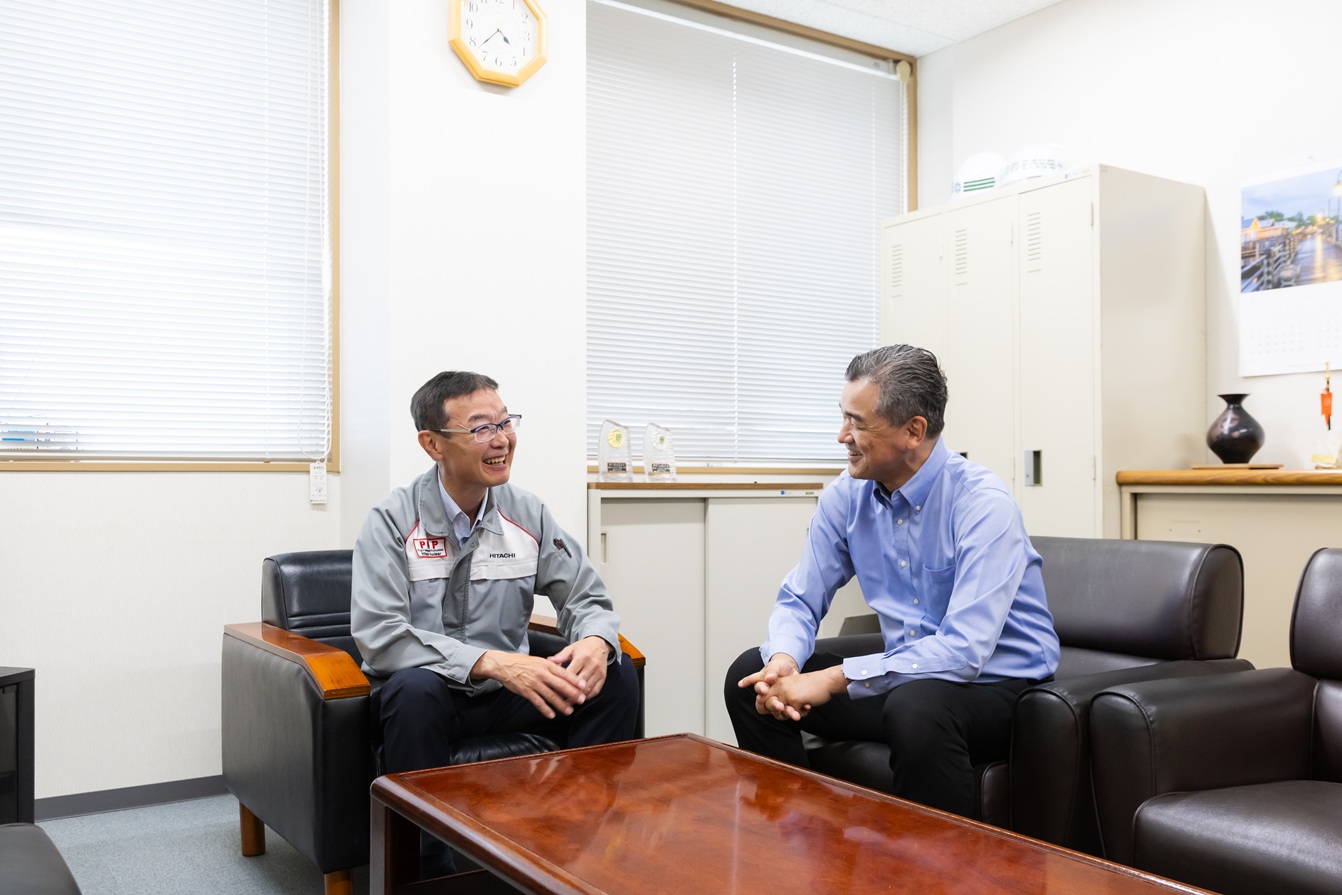
His reporting duties complete, Matsui summed up his feelings. “When I visited 15 years ago, I got a sense that there was a lot of space, but now the area is packed with additional safety equipment, which has changed things quite a lot.” In 2011, Matsui took it upon himself to study nuclear energy on his own, out of a concern that the television station where he was working at the time lacked anyone with specialist knowledge on the subject. Utilizing a connection from his university days, he arranged a visit to the Kashiwazaki-Kariwa Nuclear Power Station. It was just a week later that the Great East Japan Earthquake struck. This was the start of Matsui’s career as a journalist specializing in nuclear energy.
“Given the personal connection I have to this place, Ohira’s comments about it finally returning to being a power station really touched me.
I can understand how people would lose heart after working year after year only on countermeasure work without the restart in sight. Even so, they saw the work through. That would make the joy of seeing it finally start to supply power again all the greater. Seeing Deputy Superintendent Daito speak about the vibrations of the turbine and the sound of the transformer with such obvious delight gave a strong sense of the pride people working in the energy industry have.”
Matsui also shared his surprise upon hearing that more than 6,000 people work at the site. In fact, during the tour he passed by many field personnel. He was impressed by how they cheerfully greeted him each time.
“I had the same experience of being warmly greeted when I visited here 15 years ago. The facilities may have changed, but the people are the same. Being able to see that was another takeaway from this visit.
Whatever measures you implement on the equipment side, ultimately, safety comes down to people. A site where people make a point of greeting one another and achieve mutual trust must be one with a strong awareness of safety. Under Superintendent Inagaki’s vision for a ‘good power station,’ I look forward to seeing Hitachi unleash the power of its people and technologies to open a new chapter in the history of safety and trust with Unit 6, as well as Unit 7.”
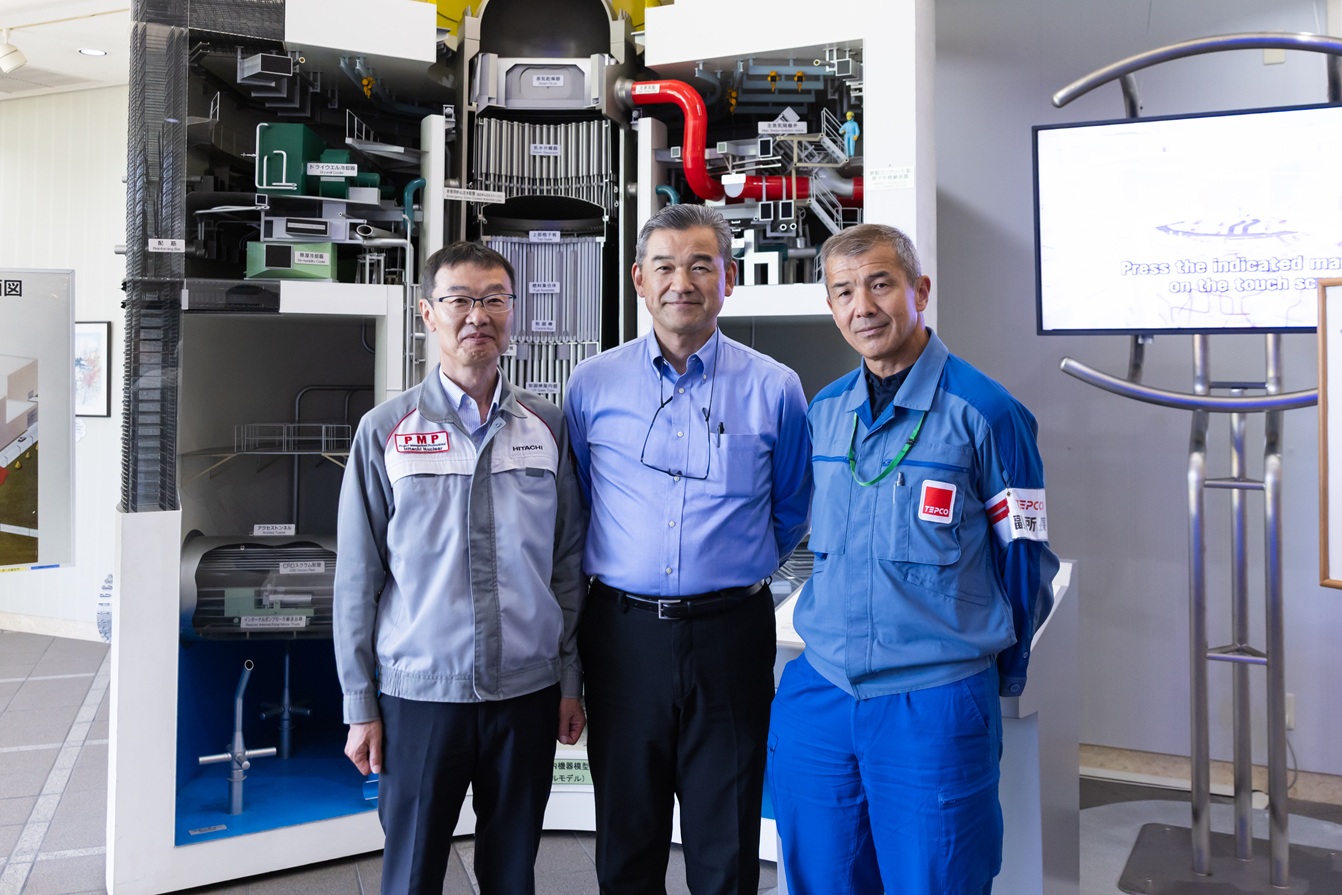
From left: Katsuhiro Ohira, Manager of the Hitachi GE Vernova Nuclear Energy Kashiwazaki-Kariwa Regional Office, Yasumasa Matsui, and Mr. Masaki Daito, Deputy Superintendent of the Kashiwazaki-Kariwa Nuclear Power Station
Yasumasa Matsui
Freelance Announcer and Journalist
Born in Inami, Nanto City, Toyama Prefecture. Graduated from Toyama Prefectural Takaoka High School. Graduated from the Department of Chemical Engineering, School of Engineering, Tokyo Institute of Technology (now Institute of Science Tokyo). In 1986, he joined TV Asahi as an announcer. He co-hosted Music Station with Tamori, served as a sportscaster on News Station, and worked as a news and information anchor on programs such as Station Eye, Wide Scramble, and Yajiuma Plus.
In 2008, he became the principal of TV Asahi's announcer school, Ask. During his two years in this role, he trained over 100 announcers who went on to work nationwide. In March 2011, following the 2011 Great East Japan Earthquake (and subsequent Fukushima Daiichi Nuclear Power Station accident), he transferred from the announcer department to the news department as a reporter covering the nuclear power plant accident. He later served as a reporter covering the Imperial Household Agency and weather-related disasters, and worked as a commentator. In 2023, after leaving TV Asahi, he established his own agency, OFFICE Yuzuki. He also serves as a plastic model history research advisor for Tamiya Inc., ambassador for Nanto City, Toyama Prefecture, and media advisor for sake company, DASSAI Inc.
 Part 1|MESSAGE: What I Want to Know and Communicate as an Announcer with a Science Background - The Present and Future of Nuclear Power Generation
 Extra Edition|The Day to Realize the Importance of Energy in Future Society - Report on HSIF2025 JAPAN, OSAKA and Expo 2025 Osaka, Kansai
 Part 2|INTERVIEW: Interview with Kohei Hisamochi, President of Hitachi GE Vernova Nuclear Energy - Taking the Nuclear Energy Business to the Next Phase. (First Half)
 Part 2|INTERVIEW: Interview with Kohei Hisamochi, President of Hitachi GE Vernova Nuclear Energy - Taking the Nuclear Energy Business to the Next Phase. (Second Half)
 Part 3|FIELD REPORT: Chugoku Electric Power's Shimane Nuclear Power Station Unit 3 nears completion! The relentless pursuit of safety and reliability seen at the latest plant under construction
 Part 4|FIELD REPORT: The Hitachi Area in Ibaraki: A Journey that Explores Hitachi's Past, Present and Future (1) Tracing the origin of the Hitachi Founding Spirit and social innovation
 Part 4|FIELD REPORT: The Hitachi Area in Ibaraki: A Journey that Explores Hitachi's Past, Present and Future (2) How nuclear safety is engineered at Hitachi's factories
  Part 4|FIELD REPORT: The Hitachi Area in Ibaraki: A Journey that Explores Hitachi's Past, Present and Future (3) Research and development that write the next chapter in nuclear technology
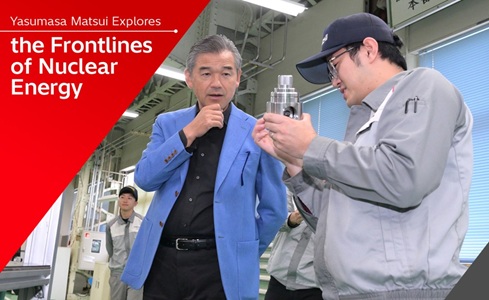 Part 4|FIELD REPORT: The Hitachi Area in Ibaraki: A Journey that Explores Hitachi's Past, Present and Future (4) Nurturing people and growing with the region: the spirit of Hitachi seen through the WorldSkills Competition and co-creation projects
 Part 5|FIELD REPORT: To the Frontlines of the Decommissioning of Fukushima Daiichi Nuclear Power Station―Tracing the Path Forward through Reporting from the Field
 Part 6|MESSAGE: Facing the Current State of Nuclear Energy Through the Lens of the Field and Facts―What It Means to Build Up Trust From the Perspective of Hitachi's Nuclear Energy Business
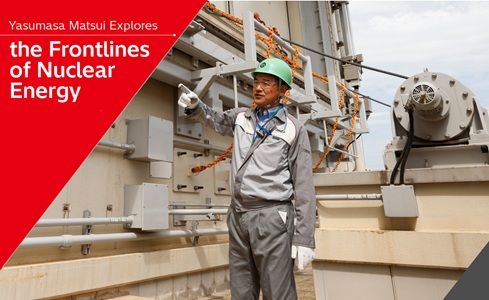 Part 7|Charting A New Chapter in the History of Safety and Trust Beginning With the Restart of the Kashiwazaki-Kariwa Nuclear Power Station [First Half]