Part 8|Evolution of the Energy Systems and Nuclear Energy Supporting the AI Era: Report on HSIF2026 JAPAN [First Half]
Share this:


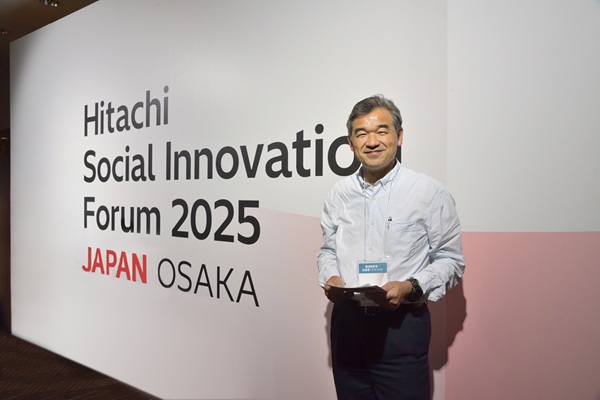
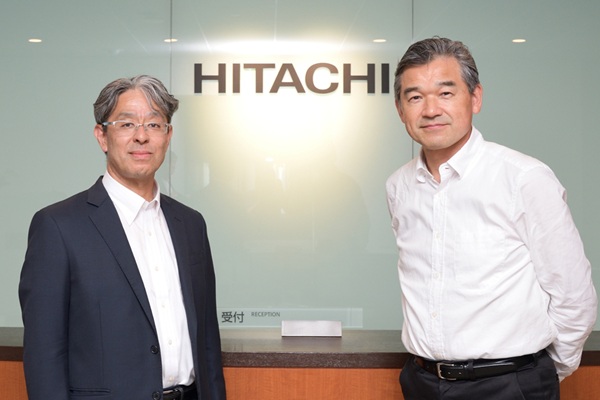
On September 3 and 4, 2026, Hitachi, Ltd. held Hitachi Social Innovation Forum 2026 JAPAN (HSIF2026 JAPAN), one of the Hitachi Group’s largest annual events, at Tokyo International Forum. At the venue, the Hitachi Group exhibited its latest technologies, products and solutions. The Group also held various sessions inviting its partner companies and experts to participate in. Yasumasa Matsui, a freelance announcer and journalist, moderated a business session held on the first day and visited booths in the venue the next day. Matsui’s report on the two-day event will be presented in two parts.
In the first half, Matsui will examine the demand for electricity in the era of AI and a sustainable energy system to support that demand through the keynote session by Toshiaki Tokunaga, the Representative Executive Officer, President & CEO, Hitachi, Ltd., and a discussion themed on energy and AI.
On the first day of the event, President Tokunaga held the keynote session, entitled Transforming Social Infrastructure with Physical AI: Hitachi at the Frontier of Digital Infrastructure. President Tokunaga explained that Physical AI is not limited to robots. It turns various pieces of equipment used on the front lines of industry into autonomous equipment, enabling it to learn from data, think, and make decisions on its own in accordance with the situation. He presented a policy of shifting to digital infrastructure, which will enable social infrastructure to evolve more autonomously as the labor shortage grows more serious.
Hitachi provides HMAX™ by Hitachi, a group of next-generation solutions that address social infrastructure issues by combining AI, data and domain knowledge. These solutions have already produced effects, such as the reduction of maintenance costs and development periods and the increase of operating rates, in the railway, semiconductor manufacturing, energy and other sectors. In the keynote session, he also announced the launch of three new HMAX solutions, including HMAX for data center operators.
Tokunaga also expressed Hitachi’s policy of aiming to build a harmonized society, in which the environment, well-being, and economic growth are in balance, by accelerating its collaboration with NVIDIA in advancing the social implementation of Physical AI.
The theme of the energy sector business session moderated by Matsui was “Energy x AI Realizing a Sustainable Future.” Mr. Hiroshi Okamoto, the Senior Fellow of Tokyo Electric Power Company Holdings, Incorporated, and Mr. Hiroki Saito, the Senior Director of Strategic Account Group of NVIDIA, were invited as guest panelists. They shared perspectives on the possibilities of AI and the future of the energy landscape with Andreas Schierenbeck, CEO of the Energy Sector of Hitachi, Ltd.
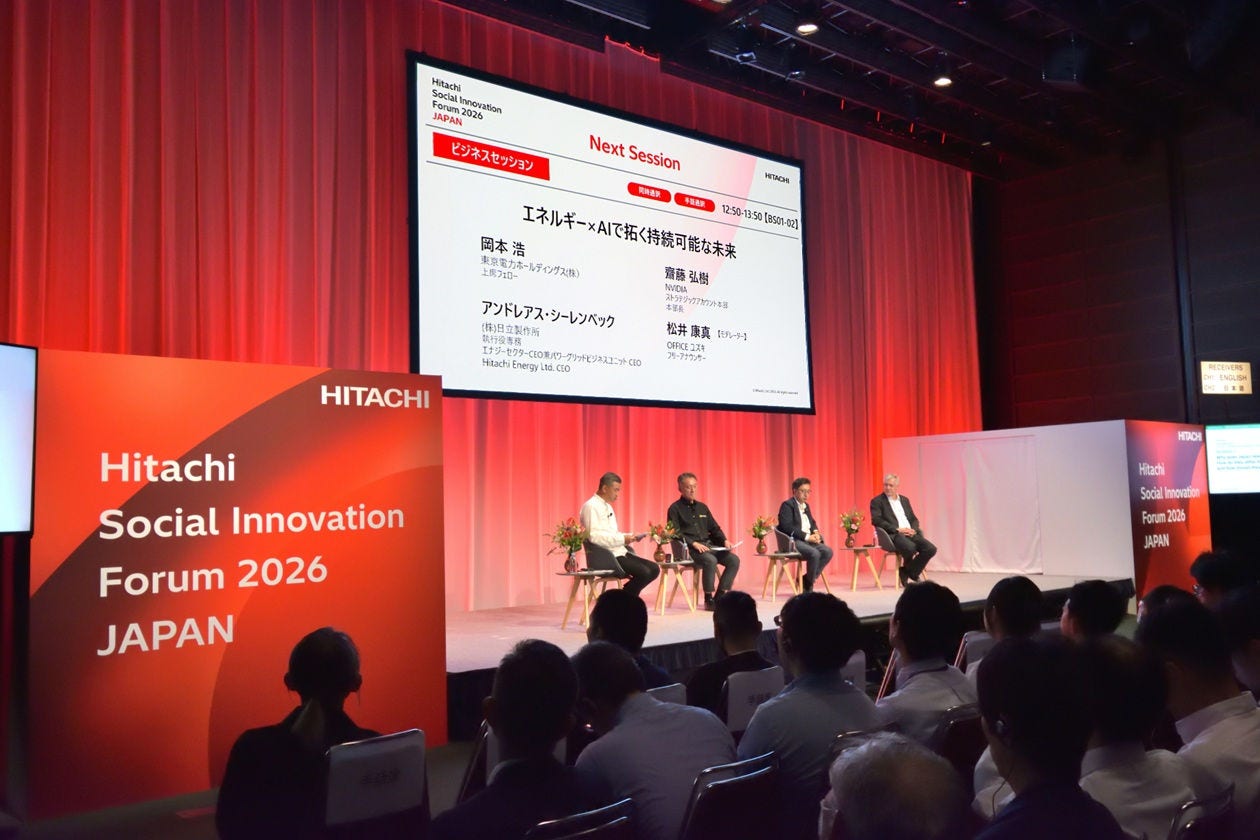
Matsui: First, I would like to ask Mr. Schierenbeck a question. How will the Hitachi Group contribute to the optimization of the energy system as a whole?
Schierenbeck: In the last several years, there has been a combination of the electrification of industries, transportation, and buildings and the rapid expansion of data centers, and the demand for electricity has been growing far above forecasts. At present, the power receiving capacity of data centers planned around the world is on a gigawatt level. If their capacity is three gigawatts, for example, an amount of electricity equivalent to the amount generated by three nuclear power plants*1 is necessary. However, it takes time to develop power stations and power grids, and the aging of equipment has also been an issue. It is not easy to promptly distribute large quantities of highly reliable, affordable, decarbonized and sustainable energy.
Hitachi provides technologies and services related to the improvement of the reliability and efficiency of power grids, their automation, high-voltage equipment, transformers and nuclear energy. Leveraging these technologies, we take a comprehensive view of the energy system as a whole, from power generation to power transmission, distribution and consumption, and we are optimizing the system.
While AI is a factor in the increase in the demand for electricity, it will also be a powerful tool that will be useful in predicting the condition of energy equipment and optimizing the operation of power grids. Hitachi provides support for the advanced maintenance and operations of important customer energy infrastructure via HMAX Energy, a solution utilizing AI and data obtained from electric power systems and other equipment. We are addressing the issues faced in the energy industry by contributing to the improvement of operating rates and the stable operation of equipment.
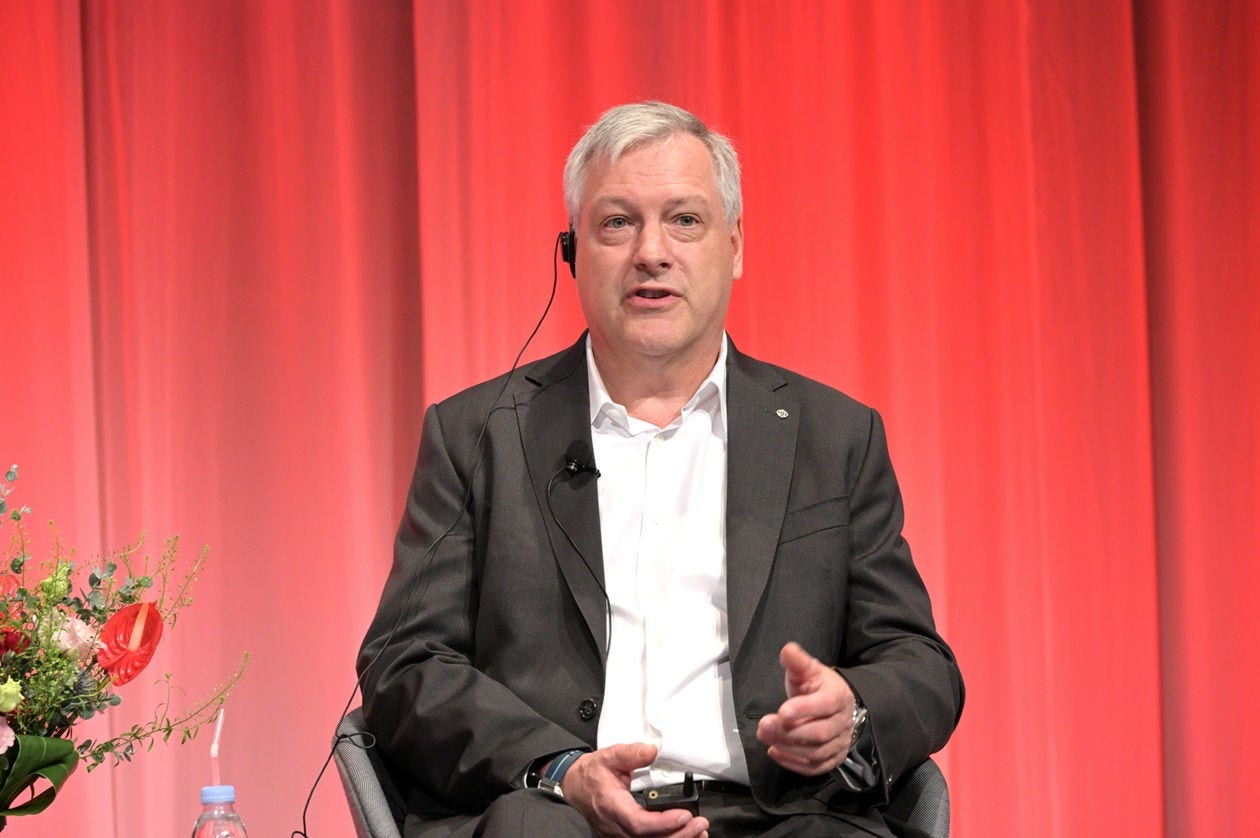 Andreas Schierenbeck, Senior Vice President and Executive Officer, CEO of Energy Sector, CEO of Power Grids Business Unit, Hitachi, Ltd.
Matsui: Next, I would like to ask Mr. Hiroshi Okamoto, Senior Fellow of Tokyo Electric Power Company Holdings, to talk about his vision for the future of electric power systems.
Okamoto: The watt-bit collaboration concept we advocate is an infrastructure concept modeled on the human body. It is the idea of likening power infrastructure to blood vessels and information and telecommunication infrastructure to nerves to improve and operate the two in an integrated manner. The popularization of AI will increase the demand for electricity, but shifting when and where computing takes place will help stabilize the power grid.
In addition, the GPUs in data centers generate a huge amount of heat. We are also implementing a demonstration project to effectively use waste heat in factories and local communities. In the future, we would like to view power, information and heat as a single whole and support Physical AI and smart factories to circulate energy efficiently within each area.
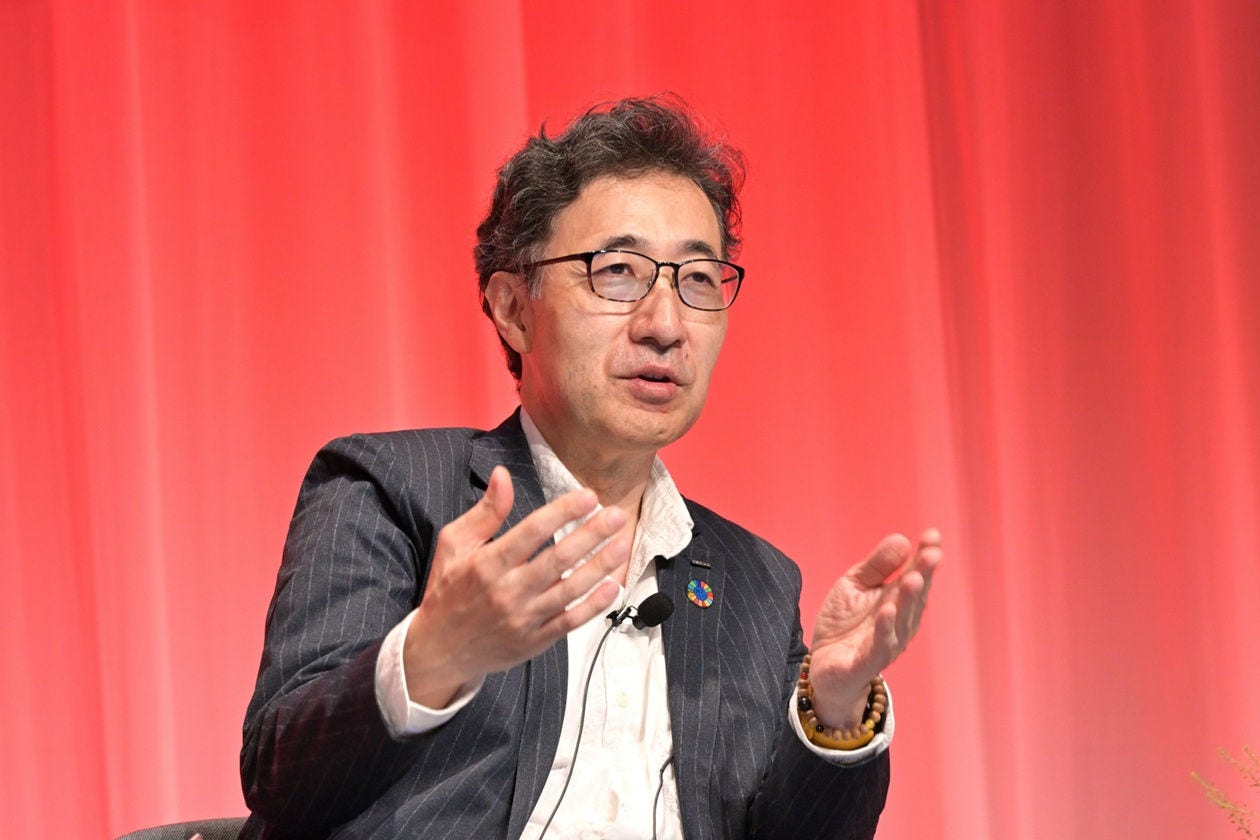 Mr. Hiroshi Okamoto, Senior Fellow, Tokyo Electric Power Company Holdings, Incorporated
Matsui: Next, I want to ask Mr. Hiroki Saito from NVIDIA to talk about the evolution of AI and its impact on energy.
Saito: AI is now an important part of social infrastructure, ranking up there with energy and telecommunications technologies. We see AI as having five layers, energy, chips, infrastructure, models, and applications. We help build energy-efficient AI infrastructure through initiatives with Hitachi that improve the efficiency of the use of energy, technological innovations regarding chips and the provision of reference designs for data centers, among other measures.
While generative AI is evolving from a foundation model to a reasoning model and autonomous agents, the processing capacity required is increasing rapidly to 100 or 1,000 times what was previously needed. At NVIDIA, we are improving the performance of platforms for AI. Regarding the architecture (internal design) of GPUs, the processing capacity of the Blackwell architecture is twice that of the Hopper architecture from 2022. The AI processing capacity of Vera Rubin, the latest-generation platform, is ten times the AI processing capacity of Blackwell with the same power consumption. We will continue to support the use of AI by improving energy efficiency in terms of the chips and systems.
Matsui: The Organization for Cross-Regional Coordination of Transmission Operators (OCCTO) expects that, by FY2035, the maximum electricity demand in Japan will be about nine times greater than in FY2026*2 due to new construction and the expansion of data centers and semiconductor plants, and a significant increase is expected in the Tokyo area in particular. Why is it important to develop AI data centers in Japan if they demand such a large amount of power?
Saito: To stay competitive internationally, it is essential that Japan utilize the data that is unique to it and have unique models. We need to build computing infrastructure to do this. AI data centers, which we call AI factories, use GPUs that generate large amounts of heat. Accordingly, we are increasing the sophistication of thermal designs and cooling systems, attaching more importance to the maximization of AI processing capacity per watt than operating rate. While AI agent throughput is expected to increase rapidly in the next few years, AI processing capacity is a key point linked directly to corporate earnings. We therefore believe that development of AI factories is very important.
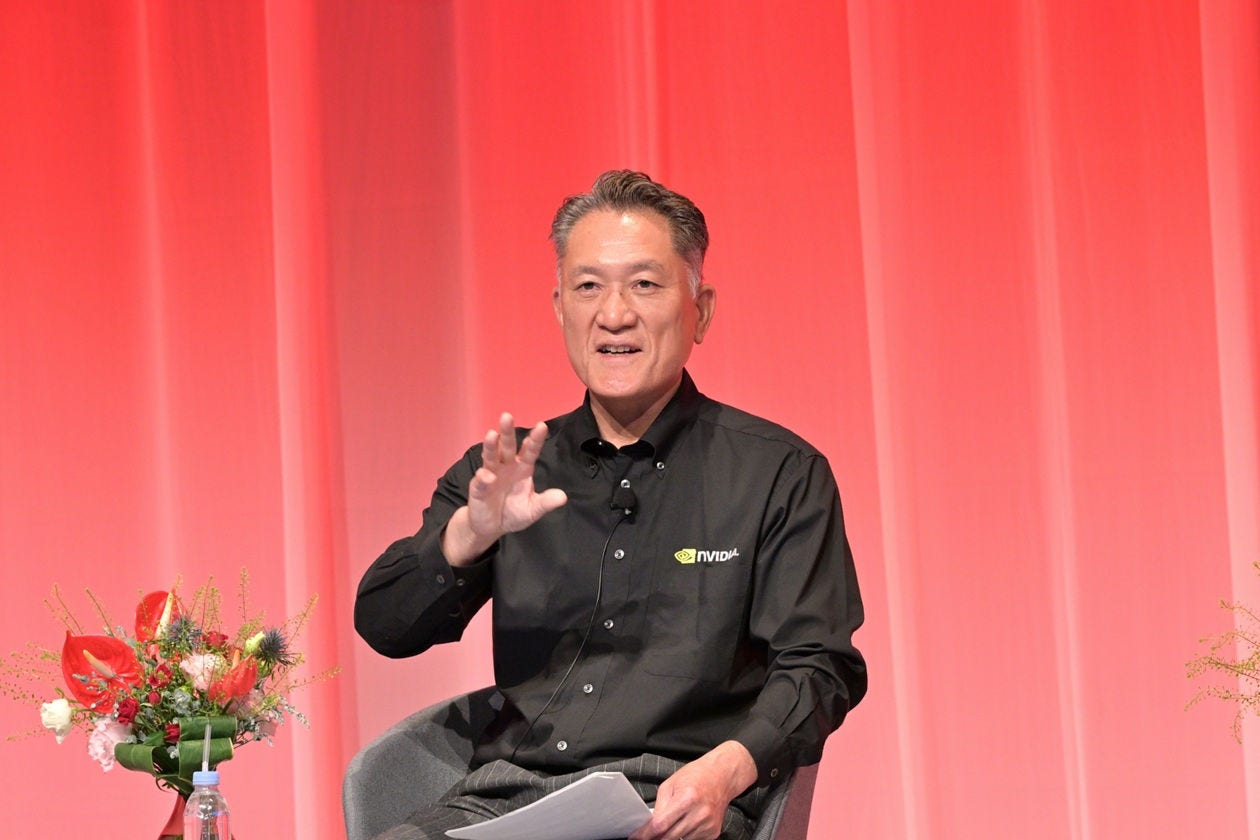 Mr. Hiroki Saito, Senior Director, Strategic Account Group, NVIDIA
Matsui: How should we balance the increase in AI data centers’ demand for electricity and the stable supply of it?
Okamoto: Both time and labor are necessary to build power transmission equipment for data centers. In particular, it is essential that we reach agreements with local communities regarding the installation of power lines. However, these efforts have not caught up to the speed of the evolution of AI. It is a big problem. In response, we are working to locate data centers close to substations that have leeway in terms of receiving capacity. Further, we plan to make requests regarding the adjustment of operations in accordance with the availability of power grids and the flexible use of electricity using storage batteries, among other matters.
Matsui: How will Hitachi contribute to balancing the increase in the demand for electricity and the stable supply of it?
Schierenbeck: The power grid is like an expressway. It is crowded or has plenty of room depending on the time of day. Normally, approx. 80% of the time, electricity consumption is only around 20% of the maximum capacity. Rather than expanding supply-side infrastructure simply to meet peak demand, it is important for data centers on the demand side to have their own power sources and balancing capabilities and work in coordination with the power grid.
Hitachi possesses technologies for controlling the use and supply of electricity, such as power storage equipment, co-generation systems, frequency converters, and high voltage direct current (HVDC) systems. It is important to create a system that supports the stability of energy infrastructure beyond the conventional categorization of electricity generation, transmission and demand.
Matsui: How will AI technologies evolve?
Saito: AI is evolving from a tool that answers questions to a tool that is a co-worker working autonomously in cooperation with humans. Further, it is expanding into the realm of Physical AI, which uses AI to control robots and equipment. Generative AI, AI agents and Physical AI will not be replaced. Rather, they will evolve simultaneously and cooperate with each other. In anticipation of this, Hitachi and NVIDIA have announced their collaboration in the development of a platform for the orchestration of multiple AI agents. We will also connect IWIM, which is Hitachi’s social infrastructure intelligence platform model, to NVIDIA Cosmos™ to examine the safe and reliable control of Physical AI, among other measures. We believe that this will facilitate progress in the social implementation of Physical AI.
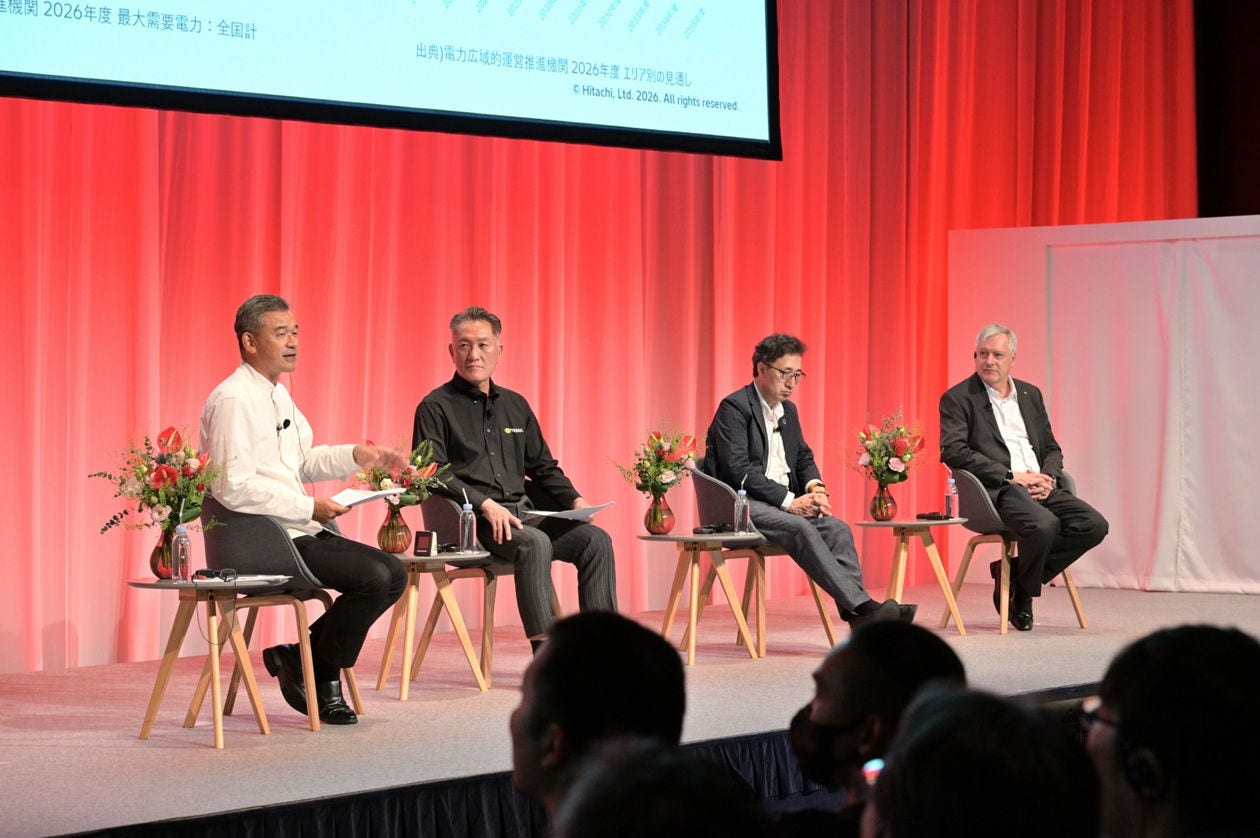
Matsui: How has the use of AI progressed on the front lines of the electric power industry?
Okamoto: Even if the number of human resources decreases due to the decrease of the population, we cannot easily reduce the amount of infrastructure. To keep the quality of work at the present level with a small number of workers, we already use AI to diagnose the condition of equipment based on images, among other applications for AI. Moving forward, we must expand the scope of the use of AI further, including in the formulation of grid restoration plans, to prepare for a decrease in the number of operators. We provide the game named PicTree that provides rewards to players who take photographs of electricity poles and other assets and post them. We use AI to analyze the submitted images to identify abnormalities.
Personally speaking, the continued evolution of Physical AI may enable frontline workers to create the robots that are needed themselves, enabling them to improve work themselves.
Matsui: What practical value will AI have in the field of energy infrastructure?
Schierenbeck: We have already achieved great things using AI. We have used HMAX to optimize the timing of maintenance in line with the condition of equipment. This has reduced the amount of work and made it possible to maintain quality with a small number of workers. In grid operations, we detect problem indicators from a large amount of data to support the people in charge of operations in their making of judgments. These are practical examples of the use of Physical AI. In the future, AI should be used more widely in balancing the demand and supply of electricity. Further, when introducing the HVDC system, it usually takes a year to simulate expected grid conditions. We could reduce this by more than 50% by implementing trials that were made using AI. AI tools also facilitate the efficient allocation of equipment to substations and other measures, making it possible to quickly start construction on electric power systems.
Matsui: Will we have enough electricity in the future, Mr. Okamoto?
Okamoto: There are many uncertainties in long-term demand forecasts. In the area served by Tokyo Electric Power Company, applications for data centers totaling 18 gigawatts had been submitted as of the end of last fiscal year, but the actual figure may be smaller due to delays in the start of operations or energy conservation—or it could be larger due to the expanded use of AI. It is important to prepare for uncertainties. I think it is important to invest in new things while also using existing infrastructure. This means maintaining existing thermal power stations as future options rather than hastily shutting them down.
Saito: We are also working together with partners to boost energy efficiency, and demand for AI will continue to grow. I think cooperation with electric power companies and Hitachi will be increasingly important.
Matsui: AI needs electricity, and AI, in turn, makes energy systems smarter. So, through this interaction, the optimization of demand, supply, and infrastructure throughout society will help shape the next-generation energy system. Thank you all for today.
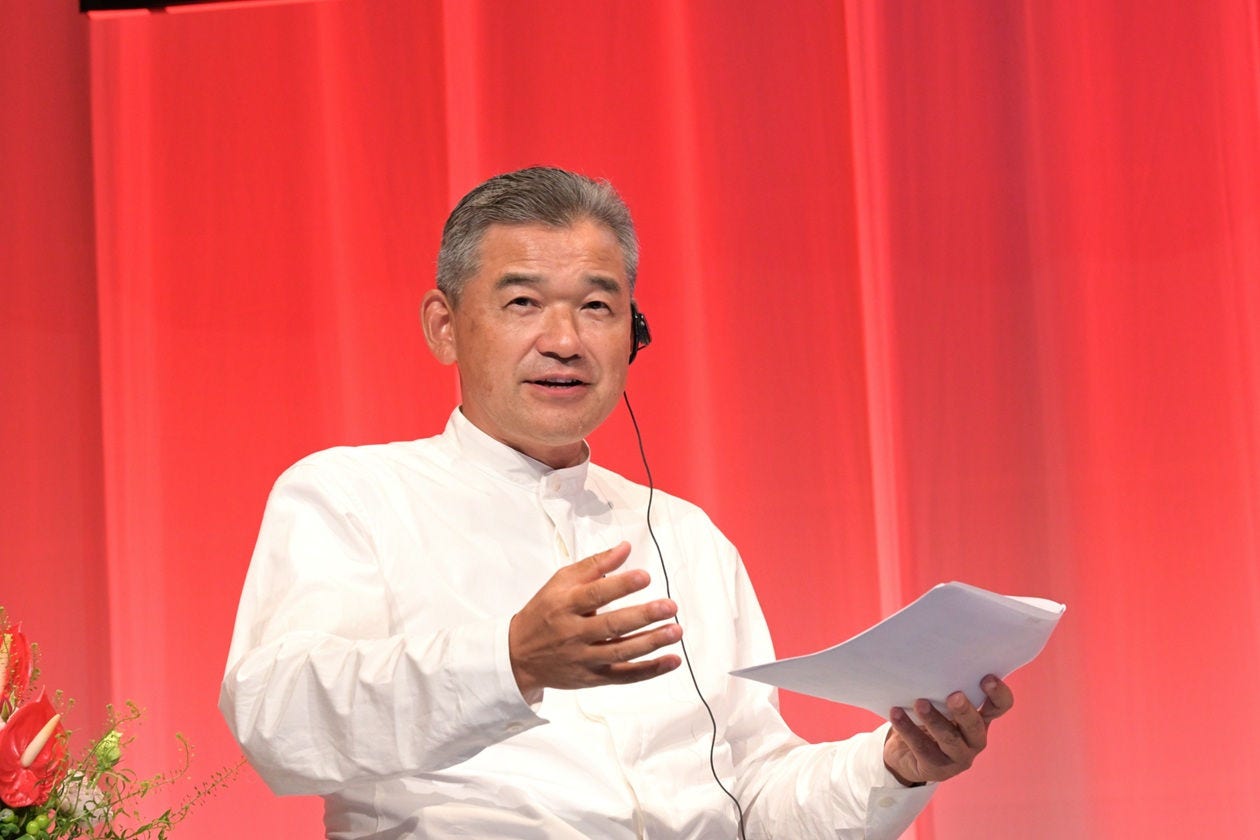
After moderating the business session, Matsui reflected on the discussion.
“The session enabled me to clearly understand that AI data centers are essential for social innovation using AI, and it is necessary to improve the energy efficiency of data centers and stably supply energy. It is also necessary to increase the sources of power, in addition to establishing a smart power grid using AI. In this sense, we can say that the need for nuclear power generation systems, which are stable, decarbonized sources of electricity, is increasing. Tomorrow, I will visit booths in the venue with a focus on the area related to nuclear energy.”
*1 A rough guide based on the output of one standard large nuclear power plant (1,000,000 kW = 1 GW)
*2 Based on electricity demand forecasts for Japan as a whole and for each service area published by OCCTO in 2026.
The individually calculated maximum electricity demand resulting from new construction and the expansion of data centers and semiconductor plants is expected to increase from 830,000 kW in FY2026 to 7,620,000 kW by FY2035.
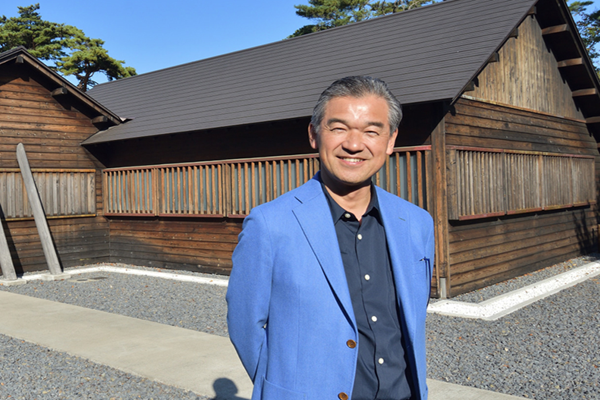
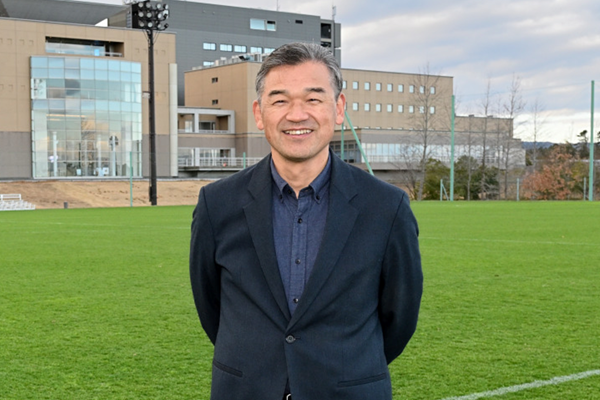
Yasumasa Matsui
Freelance Announcer and Journalist
Born in Inami, Nanto City, Toyama Prefecture. Graduated from Toyama Prefectural Takaoka High School. Graduated from the Department of Chemical Engineering, School of Engineering, Tokyo Institute of Technology (now Institute of Science Tokyo). In 1986, he joined TV Asahi as an announcer. He co-hosted Music Station with Tamori, served as a sportscaster on News Station, and worked as a news and information anchor on programs such as Station Eye, Wide Scramble, and Yajiuma Plus.
In 2008, he became the principal of TV Asahi’s announcer school, Ask. During his two years in this role, he trained over 100 announcers who went on to work nationwide. In March 2011, following the 2011 Great East Japan Earthquake (and subsequent Fukushima Daiichi Nuclear Power Station accident), he transferred from the announcer department to the news department as a reporter covering the nuclear power plant accident. He later served as a reporter covering the Imperial Household Agency and weather-related disasters, and worked as a commentator. In 2023, after leaving TV Asahi, he established his own agency, OFFICE Yuzuki. He also serves as a plastic model history research advisor for Tamiya Inc., ambassador for Nanto City, Toyama Prefecture, and media advisor for sake company, DASSAI Inc.