Part 8|Evolution of the Energy Systems and Nuclear Energy Supporting the AI Era: Report on HSIF2026 JAPAN [Second Half]
Share this:


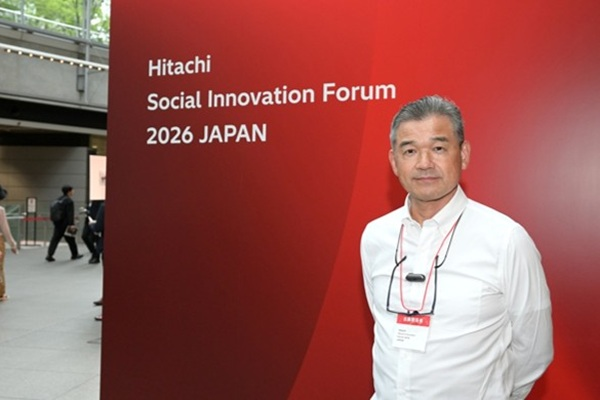
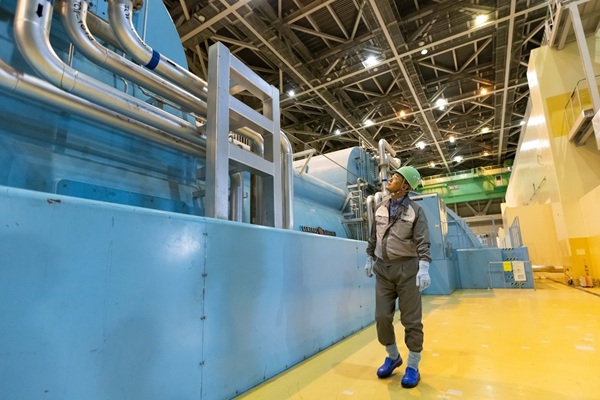
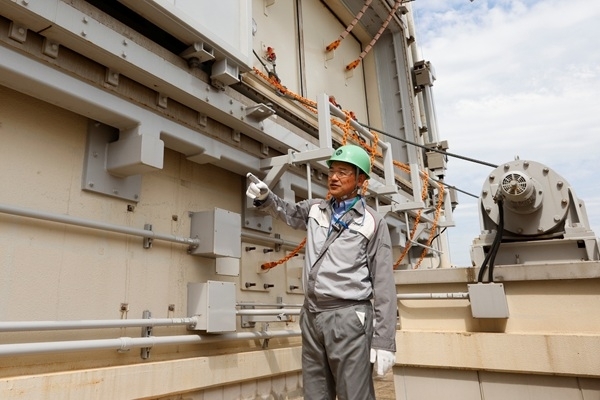
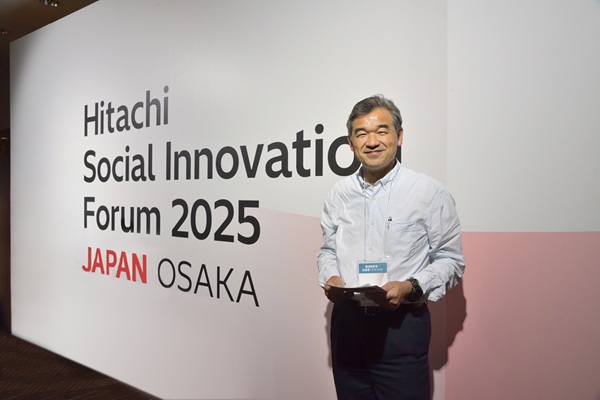
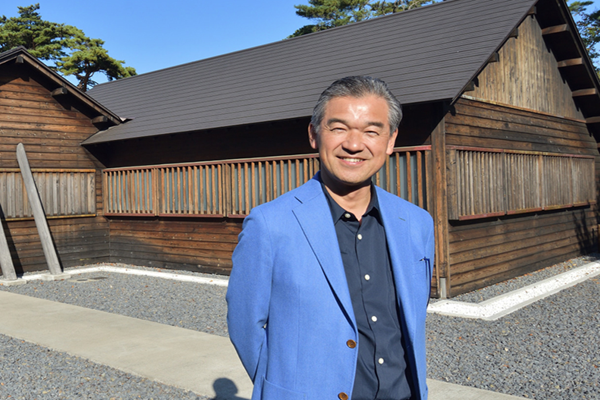
On September 3 and 4, 2026, Hitachi, Ltd. held Hitachi Social Innovation Forum 2026 JAPAN (HSIF2026 JAPAN). This year, freelance announcer and journalist Yasumasa Matsui was on stage as the moderator of a business session on the first day, and he visited booths in the exhibition venue the next day, focusing on exhibits related to nuclear energy.
The second half of the report will focus on Matsui’s visits to booths and summarize his thoughts during the two days of HSIF2026 JAPAN. Amid the growing expectations regarding AI’s transformation of society, he will explore the future of nuclear power generation, which holds the key to the stable supply of the energy that will support electricity demand in the era of AI, and talk about his expectations regarding the Harmonized Society that Hitachi aims to establish.
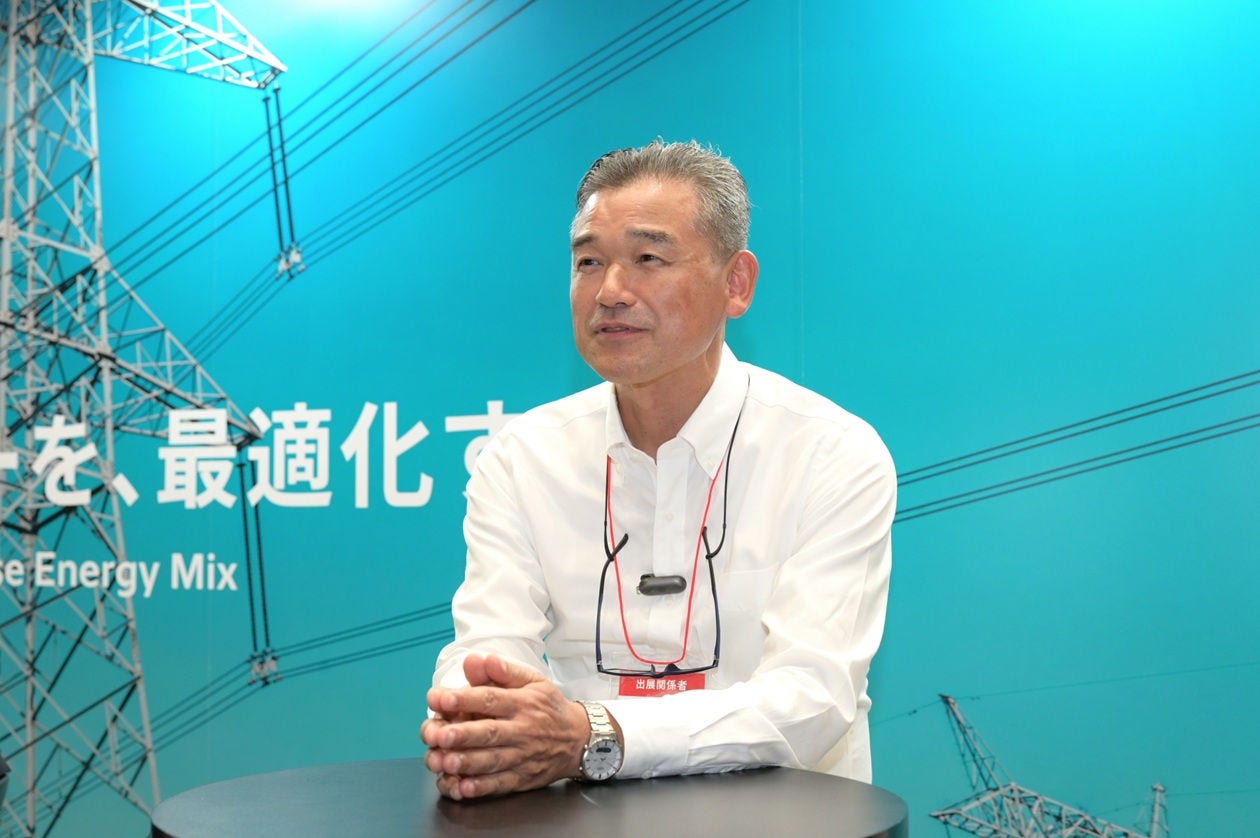
The main theme of HSIF2026 JAPAN was the realization of a Harmonized Society in which the environment, well-being, and economic growth are in balance. Exhibits aligned with this theme were the first to welcome visitors in the venue. First, in the area related to the environment, HMAX Energy caught Matsui’s eye. HMAX Energy was introduced during the business session that Matsui moderated. Among the exhibits were solutions supporting the advancement of power infrastructure, such as advanced power control systems that use data and AI in response to the increasing introduction of renewable energy, as well as AI systems used in facility management and to support onsite work.
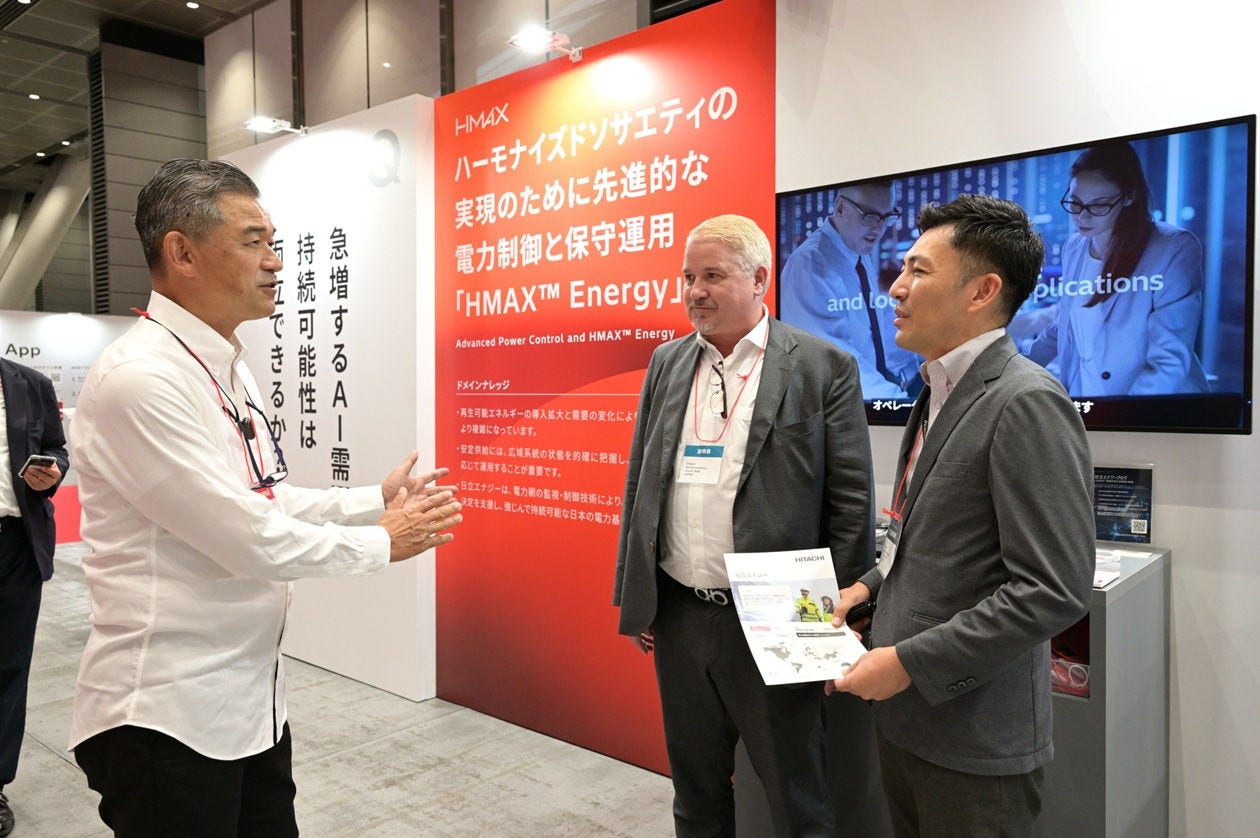 Matsui said, “Even though the demand for electricity is increasing rapidly, it is not possible to increase the number of power transmission facilities immediately, and it is necessary to continue to make skillful use of existing infrastructure. It can be said that using AI to do this is a domain in which Hitachi can leverage the experience it gained through its involvement in a wide range of types of social infrastructure.”
Matsui then moved to the nuclear energy area, looking at exhibits detailing contributions to economic growth and well-being. The first exhibit was about the BWRX-300 small light-water reactor.
The BWRX-300 is a next-generation small modular reactor (SMR) with an electrical output of 300 megawatts. Leveraging the technologies on boiling water reactors (BWR), an area in which Hitachi has an extensive track record, the BWRX-300 achieves a higher level of safety and simplified equipment using an innovative safety system. Combined with the use of modular construction methods, these features give the reactor advantages in terms of reliability, safety, and economic efficiency. The construction of the first BWRX-300 unit is underway in Ontario, Canada.
“It has already passed the planning stage and is about to emerge as a real power station. This makes me feel that options for use of nuclear energy are expanding,” said Matsui. He looked closely at the new 1/20 scale model that was unveiled at the forum, and said that it was well-made.
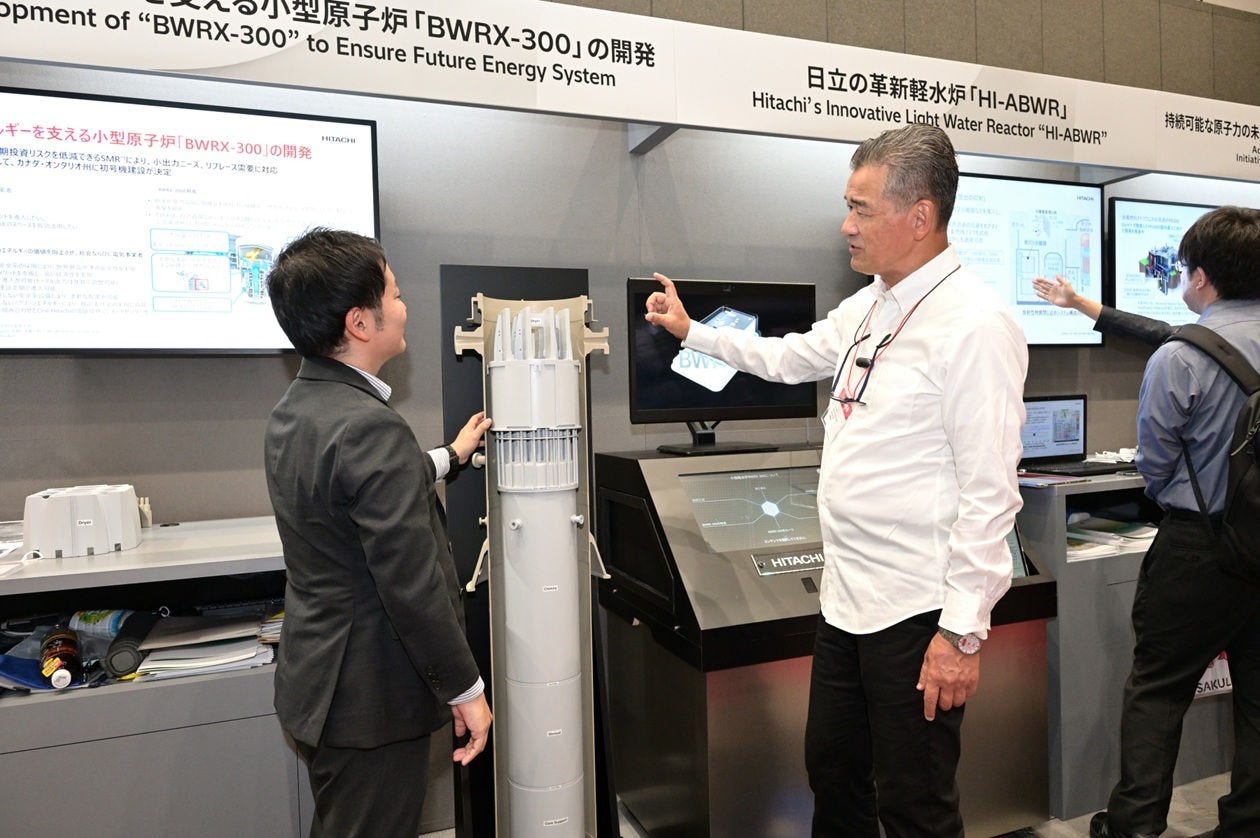 “This model is excellently made. As a person who communicates information via the TV professionally, however, I feel a few touches could be added. For example, placing models of a human and a conventional reactor at the same scale next to the model would allow you to understand its size at a glance. I think it is important to show it in a way that enables people to understand it intuitively,” Matsui said.
Next to the BWRX-300 was an exhibit about the innovative HI-ABWR light water reactor. It is a next-generation reactor, in which a new safety system is used based on the design of the international standard Advanced Boiling Water Reactor (Advanced BWR), which has met regulatory requirements in the UK and Europe, reflecting the lessons learned from the Fukushima Daiichi Nuclear Power Station accident, and has acquired design certification in the UK. In addition to measures to be prepared for disasters, the HI-ABWR has a system that enables the continued cooling of the reactor even in the event of an accident and other features. The reactor is designed to limit the progress of an accident and its impact outside the plant.
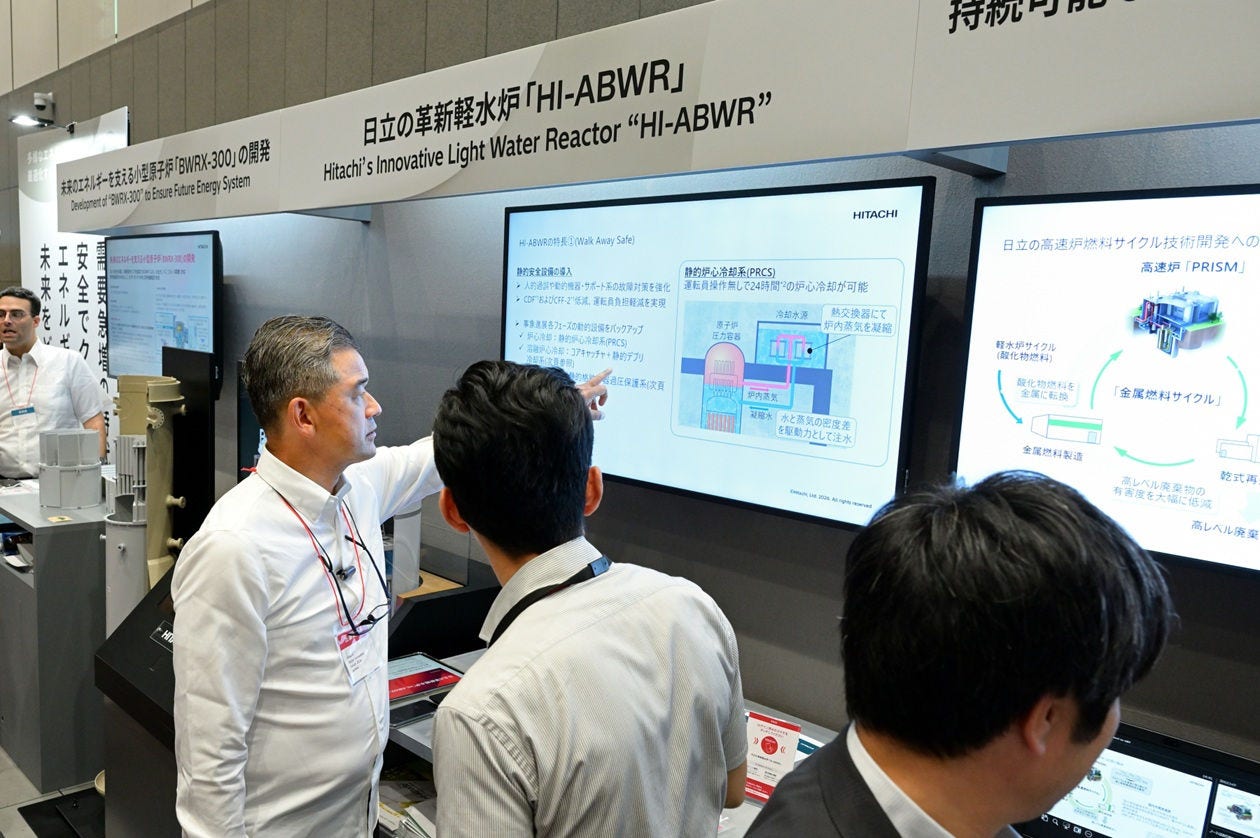 Matsui said, “A strength of the HI-ABWR is that it is built upon a foundation of accumulated technologies. Safety measures that have been added to existing power stations were included in the design phase, which makes me feel that progress is steadily being made. Of course, it is necessary to conduct a safety review, gain the understanding of local residents, and take other actions to actually build it. However, the development of proven technologies is an important option when considering the stable supply of electricity in the future.”
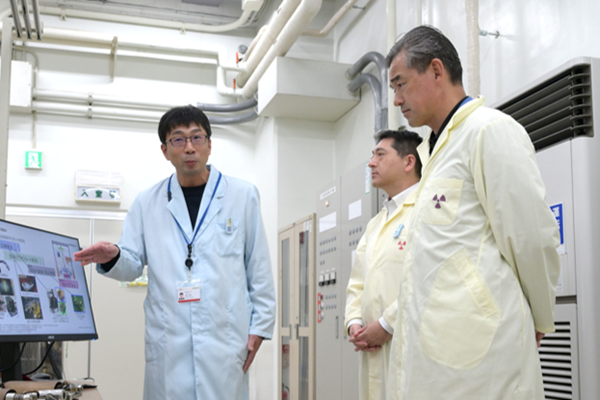
The fast reactor and fusion technology exhibits Matsui visited next offered a longer-term perspective on the future of energy. Fast reactors can be fueled by elements with very long half-lives, which are contained in spent fuel from light-water reactors. These reactors make it possible to significantly shorten the period before the harmfulness of spent fuel has decreased. It is necessary to establish fast reactor and fuel cycle technologies to effectively use resources and reduce the environmental impact of radioactive waste.
Matsui listened to these explanations and reflected on his visit to observe the Monju prototype fast breeder reactor in 2011. He said, “I spoke with young engineers. I cannot forget seeing those people, who joined the company with a strong desire to be involved in future technologies but found themselves responding to problems.” It was later decided that Monju would be decommissioned, and the decommissioning work is currently underway. However, this does not mean that fast reactor technologies have been lost. Hitachi is advancing the development of two types of fast reactors, an innovative small sodium-cooled fast reactor (the Power Reactor Innovative Small Module, or PRISM) and a light-water-cooled fast reactor (the Resource-renewable BWR, or RBWR), and it is developing fuel cycle technologies. These two activities are inseparable.
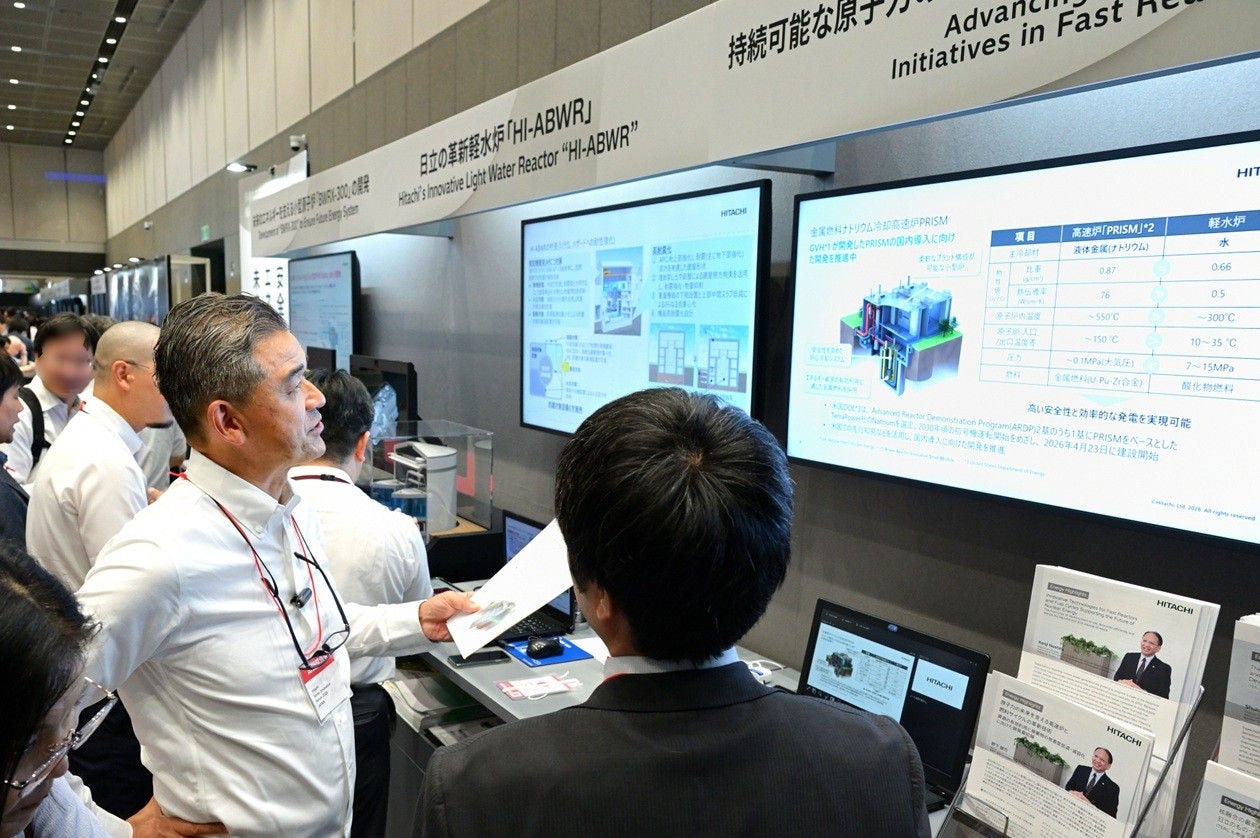 Matsui said, “I have memories of Monju, so I was happy to hear from a future technology leader that Hitachi is implementing initiatives in this field. The company is supporting research that takes a long time to produce results, developing human resources, and passing down knowledge. I feel that there are roles that only major enterprises like Hitachi can play.”
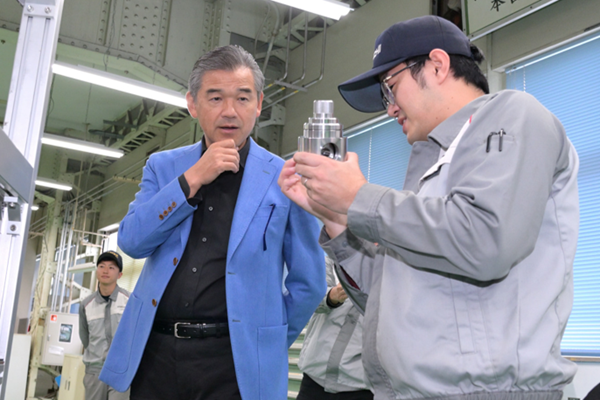
Hitachi is involved in the production of experimental devices, the design of prototype reactors and other fusion-related activities, and it is continuing to implement initiatives to make “dream energy” a reality, including its participation in the International Thermonuclear Experimental Reactor (ITER) project. Matsui listened to the explanations and said, “An announcer, one of my junior colleagues, was reporting about the current status of fusion research in the United States the other day. It appears that development efforts to demonstrate power generation technologies are underway overseas as well. I hear that Hitachi has been researching this matter since the 1950s, which makes me feel encouraged.”
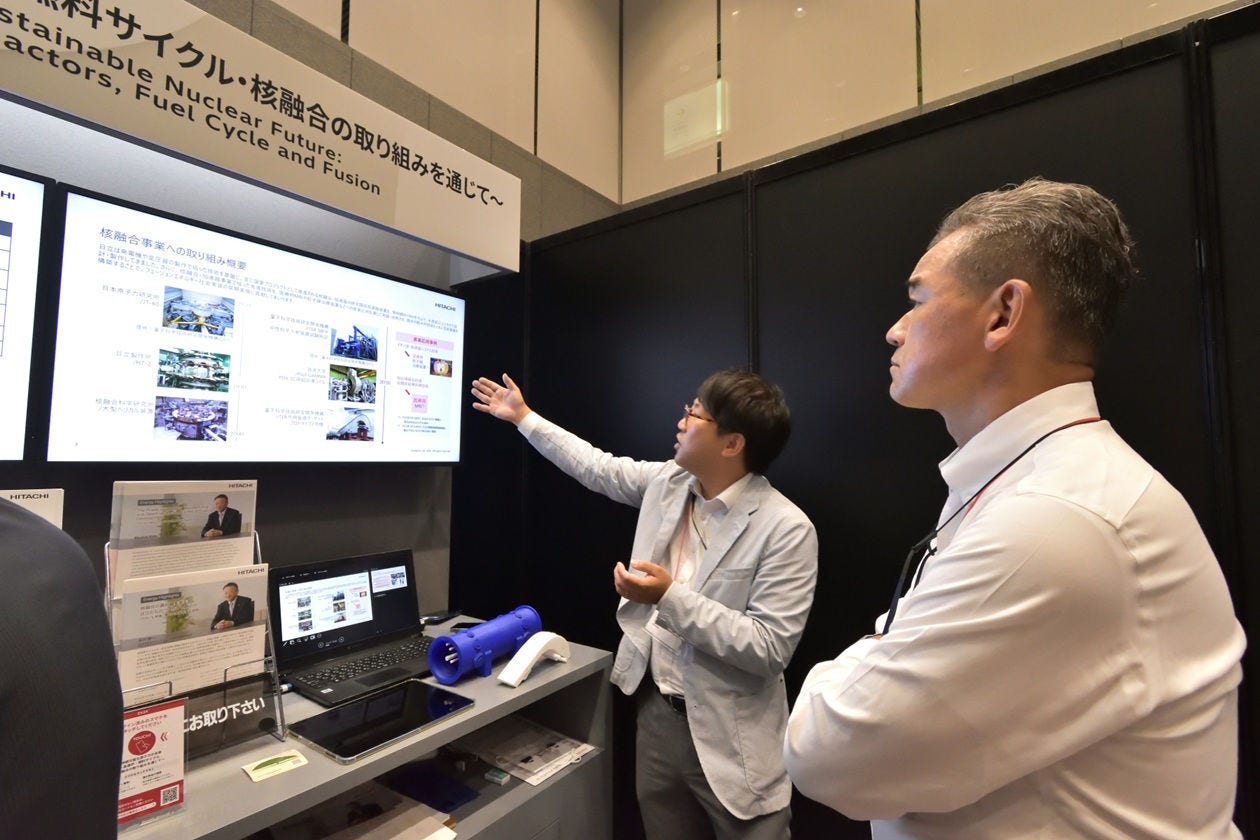 Matsui said, “If made a reality, fusion will be a game changer that will drastically change the energy options available to us. I think there are issues that need to be overcome before it can be practically realized, but I hope they do not stop moving forward with their development of this future option.”
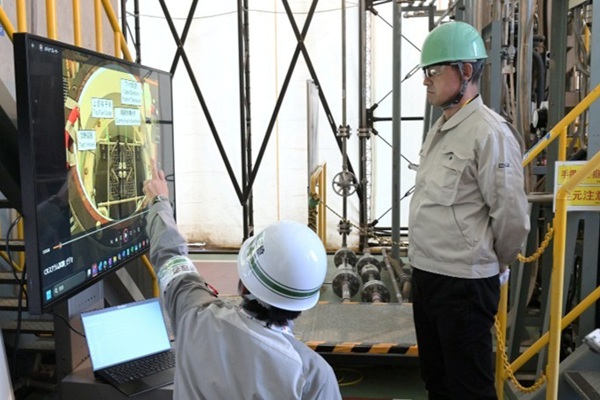
The final booth in the nuclear energy area was the Metaverse Platform for Nuclear Power Plants booth. Its goal is to streamline work, including design, construction, maintenance, and decommissioning work, by recreating nuclear power plants in the metaverse, offering AI documentation search services, and facilitating the sharing of information between relevant people at different sites. This technology is the foundation of the Data-Driven Power Plant, in which domain knowledge and AI are combined and onsite data is utilized.
Matsui watched the demonstration video projected on a four-sided screen and said, “I feel the project has been evolving since the demonstration I was previously shown at the laboratory. I could see that they are striving to achieve higher-definition images, which increases my hopes for their work.” At the same time, he pointed out, “As information about power plants is recreated more precisely, the importance of the methods used to protect that information increases.” He asked the booth staff about how the security of the plant data would be protected and other matters.
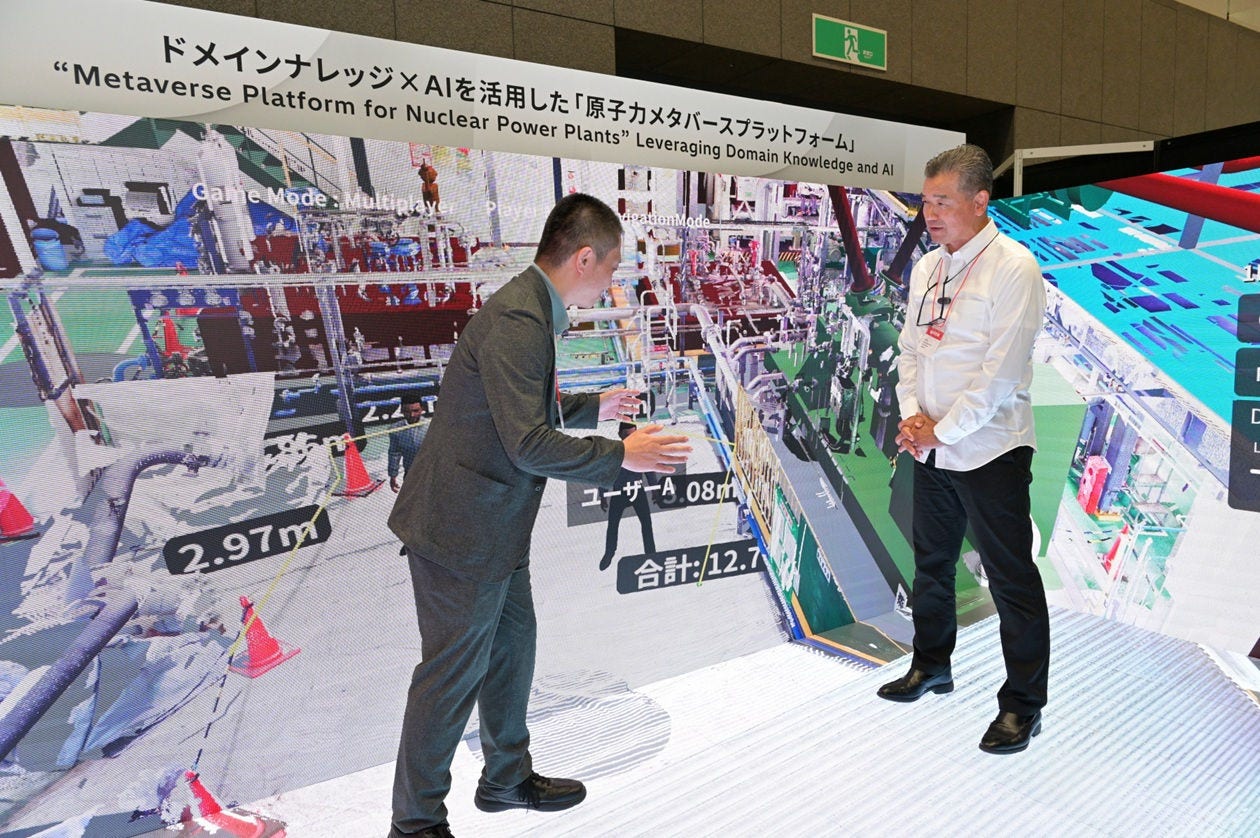 Matsui said, “The exhibits increased my desire for the people involved to thoroughly work to leverage digital technologies and protect information. HMAX Cyber, which provides end-to-end support throughout the process from the identification of cyber risks to monitoring and restoration from damage, was introduced during the keynote session. I would request that Hitachi advance its initiatives to increase the sophistication of social infrastructure and protect its safety in an integrated manner so that they can be provided to society as technologies that can be used with peace of mind.”
After visiting the booths, Matsui reflected on his overall experience at HSIF2026 JAPAN, saying, “Through the sessions and exhibits, I learned about Hitachi’s vision for enriching society using AI, supporting energy that is essential for the development of AI, and connecting its businesses to each other to work towards the establishment of a Harmonized Society. The event was also an opportunity to consider the role that nuclear energy will play in this process.”
The Energy x AI Realizing a Sustainable Future business session Matsui moderated was strongly connected to the message about increasing the sophistication of social infrastructure using Physical AI shared by Toshiaki Tokunaga, the Representative Executive Officer, President & CEO of Hitachi, in the keynote session. Matsui said, “The 600 seats in the venue were fully occupied, and some people were seen to be standing. I felt they were highly interested in the theme,” and he summed up the discussion, saying, “My hometown, Nanto City in Toyama Prefecture, is attracting data centers with the vision of eventually establishing a 3.1-gigawatt cluster, which will be one of the largest clusters in Japan, so the theme was familiar. I visited the site where construction was underway, but there remains the question of whether this large demand for electricity will be fulfilled. AI progresses rapidly in cyberspace. However, electric power needed for it must be supplied by real power generation facilities. The physical world supports the development of digital technologies. For me, this event reconfirmed the significance of using nuclear energy, with safety at its foundation, as a key option for the continued stable and sustainable supply of electricity.”
At the same time, while stating that the vision of simultaneous development of AI and energy is deeply understandable, Matsui pointed out, “If I dare to look for a blind spot from a journalistic perspective, it is after all the safety in both physical and cyber aspects. I also request that harmony between AI and humans should be valued.”
“One of the factors in a Harmonized Society is well-being. I think that the way AI is used must lead to the well-being of humans.”
Looking at the stable supply of energy and what power sources should be like from an environmental point of view, Matsui said, “Every time I hear or read a news report on the heat wave that hit Europe this summer or about floods, which are occurring frequently now, I cannot help but think that the impact of climate change is increasing. We must not stop thinking because we have enough electricity. We need to think about what power sources are used to generate the electricity. It is important to promote calm, scientific discussions about nuclear energy to achieve both decarbonization and the stable supply of electricity.”
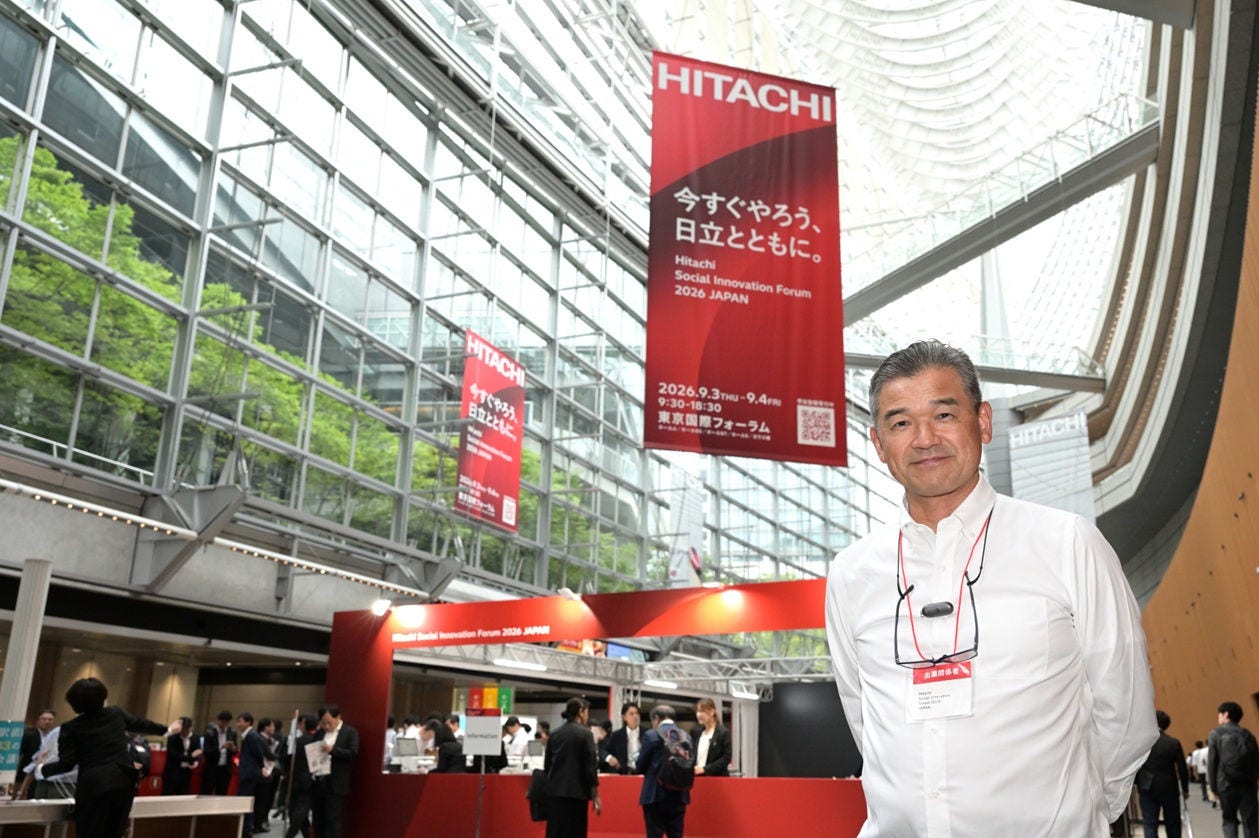 “When I held my grandchild for the first time, I felt strongly that I must not leave a negative legacy that my grandchild would be forced to correct. We must take action now to make society better for the next generation. I think the slogan, “Start Now with Hitachi,” expresses our responsibility for the future. I would like to share the knowledge and opinions I obtained from people on the front lines of these activities during my visits to help create opportunities for people to think about energy.”
Yasumasa Matsui
Freelance Announcer and Journalist
Born in Inami, Nanto City, Toyama Prefecture. Graduated from Toyama Prefectural Takaoka High School. Graduated from the Department of Chemical Engineering, School of Engineering, Tokyo Institute of Technology (now Institute of Science Tokyo). In 1986, he joined TV Asahi as an announcer. He co-hosted Music Station with Tamori, served as a sportscaster on News Station, and worked as a news and information anchor on programs such as Station Eye, Wide Scramble, and Yajiuma Plus.
In 2008, he became the principal of TV Asahi’s announcer school, Ask. During his two years in this role, he trained over 100 announcers who went on to work nationwide. In March 2011, following the 2011 Great East Japan Earthquake (and subsequent Fukushima Daiichi Nuclear Power Station accident), he transferred from the announcer department to the news department as a reporter covering the nuclear power plant accident. He later served as a reporter covering the Imperial Household Agency and weather-related disasters, and worked as a commentator. In 2023, after leaving TV Asahi, he established his own agency, OFFICE Yuzuki. He also serves as a plastic model history research advisor for Tamiya Inc., ambassador for Nanto City, Toyama Prefecture, and media advisor for sake company, DASSAI Inc.